July 1, 2022 · 44 min
The woman behind Woof Cultr: Meet Mandy Boutelle
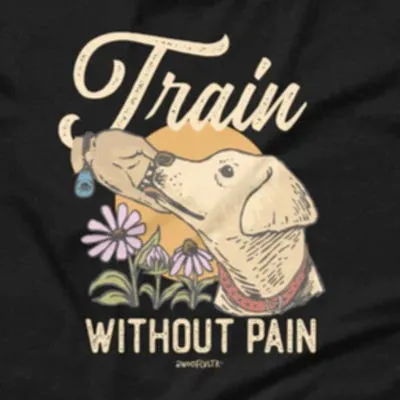
Hang out with any Positive Reinforcement dog trainer and they're bound to have a shirt in their wardrobe from the online store Woof Cultr: An apparel company that has a very niche market: Force-free trainers. Woof Cultr is the brainchild of Mandy Boutelle, who originally left a career as a hairstylist to become a certified dog walker in San Francisco. When she started doing off-leash group dog walks, she knew she had to learn more about dog training and behavior in order to manage her rowdy young pack. This led her to decide to become a dog trainer. At the start of the pandemic, however, she and her husband decided to move to Oregon and to spread the gospel of positive reinforcement dog training in a unique way: By printing bold-but-simple statements about training and behavior on t-shirts.
DigiWoof | Web Design & Digital Marketing for Dog Trainers and Pet Pros
Transcript
This transcript was made automatically from the audio, so it may contain small errors.
Once I started wearing more training-related shirts, they would notice it. I wouldn't even point to my shirt or anything. They'd just notice it and they'd be like, oh, I should reward my dog more. I like that you wear that. That's a good point.
It's a good reminder. Or the Reinforcement Drives Behavior shirt, they're like, you're right. That totally applies. And it would just be something as simple as me wearing a T-shirt and them... Applying it to like our training session, for some reason it would make things click more.
And I feel so silly saying that because I just don't think people really realize the importance of a visual when you're trying to make an explanation for something. But for whatever reason, it started clicking, pun intended.
School, school for the dogs, for the dogs. School, school for the dogs, for the dogs.
Mandy, thank you for joining. Joining me, we have not met in person. I'm excited to meet you this way. Could you maybe just go ahead and introduce yourself and we'll go from there. Yeah, sure.
And thank you for having me. First of all, I'm really excited to chat with you virtually and nerd out about all things positive reinforcement and dogs. So my name is Mandy Boutelle. I am a CATCH certified trainer as well as a CTBC, which is a certified trainer and behavior consultant through the Dog Training Internship Academy. I was a certified dog walker for about five years and then I got into dog training.
I was a trainer for... I have very rarely heard anyone refer to themselves as a certified dog walker. Was that through the Dog Walking Academy? Yes, the Dog Walking Academy through Dog Biz. Ten or so years ago, we actually hosted a Dog Walking Academy at School For The Dogs, back when School For The Dogs was in my apartment.
Oh my gosh, that's crazy. Yeah. That's cool that you did that. Yeah. My husband was actually an instructor for them for a couple of years.
So I did a lot of hands-on training with them as well. So there's a background that a lot of people don't know about us. What got you into dog walking to begin with? And then what got you to think, gosh, I need to get some sort of certification? Yeah.
Actually, I was a hairstylist for eight years before I ever got into dogs. I met my husband and I just thought it was so interesting that he was a dog walker and that he could have a thriving career and not be burnt out and he just seemed very healthy physically and mentally because he was around dogs. All the time and outside all the time. And I just was like, you know, you're looking for an employee and I'm ready to get out of this industry. Why don't we?
So he was a dog, I'm sorry. He was a dog walker by choice as a profession as opposed to, I think, many dog walkers out there who work as a dog walker as a kind of stopgap between doing other things. Yeah, so he actually, he got started at... He volunteered at the SPCA when he was a kid, so he's always been around dogs. And then he worked for a, it's called SF Puppy Prep in San Francisco.
It's basically like a daycare for puppies where they can get all the proper socialization and learning and all that stuff. And so he was a walker for them for a few years, and then he decided to go take it off and do his own thing. Mm-hmm. But so I asked him, I was like, hey, you're looking for an employee. I don't like my job.
I think we'd work great together. And he was like, I'd consider hiring you, but I want you to go through the Dog Walking Academy so you can just have the skill set that's beyond what I can just teach you and like having you assist me. So I went through their four-day intensive program and learned how to manage dogs, learned things I did not know about dogs, first aid, CPR, handling, unloading dogs you would not think is something you should learn, but it is definitely a skill worth learning. And a big difference between people, though, who are doing that kind of program for a future career walking dogs in San Francisco or New York City and ones doing it in, I don't know, the Great Plains. Right, exactly.
Yeah, there were being an off-leash walker in San Francisco was a feat of its own, for sure. There are a lot of... Permits you have to get, a lot of laws you need to follow, certain numbers of dogs you can walk. Not that a lot of people obeyed that or abided that rule, but it was fun for sure. Would I do it again?
Maybe, but not in San Francisco, maybe, because all the driving. Right, a lot of driving, which is something... In New York City, people don't – New York City, at least in Manhattan, the dog walkers near me, I don't think are doing a lot of driving. Oh, God, I couldn't imagine. They're doing a lot of – I mean, how do you explain to people pack walks as a good idea or not as a good idea?
Is that a question you would ever get asked? Yeah, of course. You know, when you would – we'd always interview dogs before we would – Even debate hiring them on. We'd have to, you know, get a read for their temperament, history, socialization history, all that stuff to even see if they're a good fit. And there were some times where, you know, we'd meet a dog.
One that really comes to mind was a Frenchie that wasn't the healthiest dog. Just had a lot of breathing problems, back issues. And we just had to say, you know, I think individual leash walks would be great for him. But since we go on these big, you know, hour long on trail hikes with dogs that are much more active, he may not have a good time. And I think just really always coming from the standpoint of we want to do right by the dog and we want to make sure that the dog is having a good time, not just, you know, hey, let's go pick up your dog, go walk them because you need them tired while you're at work.
And so I think it was a lot of connecting with different types of walkers in the city so that we could have that network of referral so that I could just say, hey, it's not going to work with us, but I know all these awesome people and giving them options. Networking was really big for us. It's so interesting because as a dog trainer in New York City, I would say, don't do a pack walk. Yeah, exactly. Because to me, it means a different thing than like taking a whole bunch of dogs out to a trail.
To me, the pack walk is the guy who has six leashes in each hand. They're wrapped around his hand like five times and he's walking like ten dogs. Yeah, and he has a phone in his hand and is, you know, tying them up to a lamppost so that he can go in and bring them off. Or, you know, just bring one of the dogs inside. Like, where do you put the other dogs when you have, you know, unless there's two people walking.
It's just like, I just... If somebody said our packwalk's a good idea in New York City, I'd be like, you know what? Dogs already have a lot that they're dealing with on the city streets. That sounds like chaos. Yeah, I would say no to that.
Yeah. But yeah, that dog-centric view of dog walking, I mean, I think is part and parcel of our mission as dogs. Whatever you want to call it, positive reinforcement dog trainers to think about the needs of the dog. I started my life as a dog trainer going to Karen Pryor Academy and the summer after I graduated from that, I was walking these two English bulldogs twice a day and they wanted me to be taking them out for an hour twice a day and it was the summertime. And I remember...
Getting, like, kind of getting in trouble because one time I took them out, well, more than one time, I mean, I would sometimes just take them out and, like, go sit on a stoop somewhere with them. Right. And, like, hang out with them on the stoop because it was 90 degrees outside and they were in those full dogs and it just, like, wasn't the right thing to be, like, you know, walking them, dragging them down the street. But that wasn't... People watch and get enrichment that way.
Yeah, yeah, but that wasn't, you know... That wasn't what dog walking, you know, the job I was hired to do, which was to be walking the dog. And I ended up quitting the job because I just felt like it didn't feel right. So you started out as a hairdresser, became a dog walker, and then that led you to realize that you wanted to learn more about dog behavior? Yes.
Yes, bingo. So with the parks we walked at, it would vary. We could walk a limit of six to eight dogs per group. And I was a small dog walker, so I didn't walk dogs over, I want to say, 36 pounds. So they were all within the same range.
And I based my groups off of them. Temperament level. So I had my calm morning group that was a little bit older. And then I had my rowdy young afternoon group. For my sanity, I had to do that.
But then I, so I'd be walking six to eight dogs at a time. And I think just I noticed with my rowdy afternoon group, I just while they were all balanced out perfectly with their personalities, it was so much for me to manage. And I just remember being like, OK, I only learned. Up to a certain point about behavior in the Dog Walking Academy because you can only learn so much in four days. So I was just like, okay, I need to get a better brain for the situation so that I could kind of just try to set my group up for success better.
And once I did start going into training, first I did the catch program because I just kind of wanted to dip my toes into training and I wanted something that I didn't have to go in anywhere. I wanted to do it virtually so I could just Dip my toes into behavior stuff. So I did that, got that certification, and I realized I wanted a more hands-on training certification. So I went through the Dog Training Internship Academy, and that was created by Janice Bradley. And that was a six-month-long program.
And that was really where I was like, oh, okay, this is changing my group dynamic. And I was able to... I'm not sure how it is for KPA, but for my program, I had to have four or five project dogs for each kind of program. Section of the program. And so what I did was I would take whichever dog I was wanting to work on in my walking group and I would just say, hey, can I use them for my training?
So I was kind of working for myself in that situation and kind of giving the dog that was in my group that was really rowdy that extra training time with me so that... When they were in the group, I just noticed things were getting better and then their parents started noticing and they're like, what have you been doing? And I'm just like, I have literally been spending 30 minutes to an hour a day training your dog and that is all it took. And they're just like, okay, yes, like keep doing this, keep taking my dog, learn with them, this is awesome. And then by the time I finished up my course, my afternoon group was perfect.
And I don't mean perfect in the sense that they didn't run off the other groups and they weren't rowdy, but it was just easier for me to manage and prevent unwanted behaviors with... More opportune behaviors. So something I created with my, and stop me if I'm getting off on a tangent, but something I created with my groups was I would create the queue party time. And so they would know that when I would yell party time, everyone would need to circle around me and they'd get a jackpot of treats from me. So I was the dog walker that would randomly be yelling party time.
And my group like just sprint to me and all the other walkers would be like, What are you doing? And I'm like, well, we have a ritual and this works.
We say the word break during our group play situations, but party time is a whole lot more fun. It's a trick my husband taught me. I was like, why do you yell party time? And he's like, it works. It gets them to know a jackpot's coming.
I'm like, oh, okay. Cool. You have to, I'm trying to think of what else would be a funny thing to yell though to dogs. You're like, nightclub or something or breakdance. I like doing fun cues because then you just get weird looks.
Yeah. I'm thinking, cocaine! Shots! Shots, that's a good one. People will be like, it's 9am, what are you doing?
Your walker doesn't seem sane. Shots on me. I meant espresso.
So funny.
Well, which brings me to your sense of humor, which is on display with your Woof Culture work. So since we're working chronologically through your life story. Take me from offering, from being the party time girl with the doggos in San Francisco to your current life in Oregon, or Oregon, Oregon, Oregon, Oregon. Yeah, it's 180. Being an entrepreneur.
Yeah, it's a huge 180 from what it was. I want to say, oh, you have to go all the way back to like pre-pandemic, which I mean, I still feel like I'm in 2020, 2021 right now. And time has lost all meaning in the last couple of years. I know. I'm like, what week is it?
Day, month? I'm not sure. So when it was 2019, I was still walking full time and then training part time. And I remember I was on a walk with my husband and he just he was like, you always say you want to wear like shirts like you always say like, oh, that'd be great on a shirt or we should put that on a shirt when it comes to like your dog walks and stuff. Because like I had I walked some reactive dogs and, you know, people.
Just random owners would walk up to my group and I'm like, I just, I wish I had a shirt that says, my dog doesn't want to say hi, or we don't want to say hi, or leave us alone, or something like that. And I was just talking to my husband about it, like you do with any spouse, you vent all your annoyances to them. And so he was just like, well, what if we did? What if we made a t-shirt company and you just started doing that? Because you don't like anything that's out there or there's nothing really out there.
And I was just like, we already have like such a busy workload. How? And he just, he looked into it more. He looked into doing more kind of Shopify stuff and print on demand so that we don't have to supply and keep everything in stock. It's just better environmentally, consciously, because everything's just getting made to order.
So it's less production costs on our end. And I was just like, okay, if we can swing this while working full time, then sure, I will dip my toes in it. And when it first started off, we didn't really niche towards positive reinforcement. We were just trying to do more of like... Hiking with dogs and, you know, get out with your dog and do more with your dog kind of things.
But I was just like, there's something's missing. We need to touch more on our methods. Because I was like, here's the thing, like, while I know there are different methods of training, I don't want... People that are using prong collars or shock collars to be wearing our shirts necessarily, you know, because I don't support that. Ah, interesting.
Because, you know, we saw a lot of walkers out there that... So give me an example of some of the kind of non-POV... Stuff you were doing to begin with. Like I Love Dogs. So there's one thing I can think of.
Like there was a T-shirt and I think it's somewhere like very, very early in our Instagram posts. And it says like doggos, puppers, woofers. Or like weekends hiking and dogs. And I was just like, this is too generic. No one, like everyone's done this.
And then I remember the first shirt Josh made, my husband, it was the click, treat, click, treat, click, treat, click, treat shirt, just going down the shirt. And he was just like, what if we focus on On clicker training and force free training. And I was just like, I guess. Like I had barely found the R plus community online. So I was just like, I mean, I guess like there's this amount of people that would wear this.
I'd hope people that would be as nerdy as me. Sure. And so we did it. And then I just remember I started sharing it and people were just like, yeah, like this is awesome. Why isn't this on a shirt more?
And then I think we made the... It's hard to think back of like our original designs. I think we made like the let them sniff design and reward your dog. And those like first three just blew us up and put us like people found us. And I was just like, oh, OK, great.
Like, this is awesome. Then people actually like this and they care about humane training. They like the punny stuff, like maybe this can work. Can we just back up and just say, I mean, just like marvel together at the fact that putting reward your dog on a tote bag or a shirt is interesting enough?
I mean, it's sort of sad, actually, because you wouldn't put like, you know, eat... Eat your fist on a tote bag. Or pay your employee. It wouldn't be like, you know, bathe your children on a tote bag. Like these things that seem obvious.
I mean, actually, you should bathe your children would be a funny tote bag. That actually would be very hilarious. People might question child abuse, but... Just the weirdness of it. It's something just that simple.
And that's something I have a hard time explaining to people is... Like the reason I just wanted to put it on a shirt or put like reinforcement drives behavior on a shirt is because I'm a visual learner with my ADHD. And so when I see visual and then I hear someone talk about it, it clicks more for me. And so I noticed that with my... And this is how to get into another tangent.
I noticed that with my training clients that when I would talk about things, I noticed things weren't clicking into place as much. And then once I started wearing more training-related shirts, they would notice it. I wouldn't even point to my shirt or anything. They'd just notice it and they'd be like, oh, I should reward my dog more. I like that you wear that.
That's a good point. It's a good reminder. Or... The Reinforcement Drives Behavior shirt. They're like, you're right.
Like that totally applies. And it would just be something as simple as me wearing a T-shirt and them applying it to like our training session. For some reason, it would make things click more. And I feel so silly saying that because I just don't think people really realize the importance of a visual thing. When you're trying to make an explanation for something, but for whatever reason, it started clicking, pun intended.
Now, at this point, you were working as a trainer then, and also your husband was working as a trainer? Yes, we were both full-time trainers, and then I switched into walking part-time, so I would do... One group walk and then I would have three training clients afterwards and then get home around six after picking up my senior dog from daycare and then try to do some Woof Culture stuff after all of that. And what a what an amazing couple that you're both dog trainers and he also has his own. Business.
Can you talk about Josh's business? Yeah, sure. So Josh is my husband. He has DigiWoof. That is his design, web, digital marketing, just...
All around business to uplift our plus dog trainers as well. I always joke about him all the time because he just, he always has these ideas all the time. And he's just like, we need to do this. And there's this new thing that we can do. And he's just always very business motivated.
And I think that's what made me even take the leap to do Woof Culture. When we, when the pandemic hit in March, 2020, We were both training full-time, and he had just started DigiWoof maybe six months prior, and I was still working on Woof Culture. And he was just like, I don't really want to go the virtual training route. Like, I know people are going to go. And he was like, we were thinking of moving to Oregon September 2020 anyway.
He was like, what if we just... Pack it up and do a 180. And I was like, all right, I will go with you if you think this is a good idea. And we moved to Oregon in April 2020. And I just ran full time into Woof Culture starting May 2020.
And I think that's when things really started to pick up because I was able to invest all my time into it. Are you creating the designs and coming up with the... The sayings? Yes. Most of the time.
Now, just I want to say like late last year, we started a private Facebook group and I have a designated post where people can leave ideas. And then if any of our, if this is an incentive for anyone else to join our Facebook group, if I do go with a slogan someone suggests, then they get a $50 gift card from me for giving me the idea. Let's go through some of them because they're awesome. Let me pull them up. I have them saved on my phone.
Cut treats, not corners. That was a great one. Someone had suggested force-free trainers, cut treats, not corners. And I was just like, let's just shorten it down. And so we did the cut treats, not corners.
And it's kind of that like... Tough, old school, kind of rustic looking design. And then it has a cutting board with like cubed up pieces of cheese and a knife. I think that's one of my favorites now. I have that like on everything, my crop tops, my tank tops, tote bags.
I love it. And I think it's very simple and straightforward and punny and awesome. And I think I like that it doesn't have force free in it because I feel like it's... Not everything needs the force free. I think it's pretty clear.
Well, I mean, there might be people who don't consider themselves force-free trainers who are still cutting treats.
Directions over corrections. That is another good one. The Skinner Takes the Wheel and Pavlov... Always Comes Along For The Ride. That is a new fun one.
I really love that one. And I've actually, I've done a series of illustrations of important people in animal science of the 20th century. Oh. And... Skinner, he was 1800s and 1900s, Pavlov, I mean, I'm sorry, Pavlov was 1800s and 1900s, Skinner, all the way up to Karen Pryor, Ken Ramirez, and that shirt made me think like, oh, maybe I should put these on a shirt because.
Yeah, totally. Oh, people would nerd out over that big time. We also have a new one that I just announced that's coming in June and that is Progress Is Not Linear. Love it. So it's not even – I don't even want to make it just about force-free training.
I think it's just the general concept of training, animal behavior, science-based, just kind of all that fun, nerdy stuff that all us dog and behavior people love to eat up and nerd out and wear shirts over. His business is about helping businesses market themselves, positive reinforcement-based businesses, dog trainers. Yeah, just to give themselves a better platform and get ahead of, you know, the local shock jocks that always have the pristine, really pretty trigger words and websites. He just kind of wants to give them a better platform to jump off of. I mean...
I think you're such a power couple in that you have found this way to help people who want to help dogs in the way that you feel is, I don't know what word to use, the way that you feel makes sense. Spreading this information in such a sort of unique way. Way that's fun. I mean, what's more fun than like a cute t-shirt? Right.
It's funny. I don't realize that people don't think the way I do. And maybe that's just my neurodivergent brain. But I'm just the 90s kid in me is just like, let's put it on a t-shirt. Like I love some bold words on a t-shirt or fun graphics that make a point.
And maybe that's just my inner sassy Scorpio that likes to be a little passive aggressive as well.
Yeah. That's a good way, a good way to put it. No is not a behavior. Yes. Another one.
That is a great one.
Premack is power. It's interesting. I forget that people don't really realize what Premac is. And when I first posted that, I had to explain it to a couple people. And I'm like, oh, okay, I should be, I guess I should be giving a little background to things of when I post.
True. Well, what is your explanation for those who are listening who don't know what Premac is? The best way, and I'm sure this is how a lot of other trainers explain it, is the whole concept of You need to eat your veggies if you want your dessert. So say... My dog really wants to go and dig a hole, but I need her to focus on me really quick while this dog passes and then I could let her go dig the hole.
So I would ask for a focus and then the dog passes. Once we're out of sight, I've released her to go dig the hole because that's more reinforcing than I could ever do. Or when we're out on a field and she just wants to run, but I need to get her to pay attention to me really quick. And then I can let her run, then I would let her run. So it's just finding things in the environment that are more reinforcing and using them to your advantage.
Is that the best way? Love it. Yeah. I mean, eat a frog for breakfast, as they say. And like eating your vegetables if you want dessert.
But yeah. Yeah, I think that you said it. Beautifully. Thank you. Premac being the person who first codified this.
Yes, David Premac. Not some sort of pre, it's not pre like hyphen mac. Right. Not like pre-mac and post-mac. Someone suggested what's pre-mac-alackin and I'm like, ooh.
That is a good one. Might go over some heads, but the true nerds would appreciate it. Can I tell you my favorite, which is one of your simpler designs? Yes, please. Ask me about dog training.
I feel like that can sometimes be a controversial one. I would love to hear why you like it. Because I want to talk about dog training all the time, which is why I have a podcast. That's my thing. And I don't care if you don't have a dog or if you don't care about dogs or if you don't like dogs.
I still want to talk about dog training because I think it's like it's like the lens through which I see the world. Right. Oh, once you see it, you can't unsee it. You can't unsee it. Yeah.
So to me, I guess it seems like the most... It's like hilariously simple in that it reduces my craziness to five words on a shirt written in a lovely script. I like hearing that angle because a lot of people, they'll just be like, well, what if I have a reactive dog and I don't want to talk about dog training that day? And I just usually say, well, then don't wear that shirt on days you're working with the reactive dog. Or don't wear it when you don't feel chatty.
I wore that shirt on a very few select days during the month when I had very select clients. Otherwise, I would zip it up and not show it when I worked with certain clients because I'm like, I don't want to talk to people. Don't ask me.
Yeah. Do you get trolled? I used to in the beginning. Do you have people online saying, like, this is obviously not how you train dogs? Oh, of course.
Of course. Anything you advocate for that is... Pushing for new and better ways is always going to get ridiculed on social media. I guess I'm asking this specifically because you're not just posting stuff on social media. You're posting stuff that you're then going out and wearing.
That's putting yourself out there, and that's scary. Yeah. Honestly, in the beginning, I didn't want to be the face of Woof Culture. I didn't want to... I wanted it to be more anonymous in the beginning.
I wasn't sure if I wanted to really become the advocate that I am now, but I think Woof Culture essentially gave me the courage to do that because it was just like, well, if I'm going to create these shirts and I'm going to try and spread more awareness about this, I need to really step it up and be the base for it so that people can feel Like they can do that. Like they can stick up for themselves on social media. They can say what they want to say and not be so worried about what the other side has to say about it. And of course, I mean, I had people that were just like, oh, your shirts, I thought everything was so cool until I found out you only support positive reinforcement training. But of course, they didn't call it positive reinforcement training.
They called it purely positive training. Which always gets under my skin. Why? I mean, I know why it gets under my skin, but I would love to hear why it gets under your skin. Because I just don't think that's a real term.
You can't be purely positive. I mean, things in the environment will always somehow be punishing, whether you want it to be or not. Negative experiences happen and sometimes you cannot prevent them. And I think the whole thing with purely positive is it's also tied to... People thinking that positive means permissive.
And like we just let our dogs kind of run over us, which is not the case. We just are better at managing behaviors and implementing more desirable behaviors. And we're better at managing things. And that's a skill. It suggests that punishment is bad, that there's judgment.
Right. There's a judgment value there where punishment is not necessarily bad. It's just reducing the likelihood of behavior is going to happen again. Exactly. And like, you know, you could punish someone with kisses.
A lot of it has to do with context. Right, exactly. I mean, and also you could do what might be colloquially called punishment, but it's not actually decreasing the likelihood the behavior is going to happen again. So it's like the misuse. I like I back up.
I mean, back up, but I I feel what you feel, which is like, well, that's purely positive. Like, how can anything be purely positive? Right. Exactly. Unless you have full control over the entire situation and you're micromanaging everything, which I mean, who has the brainpower to do that?
Right. Right. Well, I mean, even if you wanted to do that, you can't necessarily know what's going to be punishing or reinforcing to your dog until it happens. And even then you might not know. Exactly.
It reduces it to something I think that is both not accurate and not as complex as reality is. And also, just like punishment doesn't mean bad, like positive doesn't mean good in the in. It's not like positive is like heart stars and flowers and honey. Right. It's not good versus bad.
It's it's like you could have punished. You could positively punish something. Exactly. Right. Exactly.
And you could positively reinforce behaviors that you don't want. Oh, which I accidentally do plenty of the time. Of course. Honestly, I almost feel like the word positive is like a problem in the world of positive reinforcement doctrine. There's so much hair splitting.
So, so, so much. It's like, it like brands it in a way that is maybe misleading. Yeah, definitely. Yeah. I think the shirt or the design that really caused trolls to come after us in the beginning, and this was like mid to late 2019, was the Ditch the Prong shirt.
And it's funny to me because I didn't think it would be that triggering to folks. I don't know. For some reason, it just caused a lot of people to be like, And I think this just says something about social media, but people messaged me and they're like, you think I'm abusing my dog? It's a form of communication. And I was just like, it's a t-shirt.
And all I was saying was to ditch the prom. I didn't say you were abusing your dog. Like, thank you. Okay. And it's just, it's when you kind of just point the mirror at people, they're just like, Well, and it's like, okay, bye.
Like you just, you're going off on a tangent that doesn't even make sense. Yeah. Wow. Yeah. That's what you're like.
It's just a T-shirt is like a really good response to any troll, in my opinion. You have that one. You have that excuse in your back pocket. Exactly. I'm like, wow, you got mad over a shirt.
Okay. Let's unpack that. Are there other brands out there that you feel like are... Are on a similar mission to spread the gospel of what I call good dog training in using their wit and design skills and smarts like you and your husband are? I'm sure there are.
I mean brands that you admire, I should say. Like I said, I feel like you have a really unique point of view and unique product. And I'm wondering if there are others that are inspiring you. I think... I don't really know of any in the R Plus community, really.
I know there are people that have started to do it after seeing Woof Culture. But one that was around before me that I have always just loved and interacted with plenty was Rescue Strong & Co. And theirs is more about... Connection, adopting, fostering, rescuing through that way. But the owner is actually, I've interacted with them a few times and they're a ABA or no, not ABA.
Why can't I think of it? BCA. Is that the right term? I don't know, ABA Applied Behavior Analyst? Yeah, I think so.
So they study behavior. So they connected with me when I released the Reinforcement Drives Behavior shirt and we nerded out about all that, about each other's companies, which was really cool. But I like their design direction and how it's more geared towards rescuing, fostering, adopting, because I don't think that gets touched on enough. I am very much into adopting and fostering when it works for my life. Definitely.
Yeah. Yeah. Well, so nice to meet you and talk to you. And thank you for the amazing business you're running. And congratulations for being an An entrepreneur in this interesting, exciting area that I hope will only get more and more attention in years to come.
Awesome. Yeah. Thank you so much for having me on. And here's to just supporting more R plus badass human beings. Take care.
One of my favorite things to do with dogs is to watch them figure out how to problem solve. I like watching them figure out how to navigate the world that we're asking them to live in and to have fun while doing it. At School For The Dogs, we specialize in selling enrichment toys for dogs. These are also sometimes called work to eat toys. They can help a dog refine their problem solving abilities, can help them burn off physical and mental energy in I kind of think puzzle toys might be the canine equivalent of playing Fortnite or doing the crossword.
School For The Dogs' new Brainy Box is a monthly subscription box where every month we will send you one of our favorite canine enrichment toys along with one of our favorite types of treats. You will only receive things that have been vigorously tested by our staff and student body. Sign up today at schoolforthedogs.com slash brainybox. For a limited time, you can get 15% off your first month or your payment for the full first year when you use the code brainybox15. Thank you so much for listening.
And special thanks to Bill and Lizzie of Toast Garden for the amazing theme song. You can find Toast Garden at youtube.com slash toastgarden. If you enjoyed this episode, please make sure to subscribe to the podcast and leave a review on iTunes. You can also support us by shopping at storeforthedogs.com and you can learn more about us at schoolforthedogs.com. You can also connect with other listeners by downloading our brand new app.
Just visit schoolforthedogs.com slash community.