October 31, 2020 · 43 min
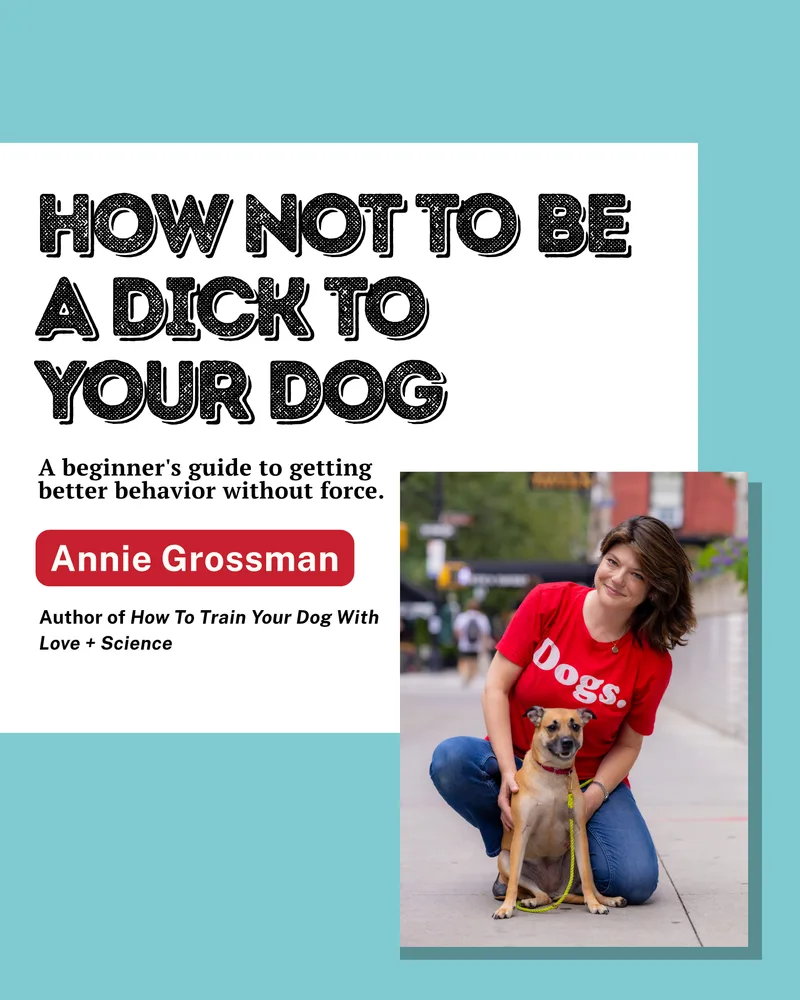
Virtual private training session: Yoshi, an adolescent Shepherd who jumps on people on the street
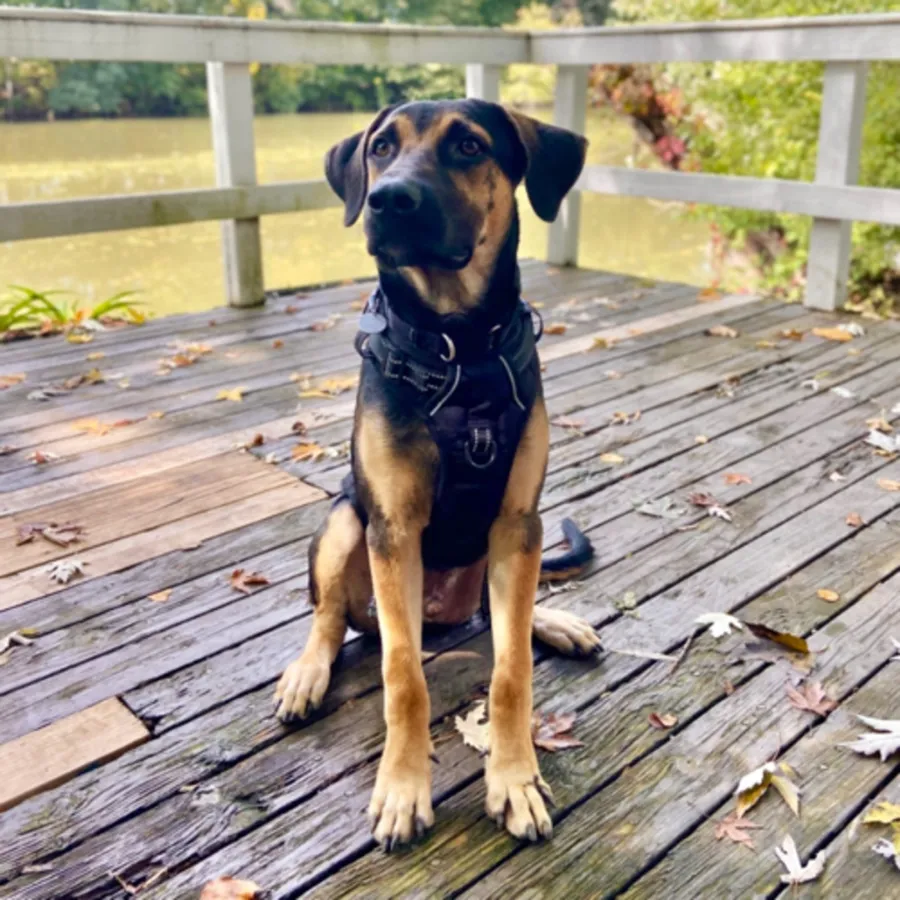
Sit in on an initial virtual private dog training session with Annie Grossman and NYC resident Kari. Kari lives near School For The Dogs with an 8-month old Shepherd mix named Yoshi. Yoshi likes to jump on people when they're walking down the street, and he is quick to rollover on his back when people greet him. Annie gives Kari tips on keeping his attention while walking outside, suggests how to set up practice sessions with people approaching him, and gives Kari some fun and easy exercises she can work on with Yoshi in their home.
Book a private session - Get a free thirty minute private session when you purchase our Good Dog Training Course - Liquid Treat Dispenser
Transcript
[Music]
Annie
This is a recording of a private session we did with a client. You can book a virtual or in-person private session at schoolforthedogs.com. And for a limited time, you can get a free 30 minute virtual consult when you buy our Good Dog Training course available at schoolforthedogs.com/courses. The trainer in the session is me, Annie. The client is Carrie who lives in Manhattan with her adolescent rescue dog, Yoshi.
Hi. Hi Kari. Nice to meet you.
Kari
Hello. Hold on. Let me just adjust the volume. I don't use zoom so I know nothing about this. Okay.
Hi.
Annie
Hi. So is this Yoshi?
Kari
Oh yeah. I gave him an antler to keep him busy, so he's right behind me.
Annie
Oh, yummy antler. Well, that sounds smart. So tell me a little bit about how Yoshi came into your life and then let's figure out how we can deal with… Doesn't sound like you're having major issues, but maybe a couple of things that we can improve upon.
Kari
Okay. So we adopted him early August. He was an instant foster fail.
Annie
And remind me, do you live in New York city?
Kari
I'm literally three blocks south of School for the Dogs.
Annie
Oh, awesome. Okay. Where did, where did you adopt him from?
Kari
True North rescue. So we've always wanted a dog for a long time, but I've never really pulled the trigger. I'd scroll Petfinder for a long time. We decided to, but you know, pandemic happened and I was home a lot and I'm like, I think it's time. And we decided to foster at first because I wasn't really sure or 100% ready to commit to a dog. So I said, let's start fostering.
The rescue that we got him from said that they were getting dogs from Puerto Rico. So that's where he's from. He's from Puerto Rico. They flew him to Florida. He saw a vet there and then they loaded them to a truck and ended up in New York. So, I picked him out of a bunch of photos. I knew nothing about him. He was six months when we got him and all they told me that he was a shepherd mix. We don't really know what kind of mix he is. I don't know if that matters. I wasn't really keen on finding out right now.
So we got him, he was six months. He didn't really have any problems. apart from, of course within the first week he was sleeping a lot. He was probably really exhausted. And of course he was scared. I think he was more scared of us than anything else. So I had very little trouble. I didn't even have to crate train him. He would go into his crate, no problem. Housebreaking took, how long did it housebreaking take? I'd say like a couple months on it. Maybe a little less. A few accidents here and there, but he's pretty fully housebroken now.
He's generally the dog he's just gets really, really excited around new people. Normally if he was a smaller dog, I wouldn't really make a big deal out of it, but he's going to be a big dog, I'm assuming. I'd rather stop the jumping situation now. And he's getting really stronger now. Like he would really yank on the leash when he wants to meet somebody and greet them. So it gets, yeah, that's my...
Annie
And I'm assuming given the times we're living in, you're probably not having lots of people over to your home.
Kari
No, no, we haven't had anybody here. So it's really people out on the streets when we were taking him for a walk. I mean, I'm biased. I think he's cute, but everybody seems to want to approach my dog and just kind of pet him and he gets super excited every time they do, and he hops up on them. And then he starts, there’s little whining, whimpering cry that he does, and then he goes down to the floor and then it shows the belly and then asks for a belly rub.
Annie
Right. So you mentioned that to me too, before explain the belly thing.
Kari
Yeah. He just really reveals his belly to everybody that comes down to pet him. And people assume that they're special, but like, Oh no, he does it to every single person. He will show his belly and just ask for rubs.
Annie
Yeah. So you know, that is considered like a “submissive” behavior, but it's not one that I think is necessarily a problem. I think it's probably a gesture of him saying like, Hey, I'm no threat, I'm friendly, let's be friends. And not a whole lot that's really wrong with that.
But just like a couple of questions, and then we can, we can address these specific things. What kind of building do you live in? Do you live in an apartment building? Is there a doorman? Is there a lobby?
Kari
There's no doorman. I mean, yes. There's like a little lobby, so to speak, where the mail is, where we wait for the elevator.
Annie
Are there hallways, like you have a bunch of neighbors on your floor kind of thing?
Kari
Yes, exactly. So sometimes when we're waiting for the elevator on our floor and the neighbor comes and wants to say hi, that's when he's wanting to jump. And he pulls on the leash and starts hopping up and trying to jump on them and stuff and then all whiny.
Annie
Okay. And what is he eating food wise in general? What's his diet?
Kari
Oh, he’s on kibble. I started him on a certain brand of kibble when we first got him. The same brand that the rescue gave me, but he wasn't responding very well to that because he would -- his stomach seemed very sensitive and he was very, very itchy. So I switched it and now he's better. We switched to a different brand and it was fine, but mostly he's been on kibble.
Annie
Okay. And you put it, like, how does he eat? Like in a bowl twice a day kind of thing?
Kari
Yeah, twice a day. We have a variety of different slow feeders. So we have the slow feeder with the outdoor hound one, the puzzle feeder, and then we have the Bob-A-Lot and I have a snuffle mat.
Annie
Great. And do you have treats that you use with him? Anything you found that he particularly likes?
Kari
He's very food motivated so he will eat anything.
Annie
Ok [laughs] That's good.
Kari
He’ll eat anything when it comes to vegetables too. Usually when I'm in the kitchen, he likes anything crunchy. He won't eat leafy vegetable. I tried to give him a spinach. He won't eat a spinach, but he’ll eat the butt a lettuce or the butt of a bok choy. Anything crunchy, he's into texture
Annie
He’s into texture. [laughs]
So here's my general suggestion for you on how to deal with his enthusiasm about greeting people. I think for the moment you should make the rule that outside, he doesn't greet people. His entire focus needs to be on you. And if people want to pet him, just say, sorry, no, he's in training. Or I always say he has glaucoma, [laughs] which it's like a meaningless thing that will make people go away. He has conjunctivitis! Actually, we even have these leash sleeves at the studio, which you can come by and get one, if you want, that say give me space.
But the main reason for that is because I want to work on it, and I don't think outside with unknown people and the craziness of New York city streets, et cetera, is probably the best place to be working on it. So I'd rather outside that the thing that you be working on is keeping his focus and attention wholly on you. Because if you think about it, you are the number one thing, that's going to keep him safe outside. And outside everything is more interesting than you because you know, he's with you inside all the time and outside there's, you know, a million people's smells, other dogs, et cetera that are more exciting than you.
The good news is he has a good appetite and it sounds like you're open to feeding him meals in a way that's not just in a bowl. So I would suggest having kind of breakfasts and dinners on the go, like every time you're out with him.
Kari
Yeah, this morning I brought his breakfast in my pocket.
Annie
Yeah. Pocket or get a good treat pouch. And it should be like, I mean, a bowl of kibble for a big dog like that. You're going to need to give him a lot. So like one piece at a time I would be like, take two steps, give a piece of kibble. I mean, see if he'll take the kibble. If you're competing with so much excitement outside, it might not be exciting enough for him to take it outside. You might need to up the ante, but you said he's not that picky and pretty food motivated.
So, you know, the kibble could work, you could mix it, do like 10% treats and 90% kibble so that every now and then he gets like a little bit of an extra something. And deliver the treat like where you want him to be. So deliver it, like by your knee or wherever he sort of is in relation to you. And maybe a little bit behind you. So kind of like the back of your knee because that's the spot that he's gonna end up defaulting to being.
And you don't need to even use a clicker. You don't need to use a word. You don't need to use anything if you're just super reliable about giving him that treat in that spot like every few feet. He's gonna default to being like, when given a choice, I should be right behind Kari a little bit to the right. And I don't really care if it's the right or the left, but probably better to just stick with one side again, so that he just gets into that rhythm of knowing that that is the magic special spot.
I also really like using lickable treats for this kind of thing. We have these liquid treat tubes, like treat dispensers we use a lot at the studio that you can fill with liverwurst or cream cheese or cheese whiz or peanut butter. There's also bark pouches, which kind of are kind of like baby food pouches or the Kalles, which is like a fish paste. That kind of stuff is nice, especially as it gets colder, if you're wearing gloves or whatever.
But again, it should be at a pretty good pace. So sometimes I'll be out, I'll pick some sort of marker on the street, like every other crack in the sidewalk or every other bumper of a car or whatever, every time I see a cab, but something that's going to happen pretty frequently so that you remind yourself.
Also, I suggest making sure that you're keeping the leash really loose. I like using hands-free leashes, especially when I'm giving a dog a lot of treats.
Kari
I bought the waist belt from your store, actually.
Annie
Oh, awesome. Perfect. That Squishy Face Waist Belt. Is that the one you got? Awesome. Yeah. Love that. That's great. Have you used it?
Kari
Yeah, I use it.
Annie
Okay, perfect. Great. Yeah. So use that and then you'll have your hands free to be giving delicious stuff. Also, when you're trying to get a dog to focus on you outside, I find it can be helpful to walk really fast and to switch directions a lot. So that your dog is like, got to keep up with her, and like, I never know where she's going.
The whole idea is to keep his focus on you. I recently interviewed this dog trainer who talks about being your dog’s superhero and being like selfish, like with your dog's attention. Like, you don't want your dog to have attention for anyone else. You want to be like selfish and keep it all for yourself.
I'm not saying you can never let people outside say hi to him. I think you could get there. I just think for the moment, let's now talk about how we can practice inside making sure that he is not out of control with people greeting him.
So I would see if you could get some of your neighbors to help out, or if not neighbors, then see if you can have some friends who can come over and even meet you. That's why I was asking about your building, cause it could be probably better to do it inside, whether it's in your hallway or, sounds like the downstairs area maybe isn't very big. But whatever you can do to set up situations where someone's going to be approaching him.
And then what you're going to do is drop something on the floor. What we want is for him to start making the association, like when someone approaches me really good stuff happens on the ground. The good news is like, he's still pretty young. And so I think you can like forge this new association pretty quickly, especially if all of his interactions with new people are going to start in this way, since we're going to be controlling a hundred percent of his interactions outside.
Inside, what is it going to look like? Someone's going to come towards him. You're going to reach into your treat pouch where you have some hot dogs. And you know, you could use a word just to let them know what's going to happen. It could be, you know, “find it” or it could be, you know, pineapple. It doesn't really matter what your word is. It could be a whistle, but do something to let them know, like I'm about to drop treats at my feet and then drop treats at your feet, regardless of what he's doing.
So, if you've gone through the good dog training course already, you know there's a lot about creating associations and classical conditioning. This is pure classical conditioning. So even if he's jumping up at the person, I don't care. I still just want there to be hot dogs on the ground. And for this, I would go as high as hot dogs. I would do something pretty high value, whatever that means to him.
And then once he has his head down on the ground, eating these things, let the other person who you are in cahoots with, have them get down and start delivering treats to him down low. Again on the ground, so you can make sure they're coming with something on them. And it sounds like then he likes to go roll over on the ground, which is non jumping behavior. So let, let him get that attention at that point. Like part of the reward can be like, now you get all this attention from this person.
I think you're smart to want to control his jumping early on in this way. You know, jumping is not an inherently bad behavior. It's just potentially dangerous if you have a big dog.
Kari
Especially if he jumps on a kid.
Annie
Right? Like if you have a Maltese, it's not going to be such a big deal. It's natural for dogs to jump. I mean, first they're excited, but also like they want to smell our butts and our mouths. And so that's why actually having the other person get down low can be helpful. And, you know, you can get down low too and like hook your finger in his harness or his color to keep him from jumping up. But at the same time, I want you to be like delivering the delicious stuff down low.
And ideally practicing this daily with different people. Maybe it can be an excuse to call up some friends you haven't seen in a while.
The other piece is, you know, what kind of plays he getting with other dogs?
Kari
Uh, well, when we take him out, we try, you know, it's really just dog parks. If we can take into the dog park. We used to take him to the Tompkins square one, but it was...One, it was just dusty. It was dirty. Sometimes it can be crazy. The kind of dogs that are there, depending on the time of day that you go there, it can be wild. So we've been taking the one on Stuyvesant.
Annie
Do you know about the school yard that we run?
Kari
Yeah. Yes, I saw the school uard and you have a pre-requisite though. So I know that I have to do a prereq. Like what is it an hour video?
Annie
Yeah, well, let me put you in touch with Adam who runs the schoolyard. I think it might be a really, a really nice thing for him. But maybe you can find a similar situation. I mean, basically our school yard is a private dog run that we run. There's a trainer there. We approve all the dogs who are there, they sign up in advance so we can kind of curate the groups. It's just, and it's clean inside. It's like an indoor/outdoor area. Yeah, like less dusty than you're going to find at the dog park, and also kind of like a closed group of people, closed group of dogs. And it makes such a difference in my opinion, to have someone like in charge, like if only all dog parks had lifeguards.
I think like good play with even just one other dog is really going to help him get his crazies out. I mean, partially I'm guessing he's like jumping on people because like he enjoys the social interaction. Jumping on another animal is something that dogs do when they're playing with each other. There's that kind of jumpiness, you know, back and forth. So if he can get some just like really good play in even just a few times a week, I think that'll probably help with his energy level.
And that could be one way, but also, you know, maybe like finding someone -- like I almost would rather you find one other person to kind of like, have like a play pod with, than bring him to the dog park. Only because like dog parks can be such unknown territory, like, you don't know who's going to be there. You don't know if it's going to be the right match for him.
Another thing you can do though, to help him get out some of this energy and also work to fortify the training that you know, Hey, when I say pineapple, good stuff happens on the floor or whatever word you're going to use that means like, Hey, go look on the floor. I think you could try doing some really good tug with him. Do you have a really good, long tug rope?
Kari
Yeah, we have a rope.
Annie
Yeah. Like long tug rope. I mean, I can even walk you through it right now or a flirt pole, actually that I think that leash belt you bought is by the same company that is by Squishy Face that makes the flirt poles that we sell. But what it's gonna look like, and again, if you want to grab it, we can try this right now.
Kari
I only have this. Just that.
Annie
Okay. That's pretty much like -- he's like, hold on. I see something delicious. I see a toy and I possibly am interested, but I also have this antler that's delicious. Mmm. I want my antler, I don't want this real toy. I want my antler.
Kari
[Laughs]
Exactly. He's like, Nope,
Annie
Do you have some delicious treats on hand?
Kari
Uh, let me grab something. Hold on.
Annie
Okay. Take your time.
All right. Can you position the camera so that I can see you guys standing up?
Kari
Okay. Hold on.
Annie
Great. Okay. Now I want you to put those treats in your pocket or sort of hidden in your hand. And actually before we get out the rope toy, let's just practice this: Pick what word you're going to say, find it or whatever you want. OK, say Find IT. I want you to say find it. And then I want you to put a treat at your foot. That's it.
Kari
Find it!
Annie
He was like, okay, got that. And do the same thing again a few times, and use whatever you have. That's like high value to him for this to begin with.
Kari
What do you mean high value?
Annie
Like it is the treat that you're using super exciting to him or moderately exciting or not much more than a piece of kibble?
Kari
Uh, hold on. Let me see, I might have some hot dogs.
Annie
Like cheese, hot dogs. Yeah. Like we want to see some, you know, umph in him. We want him to be like, Oh my goodness, I didn't realize we were playing this game this way!
Kari
Okay. Don't don't don't trip over yourself. All right. [laughs]
Annie
Oh, see, now you see the difference in him! He was like, he was like sauntering up to that treat before, like, it was whatever. And now he's like spring loaded. Okay. Try it again. Just like three times, say find it and put the treat on the ground. Just like do that three times in a row.
Kari
Find it. Find it. Find it. Okay. Wow. Okay.
Annie
Okay, great. Now I want you to get out that tug toy and see if you can get him interested in tugging with it. And then after like five seconds of tug, I want you to say, find it and then put the thing on the ground. He's like, hold on. Is there still stuff on the ground? Okay.
Kari
He's not much of a tugger, because he's very gentle. We tried to play tug with him. He'll gently bite it. And then when we try to tug it, then he'll release because he's just too gentle.
Annie
Aww, he's too gentle. What about his fluffy toys?
Kari
Let’s see.
Annie
I think you need to be a little bit more exciting. Like bring it, tease them with it. You want this? No, you don't want it. You want it? No, you don't want it. You want it? You want it? No, we can't have it. You can't have it. You're not allowed. You're not allowed.
He’slike, I don't want this. What about his antler?
Kari
Okay. Yeah. Can you bring me the angler? It's in the kitchen. You put it in the kitchen. Okay. Hold on.
Annie
He's very cute. So how old was he when you got him?
Kari
Six months. I mean, we don't really know. I don't know if it's six months flat, six months in change. Six months and three weeks. So we don't know his exact age, but we would by [inaudible] by November 11, he would have been with us for about 3 months now. So he would be about nine months?
Come here! Come here! There you go, come!
Annie
Oh, there we go. Okay. Good. That all right now, before he lets go of it, try the find it thing. Okay. Oh yeah. Okay.
Kari
Find it!
Annie
Good. Oh and I think he didn't see it.
Kari
You see it right there.
Annie
So suggestion, put it on that yellow triangle or a diamond shape the ground just so he knows where to find it. All right. Again. Get him interested. Tease him a little bit. You want this? You can't have it. It's mine. It's mine. Oh, you want this? Oh, you want it? Oh yeah. There. Now I see some bounce in his step. Yeah. Good.
So this game -- keep going. Good.
So, you know, one thing that you're doing here is you're getting him excited and then teaching him that find it means, go look on the ground. So he's excited right now about his antler, not another person. But it's still a state of excitement that you're breaking him out of. He's more interested in the treat though than the antler. [Laughs]
Kari
[Laughs]
Like when are you dropping that hot dog?
Annie
Let him have the antler. Let's see if he chews it on his own for a second.
Kari
There you go. Oh, he just dropped it.
[laughs]
Just dropped it right away, right away. Cause he's like, no, I want what you have in your pocket.
Annie
So, this game is also a way to practice, drop it.
Kari
He already knows drop it.
Annie
Well, great. So he's going to have no problem doing this game then because he's going to learn very quickly. Oh, this is like drop it, where I let go of the thing I want, I look away from that person I'm excited about and something good happens.
Because we're starting out, like I call it criteria zero, right? Like in the beginning, there's no criteria. As soon as a person's approaching, good stuff happens on the ground. It doesn't matter. You know, if he's barking or jumping or whatever, it's going to be someone approaches means good stuff happens on the ground.
What you will then be building up to is having some kind of criteria for that behavior. So as you progress, and this could be, you know, next week, you're going to start saying like, Oh, you know what? I'm going to wait until you look calmly at that person, and then I'm going to give you a treat on the ground. And then that could go, you know, go up to like, I'm going to wait until you sit, and then the treat is going to come on the ground, and then the person's going to come over and greet you. And that's part of, of course that's part of the,
Kari
I first I'm going to start it by just dropping it.
Annie
Right. And like I said outside, you can give the treats at such a pace when you're walking him outside that I don't even think you need to have a word or anything. Cause the cue is just gonna be being outside, being near your leg when I'm outside near Carrie's leg treats appear at her thigh every few minutes, err, not every few minutes, every few steps. So you don't even really need a word there.
The reason I want you to use a word here, like find it or whatever is because I want you to let him know like, Hey, there's this really good thing coming? And it could be, it could be a whistle. I mean, it could even be a clicker. It's just an indication of like, Hey, there's this delicious thing coming your way. So put your head down and look for it. And when we use a clicker with find it, like that's when we'll sometimes we'll start working in the clicker when the dog's head actually starts going to the ground.
Actually, you know, we have a couple of minutes left. Let's just do, this is a fun exercise I like to do that can help build this behavior of looking down on the ground, which also by the way is like a very calming behavior for a dog. Like we want to encourage looking down. So have you used a clicker with him at all?
Kari
Yeah. I have one.
Annie
Okay. Grab the clicker.
Kari
Okay.
Annie
So this is actually teaching a bow, but it's the same thing as teaching them to look down at the ground. So this time, put the treat on the ground. I just want you to click as soon as his head goes down to it. So just drop the treat and now click. There.
So you're clicking. You're normally with the clicker, we give the treat after we click, like click indicates a treat is about to come. Here what we're doing is, he's still going to eat the treat after the click, but you're giving the treat first, if that makes sense. Okay. So same thing again, just put the treat down right in front of him and then you're clicking. Good. You're clicking that downward motion again. Same thing. Good. So do that like three or four times. Keep going. Good.
Now I just want you to say “bow” or “bow your head,” or I used to say, show respect with my dog or whatever you want the cue to be. I want you to say it like a hair before you put the treat down
Kari
Bow
Annie
Perfect. Good
Kari
Bow.
Annie
Few more times.
Kari
Bow.
Annie
I suggest holding your clicker and your treat in one hand so that he's not so focused on the treats, cause I want them to be hidden away. Are you right-handed? If you're right-handed I suggest putting both the clicker and the treats in your left hand and then sort of picking one treat out of your left hand with your right hand.
Clicker and treats in one hand.
Are you right-handed?
Kari
Doesn't matter.
Annie
Okay. So, well, you're going to have them both in one hand and then your empty hand is going to pick the treat out of that hand.
Kari
So hold on. So I say the cue.
Annie
Yep. Say the cue and then drop the treat and click as he's bowing his head. So the cue comes first.
Kari
Okay. Bow.
Annie
And now we'll put the treat down.
Kari
I got it.
Annie
Good. And good and same thing again.
Kari
Bow.
Annie
Good, good. And again, right away.
Kari
Bow.
Annie
And put the treat down. [click] Good. Okay.
Kari
Bow. [Click]
Now my timing is off. All right.
Annie
It’s okay. There's room for a sloppiness with this exercise because you know, the clicker, we're using the clicker to pinpoint that moment that he bows his head, but we're doing basically the same thing that I was suggesting you do with people when people approach. It's just, I'm having you add in the clicker to add in that specificity. But it's not strictly necessary. Because what he's going to learn is every time she says bow, she drops something on the floor.
Now you're not always going to be dropping something on the floor, but that connection is going to become strong enough that he's going to start bowing his head when you say bow, without you putting a treat on the floor.
Kari
My question about that, is that in your experience usually how long does it take for it to get to that point where he’s just gonna associate it immediately?
Annie
It's all about having speedy repetitions. Because you really want to sort of like get into his brain, This, like I look up, I look down, I look up, I look down, I look up, I look down. Like you don't want to allow a lot of room for thinking in between that. So you could already try experimenting -- and he just looked down, I saw him look down.
So you could say, I mean already, you could try and say bow.
Kari
Bow.
Annie
And wait, pause. [click]
All right, this next time, say it and then pause. But don't give the treat until-- watch his head. I want you to watch his head for any downward motion after you say bow, and that's when you're going to click.
Kari
Bow.
Annie
Okay, wait. [Pause] Move as if you're going to give him a treat.
[pause]
Kari
Should I drop it?
Annie
And put it down. Yeah. [Click] Yeah. So I don't think he's quite at the point of like, I look up, I look down, I look up, I look down. I would build, you know, you want to build that behavior without expecting him to look down, without waiting. Like I suggested let's wait just to see if he would do it. He didn't do it.
I think I would suggest spending a couple of days of just building the up and down pattern and then work on seeing if you can say the cue and he'll do it. Okay. Does that make sense?
Kari
Yes.
Annie
We always, we always try and get a behavior pretty solid before we add a cue. But sometimes you can start giving the cue a little bit early in my experience. As long as you're consistent about it. You don't want to be giving a cue and then not having your dog do a behavior if it's really important, like that's a failure.
But in this situation, it's probably not that important for him to bow. And also it's more about just building the up-down behavior, like having the cue to go with it is really just kind of like a bonus in my opinion.
I think it's a good thing for you guys to practice because it is reinforcing this behavior of looking down, which is going to help with his greeting of people. What a cutie. And it's interesting actually teaching you know, I'll share with you, I did a podcast episode on teaching attention.
Kari
Yeah, I’ve been going through your podcasts this week though. That's why I heard the episode about jumping, and I heard the episode about, I forgot what it was...
Annie
Oh I don't even remember, I'm glad there's an episode about jumping.
Kari
There was one, but it was a while ago. And it’s the same issues with me, but most of the question that was on that episode was people coming to the house. But I mean, like I don't have people, guests, it’s really just people on the street.
Annie
Right. But at least you can try and make a slightly more controlled environment. What I was going to say is, and I can, there's an episode on teaching attention using what I call like the magic triangle method, which is really just teaching the opposite of bow. It's teaching them to look up. And I can't remember offhand, but I think in that one, I explained how you could do down, looking down instead of up.
But those are really two nice things I find to teach in conjunction with each other, because you can teach things in pairs often faster than you can teach things on their own. And it keeps the rate of reinforcement high, cause you could be rewarding up, and then rewarding down and up and down. And you're teaching your dog where you want their head to be in space that certainly can be, can be really useful.
You know, another way that you can work on teaching him to put his head down is to teach him to target something like a post-it note. Have you done some hand targeting with him?
Kari
Yeah, he can do Touch and I had that little stick with a little box.
Annie
Awesome. Yeah. So do that, and just put it on the ground or see if you can teach him, if you can transfer his ability to touch the Baton or your hand to touching just like a post-it note, and then reward him when he touches his post-it. His nose to the post-it note on the ground. Again, that's just like a way to help him figure out like where in space you want his nose to be.
In summary: Bring food on walks. It can be his regular kibble, but if you need something more interesting than his kibble try that. Of course you could always mix it up a little bit of both with a treat pouch. I'm so glad you already have the hands-free leash. Keep your walks fast paced.
Don't let other people interact with him. Changed directions a lot. See if you can arrange some good one-on-one play dates. They don't even need a lot of room, but I think a one-on-one play day in my opinion would be much better for him, especially as a young dog, than going to the dog park.
You know, a lot of dog parks don't have patience for puppies and adolescents. And I don't want someone, an older dog, taking out those feelings on him because he's still so young and impressionable. Then see if you can set up some rendezvous with neighbors or friends who can help in your hallway or, you know, some sort of more controlled environment than on the street. He can still be on the leash.
He could still be on the leash and you're going to practice find it, putting the treats on the ground. And then you can kneel down and put your finger in his collar to help keep him from jumping up if necessary, and make sure the person's giving him attention when he is down or sitting. When he's not jumping up.
Then indoors you know, practice this up and down game. And you can practice the find its as well. I just want you to have, I want you to have like a joystick basically with which you can control, like whether his head is up or down. I think that's going to be really helpful for you. And based on what I've just seen in this like little, tiny window into his life, I think if you practice, if you give this 10 minutes a day, you're going to see a huge difference in a week, in my opinion.
And every meal is an opportunity to practice and your practice sessions can be 30 seconds. Like they don't have to be really long.
Kari
Yeah, no, I mean, when I was going through the good dog training I'm still building on a lot of things that he's learning. Like look and sit. I mean, he'll do them here at home, but when it just gets outside of the house, then it's hard to get his attention, especially when I'm telling him to look when he's like seeing a squirrel in the street.
Annie
Yeah. And that's completely understandable. Like I said, you, no offense, but you're boring outside. [Laughs]
Kari
No, no, 100%.
Annie
And, if you're listening to podcast episodes, I definitely suggest listening to the one I did a few weeks ago with Dom Hodgson and his whole theory about like, you should be a superhero, like you should need to be selfish. Because I honestly never thought about it in that way, but I really liked the way that he puts it. It's a funny way of thinking about it, but it makes sense to me now, like you want to be selfish of your dog's attention. Like your dog's attention is finite, and you want to take as much of it as possible, especially when you're outside.
So I think, sort of creating the association of like food, associating food with you when you're outside, like you're just going to get a lot more leverage out of a single meal than... I mean, he doesn't need to learn to feel good about the bowl in the kitchen where he normally gets food. But he does need to feel super excited about you outside because outside you turn into like a food dispenser.
Kari
Yes. Okay. Can I just ask you one question? I just wanted to understand the prereq for the school yard. Whew. Usually what happens in that one session?
Annie
Let me put you in touch directly with Adam, because I know that they've changed it recently, and I don't want to give you wrong information. So I will do that right now.
Also, do you know about our day school program? The day school is a drop-off program that we have nearly every day. Drop off is like between eight and eight 30 and pick up is between 12 and 1230. And there's a maximum of six dogs and there's a minimum of two trainers. And they work with the trainers the whole time and they play with each other. So it's just really good structured training and play time. I think both of those things could be a really good thing for him, even if it's just once a week.
Because also like you're going to learn, especially schoolyard, I mean, day school is drop-off, but school yard, you're going to learn what good play looks like, you know, because you're there the whole time. They're 30 minute sessions. So yeah, I'm going to get off right now and I will put you in touch with Adam right now and also with Erin.
But yeah, I think those would be great for him. And as part of the, I think you got the good dog training ultimate package, so you also get a month of email support. So if you have any questions.
Kari
About that, then I never actually got to try that.
Annie
Yeah. You can do that whenever you want. Just email me and I will either answer you directly or I'll hook you up with a trainer who will be your point person.
Kari
Okay. Thank you very much. Thank you.
Annie
It was really great to meet you and he's so cute. Hope this works out well. Let me know if you're able to get any practice videos and send them to me. I'd love to see.
Kari
All right. Thank you.
Annie
Bye.
Kari
Bye.