April 9, 2018 · 43 min
Our Canine Cousins: On behavior & evolution
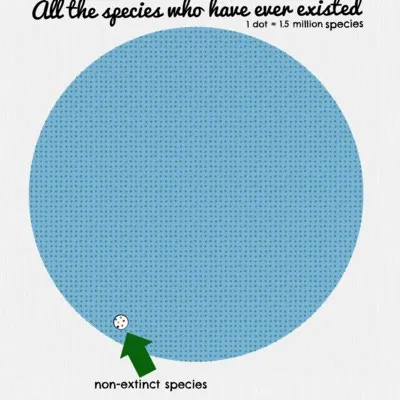
Humans and dogs have more in common than what initially meets the eyes. As non-extinct land dwelling mammals, we are both species that are in a special category that makes up 1/20th of 1/20th of 1 percent of all the species of animals who have ever lived. Annie attempts to look at the dog/human relationship from the long lens of the evolution of life on Earth, and helps us think about about what we can extrapolate about dog behavior based on what we know about ourselves.
Annie Grossman owns and operates School For The Dogs in NYC. Studio. Shop. Instagram: Instagram Facebook
Transcript
Annie
Hey Humans. So, so far on this podcast in past episodes we have talked about things pertaining to dog owners like where your dog is going to pee or poop, what your dog is going to eat, etc. But today I want to about two things that affect all of us whether or not we own dogs.
Say hello to our special guests: time and evolution.
Now I don’t think most people think a lot about evolution when they’re training their dogs. This might be because they're simply too busy trying to figure out where their dog should pee and poop and what they should eat. But it also might be because we tend to think more about dog training than we do about dog learning and dog learning, like all animal learning, has been a huge factor in their success on this planet as a species. A key to survival is the ability to adapt your behavior in such a way that’s going to be conducive to living in a given environment and natural selection has favorite animals who are good at figuring out what works in order to not expend energy unnecessarily and to stay alive. The inability to adapt to certain environments has caused many other species to not succeed.
In the last couple decades, so much about dog training has gotten muddled up with trying to understand wolf behavior. Now there's some problems comparing dog behavior to wolf behavior, but I don’t even want to get into that right now. My larger feeling about trying to understand dogs by understanding wolves is that it's kind of over-complicating the situation because wolves learn in the same way that dogs learn but dogs learn also in the same way that we learn and we know a lot more about ourselves than we know about wolves. So if we are fishing for kind of animal to compare dogs to in order to better understand them, I think we are better off looking at ourselves.
One thing that I often tell my clients is that dog training is all about understanding animal behavior and we all understand animal behavior a lot more than we give ourselves credit for, simply because we are animals and we are behaving, all the time.
**music**
Now if this isn’t the most common approach to dog training, this effort of looking at what we have in common before we look at what separates us. I guess it's because it's sure it is easier to see all the things that make dogs and people different, right?. I'm not furry. I don't eat my food from a bowl on the ground. I don't like smelling other animal’s butts. And of course, there's so many things I can do that my dog can't do: he can't walk on two legs, he can't speak. I'm pretty sure he can't understand that there are things in the universe that exist light years away from here . There are certainly many ways in which we are not alike.
And for most of Western history, there's been a focus on how un-alike we are. Aristotle put animals in a separate category from humans and suggested that animals were really only around to serve humans. And a lot of his arguments on the subject got absorbed into the Christian church through Thomas Aquinas. Immanuel Kant in the 1700s, he argued that animals were merely things- that they weren't self-conscious , that they were merely a means to an end. And then there was Rene Descartes in the 17th century who asserted that animals can feel pain. His position was that nonhuman animals were basically like very complex windup toys. To a lot of people, still, it, I think, would seem sacrilegious to compare dogs and humans in any kind of meaningful way but this is dog training darnit!. Let's break the rules. Let’s question Descartes. Let’s question Kant. And let's think what it would be like if an alien fell to earth and was trying to compare humans to dogs or humans to any other species.
**alien chattering in background**
I can think of two major things that an alien might find as points of commonality between humans and dogs. One is that dogs and humans as well as wolves and fish and birds and whales are all animals. The other thing is that we have continued to evolve and survive on this Earth up until now. Evolution of course isn't just physical, we tend to think of ways in which we physically have evolved to stay alive long enough to procreate but behavior is also something that has evolved and you could argue that it's in large part because of our ability to adapt our behavior that both dogs and humans are such wildly successful species.There certainly are a lot of us.
But attempting to look at the world in this way I find can be really hard because it involves thinking about numbers that are so incredibly huge that they seem almost impossible to grasp . It’s been something like 30 million years since humans and dogs shared a common ancestor and that seems like a really long time until you consider that there's been a life on earth for 4 billion years, so like 30 million years ago might as well in the 90s
**music**
So just as an exercise, I have plotted out the 4 billion years of life on Earth on a clock. Let's imagine two clocks so that we have full 24 hours and I am actually going to draw this out and put it in the show notes at AnnieGrossman.com so you can see it there.
With this arrangement, one minute would equal about 33 1/3 years and the first single- celled life shows up at midnight, so midnight, 1 o'clock, 2 o'clock, 3 AM, 4 AM- it’s not until about 6 AM our full billion years later that we start to see the first multicellular life on earth.
My opinion, this is around when things start to get exciting. Of course, there are still many kinds of the multicellular life that were around 3.53 or 3 billion years ago that are still around today.
One of them is called Planaria and Planaria are, there few millimeters long, I believe, there kind of flatworm, there have a digestive system, they have muscles and they’re actually rather similar to us in they have central nervous system.
**music**
I have actually had Planaria- not like I had them, like a condition. I actually bought a couple dozen Planeria which you can get at science supply stores and there about the size of a grain of rice. I bought them to challenge the School for the Dogs apprentices to train them, because if you can understand how to use reinforcement and punishment to train this simple organism you're well on your way to understanding how to train a dog. It’s difficult because they don't eat very much or very often and they don't have a huge repertoire of things that they do but I built some little Planaria mazes and I'll post photos of them in the show note. And it's entirely possible to train them to go through these mazes because they learn in the same way we do. And if they were incredibly good at learning and good at adapting they would have survived for 3 billion years.
So we’re continuing through our morning of our 24-hour clock going past noon through early afternoon really for most of that time if you're alive, you are probably blue-green algae. There is not a whole lot going on. It’s not until about 3 PM that we start to see like the divergence of the kingdoms between animals and plants and fungi and then the first invertebrates don't show up till 8 P. Vertebrates come into the picture at around 9 PM or something like half a billion years ago. Dinosaurs get to the party at around 10 PM. Mammals 11 PM in our 24 hour day. And the first placental mammals, which are the closest common ancestor that we have with dogs, only show up somewhere between 11 PM and midnight.
Now even if we only look at the last 30 million years which would be like the last minute of our 24- hour clock, it's really only been a couple of seconds since wolves started hanging out with humans and became dogs or since humans had any kind of civilization to speak of at all. So it kinda boggles the mind when you start looking at our evolution as different species over such a huge period of time. But even more than that is that we've made it this far at all.
Nature is very efficient. The Planaria have a central nervous system and so do we. It's not like every species is running its own operating system we’re all on the same operating system, just maybe different versions. And learning comes preinstalled in that operating system and learning is basically figuring out what we need to keep doing in order to stay alive and what we need to not do so that we don't die before we have a chance to pass on our genes. When you start to think about how many species haven't survived to thrive the way both humans and dogs continued to thrive we’re really and very, very special elite group
**music**
I kinda think of it like this. I live in New York City and I'm looking at the building across the street from me right now outside my window. It’s a high-rise. I can see the guy standing in the window right across the street and I could probably come up with 10 ways off the top of my head that I'm sure I'm different from him. And I have to think really hard to come up with any reason why I would ever want to have a conversation with this guy. But if I were visiting Sydney, Australia and happen to start talking to someone and realize that he was this guy who lives across the street from me in 3B in that big apartment building, we’d find a million things to talk about because we live on the same block. So I'm sure we would talk about why the coffee place always smells so weird or Rashida at Duane Reade who always takes forever to ring anything up or the fact that there's a nail salon on every corner. Why? Why so many nail salons?
**alien chattering**
8 million. It’s a big number.
That’s how many people live in New York City and it's also the number of animal species that currently exist on Earth. Looked at in that way; however, it's actually a really small number. 99% of all species that ever existed are now extinct. Now most of the animal species currently on Earth are invertebrate animals. These are animals that do not have skeletons and these represent something like 95% of all animals on Earth. Most of the insects but there's also mollusks, crustaceans, corals, spiders, scorpions etc. But it's not just that most species of invertebrates are insects; most animals on this earth are insects. There are 20 to 30 tons of insects for every one person on the planet. I was talking to another School for the Dogs trainer about this episode, Ilana Alderman, she's one of my very good friends. And she said, “Yeah, you know, we are basically a planet of insects.” And I said, “yeah, but there are lots of other kinds of animals on the planet too.” And she was like, “well, it's kinda like this: if you had a really large put full of beans and there were a couple lentils in the pot- to a close approximation, you have a pot of beans.” I thought that was a really funny way of putting it. We are basically just some lentils in this big pot of beans.
**music**
Now, do not underestimate the intelligence of insects, if their ability to learn and adapt weren't so good there would not be so many of them. Ants have very complex social systems, they can learn to use tools. Recently, there is a study that came out about mosquitoes that actually said that you can basically train the mosquito to stay away from you by swatting at them because they’ll learn to associate your unique smell with danger. And a few years ago, Ken Ramirez who used to be one of the heads of training at Chicago Shedd aquarium and is now one of the top people at the Karen Pryor Academy, which is where I got certified in dog training. Ken did this project with a botanical garden in London, a few years, where he trained 10,000 butterflies to fly on cue to go along with a live symphony. And he'd never train butterflies before and, as far as I know, he wasn't born with any kind of special knowledge of butterflies but he figured out how to do it because he understands how animals learn
Ilana is actually a very accomplished fish trainer and most people don't think that fish can be trained but they can. And she's trained fish to do things like swim through hoops and play basketball and lots of trainers like to experiment with training fish and also chickens among other animals because if you can build those skills you're really building your ability to train dogs or any other animal. And fish and chickens are among animals that are very hard to train using any kind of punishment or physical manipulation- you have to really do some brain work in order to train them.
Just like dogs and humans, they can be trained using classical conditioning and operant conditioning and really thinking about management in a smart way and assessing the appropriate reinforcers and delivering them with good timing. It’s the same recipe.
Anyway, humans are vertebrates. There are about 70,000 vertebrate species. Most vertebrate species are fish and if you're not fish and your vertebrate you are probably a reptile or a bird or an amphibian. Of the 5% of all species on earth that are vertebrates, only about 5500 of them are mammals. We’re part of this group, these non-extinct mammals, that both canines and humans are that make up about 1/20 of 1% of all animal life on Earth. Or 1/20 of 1% of 1% of all the species that have ever lived.
**music*
Male speaking: “The difference in mind between man and the higher animals greatest is certainly is one of degree and not of kind.”
Annie
Excellent job. That was my husband interpreting Charles Darwin and I just wanted to point out while we’re talking about things on a larger scale time-wise, Darwin was writing relatively recently. There are people who are alive today who knew people who were alive before Charles Darwin published The Origin of the Species in 1859. And Darwin's work was revolutionary for many reasons but largely because he was saying that animals didn’t evolve because of which ones were strongest or more intelligent; they evolved because of their ability to adapt and adjust to ever-changing conditions. And as Jason read from Darwin, he suggested that evolution of all animals was part of the same system. Animals who are domesticated are animals who live off of us. And we tend to think of this as something that we've done to animals who are domesticated, as if we placed a spell on them that made them tame. But Darwin was sort of puzzled by the fact that so many domesticated animals shared certain physical traits, like spotted coats and floppy ears and floppy tails in lots of domestic animals from cows to pigs to dogs even mice. Traits that aren't found in their wild animal counterparts. He saw this as a conundrum because he knew the farmers weren’t specifically selecting only to breed the cows that had spots and floppy ears, same thing with dogs and mice . That these things were happening on their own but he didn't know how these traits could have been selected for at all to begin with if they didn't exist in nature.
Wolves, for example, there aren't some wolves who happen to be just particularly dog-like and people were going in selecting to only breed those dogs. We don't think that's how things happened. If you're interested in this topic, you have to read Ray Coppinger’s work. He died recently. He published a couple books shortly before he died but his classic book is called Dogs which he wrote with his wife Lorna Coppinger. And in it he calls the popular idea of how wolves evolved into dogs the Pinocchio hypothesis. The popular idea that humans took pups out of wolf dens and then turned them into pet dogs by taming them and training then and going hunting with them and that after many generations of this treatment wolves turned into dogs.
Coppinger called BS on this idea and makes the really strong claim that dogs evolved into what they are on their own with natural selection selecting for lack of fear, so the ones that came closest to our dumps were the ones who were able to consume the most calories and expend fewer calories getting those calories and also not have to take the risk that is associated with hunting which was how the wolves would otherwise be getting their food most likely. And Coppinger was an ethologist and that's really what ethology is all about- it's figuring out how animals make a living, how they expend their energy and how they take energy in with a surplus of energy equaling survival in general and lack of energy and insufficient food or, not enough food to warrant the effort that's involved in getting the food, is more likely to cause a species demise or, at least, an individual's demise.
The thinking is that a lot of the traits we associated with domesticated animals like in dogs: the floppy ears, the spotted coats, the curled tails - that these traits just happened to come along on the same DNA that produce dogs who were fearless enough to come close to us and also good at adapting to us and our lifestyles is an order to benefit their own survival.
This theory has been tested in a really amazing experiment that's been going on for something like 60 years in Siberia on a fox farm. Dimitri Belyayev was a Russian geneticist and he split the foxes into two groups and one group they let breed on their own, however, they pleased and the other group, they controlled their breeding and only bred the ones that were least scared of people. I believe he held a gloved hand into each fox’s cage and the ones who didn't attack the hand were permitted to breed and that was the only criteria he picked. And the foxes weren’t raised any differently than one another, they were all raised as they always had been. But within just a handful of generations, they were breeding, basically dog-like foxes who were wiggly and liked being around humans and when they put the embryos of genetically-tame foxes into the uteruses of the non-tame foxes and had a non-tame foxes raise these foxes who had been bred for their niceness basically; the foxes still came out nice- it didn't matter that were born to and raised by mothers who were not tame. But the most amazing thing is that these dog-like foxes actually started to look like dogs and took on those physical characteristics that I was talking about that are seen in so many domesticated animals like spotted coats and floppy ears. And all these changes happen super quickly, not over millions and millions of years but over just a few generations. The Belyayev Fox study really offers some concrete evidence that evolution based on certain behavioral tendencies being naturally selected for results in domestication happening really quickly and there is increasing evidence that primates evolved in similar ways. Sort of self domestication process.
*background music*
So let's just take a moment to review. You should be already familiar with the workings of animal behavior because you are an animal, who is behaving all the time and you are working with another species who has shared billions of years of evolution with you. You're also working within a science that is not species-specific and when we’re training dogs we’re training an animal that is part of a very tiny, highly-specialized stratum of animal life that you occupy as well. Lastly, you are working with an animal that is the product of natural selection that has occurred due to their ability to coexist with you. So all that said, you're probably asking yourself, “Why am I not already an expert dog trainer.”
I have a couple of theories about this. One is that when we start talking about animal behavior and animal training, it brings up a lot of people's fear about control and, specifically, about being controlled. So much of dog training has traditionally been about us trying to control dogs and if we think about animal training as it relates to humans it can be scary to think that there might be other forces controlling us. It brings up a lot of concerns about freedom and people don't like to think about ways in which they are not free. In my opinion, we control each other a lot of the time and we’re under other controls too but nobody wants that pointed out. It's easier just to think that there must be completely different forces at work affecting our behavior versus what's affecting our dogs behavior.
As an animal trainer, though, it's really hard to not see the continuum of control. I think we’re also not more effective dog trainers because we live in such close proximity to them in so many ways that we just figured we pick up things by osmosis and we don't even see the kind of projection that goes on. Most of us at some point or another have attributed something a dog has done to something like spite or jealousy or anger or sadness or boredom or stubbornness but we’re only ever guessing because we can't know exactly what's going on in their head at any point, just like you can only have sort of roughly guess what any other person is thinking. Dogs don't say anything when we attribute things to them in this way but can you imagine how many times you'd be told you are wrong if you told someone else, you know, “I think you did this because you were being stubborn.” Rare is the person who would turn around and say, “You are absolutely right. I did that because I was being stubborn or I was being spiteful.” Usually people would say, “how do you know what I was feeling” and would absolutely right. You don't know what they were feeling. Can you imagine trying to attribute the behavior of another species of animal to these sorts of things? Stubbornness or spite? If he doesn't do what you wanted him to do, is it because he's being stubborn? What about if it were a bonobo monkey or a butterfly or a fish. And even if you accurately can know what someone else is feeling, that doesn’t necessarily explain their behavior.
If this habit that humans have of projecting our emotions on dogs in order to explain and change their behavior has persisted, I think it's because at this point dog ownership is pretty much a leisure activity. If our life depended on understanding them we would probably be better at it. On the other hand, their lives have depended on understanding us. So generally speaking they've been very forgiving students and if you call them stubborn or willful or spiteful they don't even know, they don’t even care.
*music*
Another reason why I think we’re not just innately better at training dogs is that thanks to our great success as a species and humans, a keen understanding of the workings behavior is no longer needed for us to survive. We’re able to just kind of stumble along and make babies and salaries just fine at this point without ever having to stop and really consider our ancestor’s ability to adapt their behaviors and learn from their environment in order to survive. It’s like we've inherited their ability to learn but we’re using that learning at this point to figure out how to lower our cable bill. And because it's not so important to our utter survival we don't even think about the process of learning that much anymore.
For instance, we think about learning as something that happens in school and you get a grade, but learning as it has to do with survival doesn't involve grades- it's pass-fail, you either survive and procreate or you don't. It makes me think about the beginning of the film Idiocracy which is a 2006 film by Mike Judge about what the world might look like five centuries from now.
*intro clip from Idiocracy plays*
As the 21st century began, human evolution was at a turning point. Natural selection, the process by which the strongest, the smartest, the fastest reproduced in greater numbers than the rest, the process which had once favored the noblest traits of man, now began to favor different traits. Most science fiction of the day predicted the future that was more civilized and more intelligent so as time went on things seemed to be heading in the opposite direction- a dumbing down. How did this happen? Evolution does not necessarily reward intelligence. With no natural predators to thin the herd, it begin to simply reward those who reproduced the most and left the intelligent to become an endangered species.
Annie
And then we tune in on a very loud and chaotic home and the “bloop” noises represent babies being born into this home.
*clip from Idiocracy plays- couple realizes female not on birth control*
Annie
And then we see a very prim looking couple in their 30s.
*clip from Idiocracy plays*
There is no way we could have a child now. Not with the market the way it is. That just wouldn't make any sense.
Annie
And now back to the first family.
*clip from Idiocracy plays: family yelling at each other, you hear “bloop” noises. Clip goes back to prim-looking couple”
Wife: Well, we finally decided to have children and I am not pointing fingers but it is not going well.
Husband: And this is helping.
Wife: I am just saying that before I have in vitro maybe you should be willing to…
Husband: It’s always me right? .
Wife: Well, its my sperm count.
--sound of sperm yelling at each other
Wife: Unfortunately, Trevor passed away from a heart attack while masturbating to produce sperm for our insemination. But I have some eggs frozen so as soon as the right guy comes along….”
Narrator: As so it went for many generations.
Annie
It’s a really good movie.
But it’s like humans have evolved to be affected by the laws of learning as rooted in the science of behavior but to get through life without needing to be really good at implementing these laws. Our understanding of evolution usually stops before we think about it on a behavioral level. Consider the fact that self-help is such a huge industry- I don’t think there is any other animal that has anything like self-help group of devotees the way humans do . And I wonder if the self-help industry thrives because we have so much trouble understanding our own behavior, let alone changing our behavior. Behavioral change is one of the great challenges we seem to face as humans. We don't know how to do to ourselves even if other people are changing our behaviors all the time without us even realizing it.
But I think our fuzziness about behavior could be seen as a luxury that resulted from our success as a species. For most animals, a crystal clear understanding of what works and what doesn't work is the main thing that’s kept them alive. This is why I think dogs are often better at training their owners than vice versa. Only some people decide to do dog training but, let me tell you, all dogs are doing human training all the time. Take something like jumping up on the kitchen counter; if the behavior of jumping up on the counter results in your dog getting food, your dog has learned that the behavior works at least some of the time and he will most likely do it again whenever he has another opportunity. Even if you yell at him after he does it, the behavior has still worked. But if you yelling at the dog for jumping on the counter doesn't work, do you think that means you do it again? Or do you think next time he comes up in the counter, you are going to go ahead and yell at him again. I think if we can figure out how to be better at doing what works and not doing what doesn't work, we can all become better dog trainers and maybe better human trainers too.
You might argue that dogs don't need to be worrying about their survival either anymore, that they are provided with everything that they need and that we are even making sure that they procreate in great numbers. They don’t even need to go through the effort of having sex anymore, as so many dogs are now the product of artificial insemination. But their evolutionary transition from life without human providers is relatively recent. According to the World Health Organization, there are more than 200 million stray dogs in the world. That's nearly 3 times the number of household dogs in the United States and most of the strays still live in places where food may be scarce and predators copious. Their ability to understand us and each other and their ability to adapt have been crucial to their survival.
But we are increasingly breeding them to be helpless. For instance, think about all the breeds of dogs who now cannot be born without Caesareans. So maybe they too are evolving into a species who won't need to be so cunning in order to survive. Anyway I'm not sure that is a happy thought.
Fun dog fact of the day:
Did you know that a dog’s knee is called stifle? That’s the very large joint that joins the dog’s femur, tibia and patella. I have always liked the word patella, it always sounded like a name like somewhere between Pamela and Patricia. I bet there's some hipster family in Brooklyn with a kid named Patella.
And our Woof Shout of the Week goes to: Buckminster, who’s a really wonderful French bulldog who lives near School for the Dogs. You can find him on Instagram at buckythefrenchy. And as much as I love Bucky, I particularly wanted to get a high-five to his owners: Michelle and Sahu, who are just incredible fosters. They foster dogs one at a time and put so much effort into training the dogs that they foster and making sure that these dogs wind up in the perfect home.
For the last six months or so, they've been fostering a great dog named Suki. She is also a French bulldog and they've been working with me at School for the Dogs along with Anamarie, and our trainer Anna and Kate and Mike and Karishma. And they finally decided that Suki is ready to be adopted. She is adorable and if you're interested in learning more about this beautiful adoptable French bulldog, who is about two years old I think, I will put a link in the show notes, but you can also find her on Instagram at buckysfostercrew.
If you've been enjoying this podcast, please make sure to subscribe, rate and review us on iTunes. Just make sure to put the word “evolution” in the subject line.
Big thanks to Alex Kriss for producing this podcast and to Locakuda for letting me use the ukulele version of the Friends theme song. Thanks to Vanessa Ramstock for her cover of the song Animal. Lauren Garrenger for her Talk to the Animals cover and to Andrew van Garrett for the awesome theme music.