April 24, 2020 · 61 min
Helping The Sad Polar Bear & Trump's Coyotes: The World Of Dog Trainer Ferdie Yau
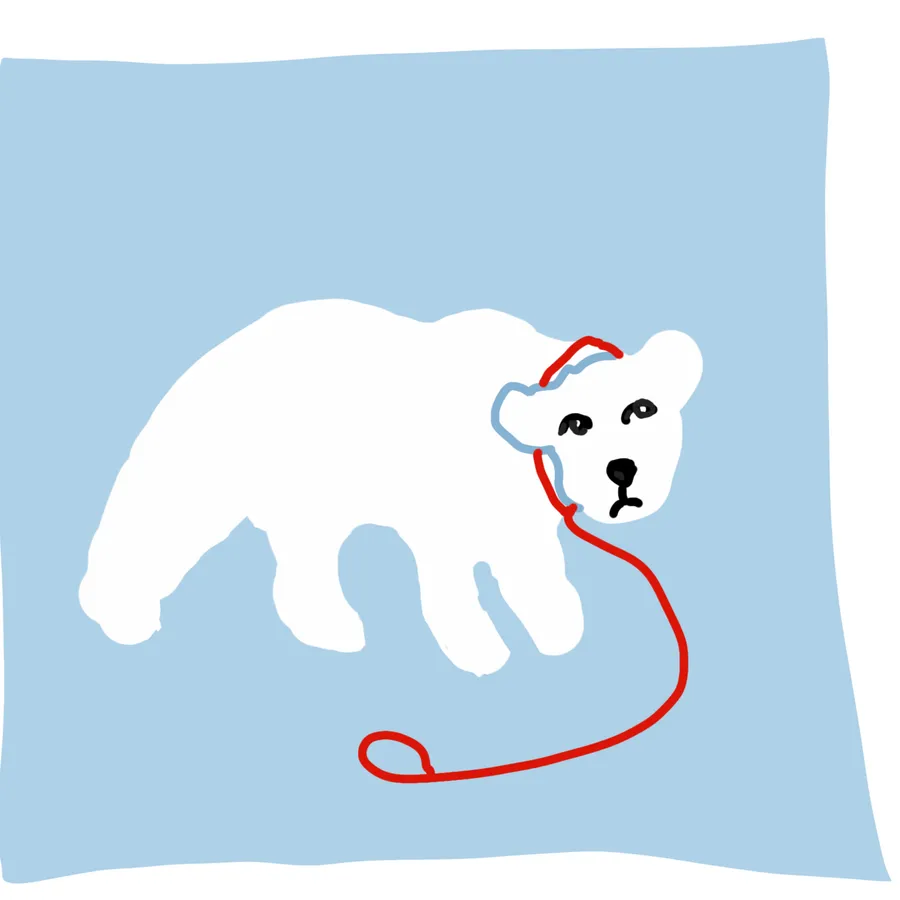
Ferdie Yau, behavior consultant at NYC's Behavior Vets, has been training animals in New York City for nearly twenty years. Today he mostly works with dogs (he trained his own to be a coyote poop detection dog...) but he started out working in the city's zoos. Learn how a lifelong passion for animals led this Long Island-born conservation biologist to think about the importance of enrichment in training urban-dwelling animals, whether they be puppies in living rooms, cats in shelters, or polar bears in Central Park.
Notes
For a limited time, we are offering free thirty minute sessions with our trainers! Book yours
Get $10 off to make your own custom stickers with Sticker Mule. Use this link.
Elly Lonon sings Aba Daba Honeymoon. Elly is the author of Amongst The Liberal Elite.
Transcript
Annie 1:24
That is Elly Lonon singing Abba Dabba Honeymoon. Thank you for tuning in. I have an episode that I'm really happy to share with you all today. It is an interview with a really excellent trainer who I'm pleased to call a colleague: Ferdie Yau. And, you know though, I actually recorded this with Ferdie almost a year ago, and then kind of took a hiatus with the podcast and I just wanted to mention that since then, he has taken a job with Behavior Vets, which is a highly respected veterinary practice that specializes in Behavioral Medicine. And yeah, I'm glad to be able to share this interview with you. I also wanted to mention that we are still doing free 30 minute private virtual sessions. With all clients, new and old. We're offering one to anyone who is interested. If you have not taken us up on that offer yet please do so, you can sign up at schoolforthedogs.com. Not sure how long we will be offering this promotion, but we feel it is something we can do during quarantine to help people who are either facing issues with their dogs having to do with the massive changes in lifestyle we're all experiencing, or if you're just looking to learn a little bit more about training, maybe looking for some ideas of fun stuff that you can do with your dog. Go ahead and sign up at schoolforthedogs.com. We are able to pay our trainers to offer these sessions thanks to our scholarship fund. So thank you to anyone who has already donated to the fund. You can learn more about it at schoolforthedogs.com/fund. And right now we are putting together a mosaic in our studio while we're closed. It's being built by the artist Jim power. Jim power is the artist who has done all the mosaics on lampposts throughout the East Village for like three decades. And he is doing this for us and if you donate $100 or more right now, we will thank you with a photo tile that will go in this unique mosaic. You can learn more about that at schoolforthedogs.com/mosaic, and I will link to it in the show notes as well. And lastly, if you're enjoying this podcast, please do leave a review but also reach out and say hi to me, I would love to hear from you. Not seeing a whole lot of people these days and it means a lot when I hear from listeners. When I see your names in my inbox, it is hugely positively reinforcing. So please reach out, just say hello, annie@schoolforthedogs.com. Okay, here is the episode.
*music*
Hi, my name is Annie Grossman and I'm a dog trainer. This podcast is brought to you by School for the Dogs, a Manhattan based facility I own and operate along with some of the city's finest dog trainers. During this podcast, we'll be answering your questions, geeking out on animal behavior, discussing pet trends, and interviewing industry experts. Welcome to School for the Dogs podcast.
*instrumentals*
Annie: So Ferdie, can you please introduce yourself?
Ferdie: I'm Ferdie Yau, I'm a professional dog trainer. I am the owner and founder of Sits and Wiggles Dog Training. It's based in the Bronx.
Annie: And how long have you had that business?
Ferdie: I've had that business for about 10 years now. And I wasn't always doing it full-time, I think I've been doing it full-time for about seven years.
Annie: So tell me about your education, I guess before you became a full-time dog trainer because, well, you tell me how did it all start out? What did you study in college?
Ferdie: In college? I went to University of Michigan, and I studied Ecology and Resource Management. So when I was in college, I took a whole bunch of animal behavior classes. And that's really all I would do is just sit in class and watch animal behavior.
Annie: I feel jealous. I wish I'd ever thought to take animal behavior classes.
Ferdie: Yeah. And I've always been very interested in studying animals.
Annie: Was there a time when you were a kid where you realized like, you know, that was a world that interested you?
Ferdie: Oh, um, you know, I think it was just all when I was a kid. It was everything was always about animals, every book I read was about animals. And remember one time-
Annie: Where did you grow up?
Ferdie: Port Washington, Long island, yeah. I remember one time my mom actually yelled at me for reading too many animal books because every single one of my books was about animals, and she's wanted me to kind of branch out and read something else, something different. But hey, it all worked out in the end.
Annie: And were you particularly interested in going to the zoo or were you interested in pets or...?
Ferdie: Uh, you know, when I graduated from school, I really didn't know what I wanted to do. And my first job out of college was as a Naturalist with the Audubon Society. And this was an Oyster Bay, so I was kind of the guy who would take the rehabilitated Raptors like Red Tail Hawks and Owls, and I'd go to schools and kind of give a presentation about like, “Hey, this is a hawk, and they have talons, and this is what talons look like.” They'll bring out snakes and so we would--
Annie: You were like the guy who you would have wanted to have come to your school. I guess you were a little kid with your head in the animal books.
Ferdie: Exactly. Exactly. So, you know, I get my experience of handling animals. You know, then that's my first experience handling animals I guess. And, you know, I did the education thing for a little while, and then became a zookeeper at the Central Park Zoo.
Annie: Wow. Yeah.
Ferdie: And that's actually where I started to learn how to train animals. You know, before that I, you know, I grew up with dogs and cats, and I was always responsible for taking care of them. But I really didn't know what training was about until I actually got to the zoo.
Annie: How do you become a zookeeper at the Central Park Zoo? Do they put ads on Craigslist or something?
Ferdie: It's a tough, it's a tough industry to get into. It can be very competitive actually. And right when I started, and this is back in 2002, this is when zoos were actually kind of making the transition to become a little bit more, as far as their keeper staff, more scientific and they started looking for zookeepers, hiring people with degrees in Biology, Zoology, you know, something related to animals. In the past, working at a zoo was just a lot of manual labor. I mean, you were really a poop shoveler, a professional poop shoveler. And so you didn't really need to know a whole lot about animals, but you had to be, you know, physically fit to do it. So, now the old time zookeepers were just people who... a lot of them came from different types of industries. You know, some people were like accountants, and they decided, like, “Hey, I don't like this job” and they became a zookeeper. But right when I got started, I started as an intern first in the Animal Department at Central Park Zoo, and then and then worked my way up to become a zookeeper. So, actually my, my first full-time zookeeping job was at the Bronx Zoo. It's a much bigger zoo, obviously. So there were more positions that had opened up there. I was there for about nine months and then moved back to the Central Park Zoo, where I got my start. I just liked the smaller zoo, the family atmosphere over there.
Annie: What is life like as a zookeeper? Well what is your day like there?
Ferdie: Well you come in, usually get in early-
Annie: I'm sorry. I'm also is there one zookeeper? Are there many zookeepers?
Ferdie: There are many zookeepers, and you're basically assigned to different areas of the zoo. And so I was usually assigned to the Polar area in the Central Park Zoo. So that included the penguins, the sea lions, the polar bears, the harbor seals, river otters, now they have snow leopards, but where they have snow leopards now used to be river otters. I was, you know, I was in my mid 20s. And I got, when I went to work, I got to play with sea lions and polar bears. And you know, I couldn't really ask for anything more than that.
Annie: You do know about the famous polar bear who had the Stereotypy in the 90s?
Ferdie: Yes, that’s Gus and Ida
Annie: And is he still there?
Ferdie: No, Gus has passed. He passed in 2013. But, but really Gus, I didn't realize it at the time, but Gus was my first behavior case.
Annie: Okay. And that's the one I'm talking about? With the Stereotypy?
Ferdie: Yes, that is the one.
Annie: Stereotypy is maybe a word that we should define.
Ferdie: Yes
Annie: Yes, you go for it.
Ferdie: So Stereotypy is a behavior that can be... it's related to anxiety, stress, and you see it in animals, especially in animals in captivity. So, Gus’ particular case was, he was known for swimming laps in the pool. Or, you know, he could go for hours on end without stopping. And, and in some cases, in some cases, stereotypical behaviors can become very damaging to animals’ wellbeing. And in this case with Gus, it was, it was clearly an expression of his stress of being in, you know, being a very small animal exhibit in the middle of New York City.
Annie: So, so sad and yet so interesting. And, and it's one of those things like, I mean, I remember going to see him when I was a kid in the early 90s maybe, and it was, it was cool to see this big polar bear foot on the glass because he would do these labs and push his foot off the glass and it was like something to go see. And yet, It was actually, I mean, now I know it was this animal who was suffering deeply for like, many, many years.
Ferdie: Yeah, it really was. And you didn't even have to go into the zoo to watch it. You could actually stand right outside of the zoo, outside of the gates. And you could actually see part of the polar bear window where he would swim up and he pushed off at the same exact spot. So he became quite famous as the neurotic, or the depressed polar bear of New York City. Which, you know, people kind of played with that because, you know, people called New Yorkers neurotic, so it kind of made sense that our polar bear was neurotic as well. And so that was really my first experience in working with a serious behavior case. And really, it wasn't until kind of later on in life as a professional dog trainer, I started to realize what an influence that experience had on me and how I approach a lot of my cases now when I'm working with my clients. But yeah, Gus, when I, you know, got into work, I would sometimes spend a whole hour preparing his exhibit, just adding more enrichment, which are basically just puzzle toys. Toys for, you know, things to keep the animal engaged in their environment, try to stimulate natural behaviors like hunting, foraging, scavenging. So, so, you know, did a whole lot of trying to really challenge Gus’ brain really, to help reduce the pulling, because in one sense, he probably was extremely bored. And then in another sense of we wanting to really improve his well being because he saw that it wasn't healthy for him to just keep swimming laps over and over and over for hours. It could last for like four hours at times.
Annie: Well, isn't it interesting how so much training just comes down to, like, giving animals something to do?
Ferdie: Yeah, it really is. You know, so much of it is trying to be proactive. And, you know, you hear people say, especially when I'm working with their, dogs, their family dogs, they talk about how smart the dog is and how active and energetic the dog is. And then they expect the dog to kind of, you know, sit at home by himself for 10 to 12 hours a day while they're at work and do nothing. And, and then they come back home and they complain about how the dog is just jumping all over him or too energetic. So really a whole lot about, you know, caring for an animal is trying to understand, you know, what makes them happy, you know, activities that can help them become happier and more content.
Annie: Just yesterday, someone said to me, “Well, what kind of breed of dog is easiest to train?” and I'm curious what you’d answer. I can tell you what I said, I said that I think generally more in terms of the individual than the breed, but sort of, you know, generally speaking, we consider animals that were bred to work with humans to be smarter because they have like intelligence that's more attuned to ours, so sheepdogs herding dogs, that kind of thing. But they might be more intelligent as we see intelligent, however, that does not necessarily make them good pets. Yeah, a dog that is like a super vigilant, super smart active brain dog might not actually do well in New York City because like they're too vigilant to be out on the street and they’re trying to herd every taxi and they can't be in an apartment all day.
Ferdie: Yeah, you're absolutely right. It's, yeah, everybody wants that smart dog. But then, if you have a very smart dog, and a dog doesn't have anything constructive to do with its time, usually, they, they get themselves in trouble.
Annie: They make their own jobs.
Ferdie: Yeah, they make their own jobs. Exactly. So, you know, really depending on your lifestyle, if you're somebody who is active and likes to do a lot things with dogs then yeah go for it go get that really smart herding dog if you want, you know but also you know, understand,you know, the environment you’re bringing that dog into.
Annie: You might say like, you know, a lazy Basset Hound or Great Dane is actually “smarter” to live in a city apartment. You know, more evolved to that environment.
Ferdie: Yeah, exactly. I was just gonna say yeah sometimes you're better off as far as having a pet in your home. If you live a very busy life, you're better off having a that that, you know older couch potato, you know the one that you know, just is kind of a, maybe a goofball, maybe, you know …
Annie: It’s a different kind of intelligence.
Ferdie: Yeah, it is, you know, that they're content to just hang out with you.
Annie: So how did you go from the polar bears to dogs? Was that a goal or?
Ferdie: You know, it wasn't. So when I was at the zoo, you know, I was working with the polar bears, learned how to train all the animals there, like sea lions and river otters.
Annie: Were you doing clicker training?
Ferdie: We weren't, It was all reward based training, we didn't use clickers.
Annie: Were you training, like husbandry type behavior?
Ferdie: Yes. Yeah, all of it was especially working with the sea lions where we would teach them to present their rear flippers for voluntary blood draws.
Annie: So for those who aren't familiar with training at zoos, I know that there are zoos where they do you know fun exhibits where they're you know... Or you SeaParks kind of stuff where the dolphins do tricks but most of the training, from what I understand, at zoos is about teaching them to voluntarily be handled, make it easier to take their blood, right?
Ferdie: Yes, it is. It's um, you know, well at the Central Park Zoo, you could watch the sea lion shows and it's kind of fun, you see them do tricks, but the, really the priority behind the training programs is for the animals’ health and well being. That relationship you develop with the animal, you know, trainers, really good trainers can tell early on, if there's something that's bothering the animal, that they're not performing a certain behavior as well as they usually do. So really, it's more than just teaching them new tricks. It's really teaching them how to kind of cooperate in their own care so that we can take a good close look at them. Look at the flippers, look at the body condition. With the bears, we could trim their nails, for example. We train them to put their paws up onto the, onto the bars of the cage. When we would train the polar bears, it's in a protected context so that we were not in there with the bears, we’re actually protected by the cage and they could present their paws up onto the bars of the cage and then we could clip their nails safely without having to you know, have the bats come in, restrain them or anything like that. So yeah, that's how a lot of the training at the zoo is done, well reward-based positive reinforcement training. And then, you know, how I became a dog trainer really was, it wasn't my immediate goal. When I was at the zoo, I went back to grad school. I went to Columbia to get a masters in Conservation Biology. And after I went to grad school, to study animal behavior a little bit more, and when I left grad school, I got a job as a biologist with New York City Parks. But when I was working as a biologist, you know, I also kind of missed working with animals, that interaction, that direct contact with animals that I had at the zoo. I really missed it. So I decided to start teaching, do some dog training. And I started working with Biscuits and Bath, which is a doggy daycare here in New York City. And a bunch of other really great trainers there that, you know, we consider our colleagues and our friends now. So, you know, I was, I was working as a biologist for New York City, and I was moonlighting as a dog trainer, part time for about a year or two. And then after that, I left Biscuits and Bath and started Sits and Wiggles. Again, still doing it part-time, I was still working full-time as a biologist. And I didn't switch full-time until about 2012. And then that's when I decided that what I really really loved doing more than anything else was training animals. And while I felt really like wildlife conservation was still a big part of me and I really didn't want to leave that field, but I just felt that, you know, going to the Dog Training business was kind of the right step for me at that point. And then lucky enough I was a year. Really? Yeah. Really. A year later, I got hooked up with the Gotham Coyote Project and now, now I am back. I'm studying the coyotes in New York City. My dog is a trained coyote scat detection dog…
Annie: Yeah. So how did you get involved with... First of all, I mean, until I knew that you were doing this I didn't know that there were crack coyotes in New York City. There are coyotes in Manhattan? Are there some coyotes on my street?
Ferdie: There are sometimes coyotes coming to Manhattan. It's usually in the winter or early spring. But uh, they're, you know, really in Manhattan itself. There are probably not enough green spaces...
Annie: Right. And so where, where is your work primarily?
Ferdie: So my work is primarily in the Bronx, where it's a... you have a little bit more space. And despite the reputation that Bronx, the Bronx has, there are actually very large parks in the Bronx. So very large green spaces in the Bronx. And that's where we're studying the coyotes. They're coming down from Westchester, Connecticut, and we have probably about five resident packs in the Bronx right now.
Annie: How many are in a pack?
Ferdie: We estimate, you know, it depends on the season. Like right now, this is the, this is the pupping season, so the packs are larger right now, the pups haven't really left the packs yet until later in the year. So at this time, a coyote couple can have a… a coyote mother can have anywhere between three to seven pups in-
Annie: Is a pack just one family?
Ferdie: Yeah, it's one family. So this time of year they can be, you know, they can have, if the conditions are right, you can have seven pups or more. And so that pack can be very, very big at this point of time. But, you know, usually we consider about five or six individuals to a pack, at least adults. So the estimate that we're going with right now are maybe 30 or 40 individual coyotes in New York City total. But most of them were living in the Bronx.
Annie: And is it okay that they're there? Are you trying to get them to not be there? You're trying to make their lives better? Like what is the mission?
Ferdie: Well, the mission really is to study how, how they're surviving here in New York City. And then and then also to educate and learn how we can coexist with coyotes. The fact of the matter is, they're living here and they've been here for several years actually. And they're, they're here to stay. What we know about coyotes and, you know, just in general about coyotes, and across the country, we've been trying to get rid of coyotes for over 100 years. Farmers, hunters have been, you know, trying to kill coyotes for a very long time. And coyotes are so adaptable that basically their response to the hunting and really to the really targeted, you know, persecution, is to have, they’ve expanded their range and, and diversified their niche. So that's really one of the most fascinating things about coyotes. Coyotes first, were living out in the West in open habit, like grasslands and prairies. And now, over here in the east, they are inhabiting deciduous forests and they are living in urban areas as well. So, and along the way as they had migrated from the west to the northeast here, they had hybridized with wolves and domestic dogs. So that's one of the interesting things about the coyotes here in our area is that they aren't, genetically speaking, they aren't identical to the Western kind of Coyote. Here they are about, as far as what we know about them are, they're about 65% coyote 25%, wolf, and 10% domestic dog, so yeah, they're mutts here, the coyotes are mutts here, and sometimes you might hear them referred to as Koi wolves or Koi dogs, which I think is the media's way of kind of sensationalizing what what they're doing here, you know the animal. But yeah, they're coyotes are a little larger than their Western cousins. And they can live in force as and live very close to humans as well. But they're here to stay really.
Annie: What do they live off of in the Bronx?
Ferdie: So we’re finding they're eating birds, lots of birds. Usually pigeons. Were finding a lot of pigeons.
Annie: I’ve always wondered where the dead pigeons are in New York City...
Ferdie: Maybe the coyotes… .
Annie: Seriously, there's so many pigeons, but you rarely see a dead pigeon.
Ferdie: Maybe they find a quiet place to go away
Annie: Pigeon retirement homes?
Ferdie: Yeah. But yeah, the coyotes here in New York City are eating, we're finding lots of birds, rodents, rabbits. Some of them in the Bronx, where they couldn't get access to it or eating deer as well. Most of them are probably eating roadkill where we don't, we haven't seen a lot of evidence of coyotes actually hunting adult deer. As of yet, they could probably capture younger deer like fawns but adult deer are too, a little too big for coyotes to take down there and in places where they're living closer to in more urban areas, we're finding that there's a higher percentage of anthropogenic sources of food. So they're basically eating leftovers, trash. So, one of the things that's part of our project is understanding what these risks are and how they, how people can safely manage, you know, their trash basically to avoid attracting coyotes to their neighborhoods and and where they live.
Annie: Do they present a danger to people who have small dogs in their yard?
Ferdie: Yeah, you know, coyotes are always going to be a danger to small dogs and cats. So, you know, obviously in Manhattan, you know, people obviously don't really have backyards, so we’re not really worrying about it. In the Bronx there are some neighborhoods like in Riverdale where some people have houses with yards, where you want to be more aware about that situation. But yeah, coyotes can, they can look at dogs as competitors or they can look at dogs as food as well.
Annie: So what is your work? What’s involved?
Ferdie: So it involves a specifically, it involves camera trapping, so we put these wildlife cameras into the parks, so we can monitor the coyotes. The cameras are heat and motion sensor cameras, and they're hidden in the parks, so anytime any warm blooded animal walks in front of the, of the camera, it takes a picture, snaps a picture so we can detect the presence of coyotes there. And we can also see if we are, if we're lucky, see evidence of breeding. And that takes kind of a little bit of luck and a little bit of skill of understanding where you think coyotes might then put their den up. And the other part of our studies are collecting scat, which is coyote feces. And my dog is trained to sniff it out in the woods so we can collect it for genetic studies and for diet studies so we can figure out what they're eating, and also who's related to whom among the parks, and try to figure out how many different individuals there are out there.
Annie: So interesting. So how did you train your dog to be a coyote scat smelling dog? And does it come in useful in other situations?
Ferdie: Yeah, well, really, it's one job that dogs have been bred to do for a long time, which is using their nose. We have here in New York City, we have dogs that are bed bug detection dogs. So, we have you know, so my dog can, first I started teaching my dog how to detect, how to sniff out scent inside boxes, inside little containers. And then once she started to get that idea of how to find something for me, then really what I started to do was I had a coyote scat samples which I obtained from the Queens Zoo, the Queens Zoo does have coyotes in captivity. So as you know, we were able to get some samples from the Queens Zoo. And what I did was I hid the food and the scat inside the box. And my dog was already trained to find the food. So at this point, what I was doing was I was associating the scent of food along with the scent of the coyote scat and I gradually faded the scent of food out, so basically my dog starts to recognize that whenever she smelled this scent the coyote scat as she found it for me, she would be rewarded with a game of tug or she’d be rewarded with one of her favorite treats. And then we started training the dog out in the field out in the woods. And, and you know, once that went well then we were collecting real wild coyote scat. She's doing really well with it.
Annie: So what's her signal when she spots coyote scat?
Ferdie: She will make very distinct eye contact with me and then just sit down by the scat. So when we study more about them, when we learn more about the coyote, and how they're surviving here in New York City, we have a better idea of how to avoid conflicts with humans. And what we're learning so far is that coyotes are really trying to do as much as they can to avoid humans, which is great. So for one thing, coyotes in more natural settings live, they have behavioral activity patterns So in other words, they're usually more active at dawn or dusk. In urban areas, coyotes here in New York City as they do in other urban areas like Chicago and San Francisco, LA, they have shifted their activity patterns to become more nocturnal. And we believe, as it's consistent with other cities across the US, we believe that this is a behavior to avoid humans. And when coyotes can, they are staying in green spaces and green areas. So they're really staying well hidden in these parks. And they're not really hanging out in your neighborhood around the corner. They're really, you know, trying to stay deeper in the parks. So one reason why you don't see a lot of coyotes in Manhattan is number one, it's an island. So just that fact alone makes it harder for coyotes to actually get to Manhattan because they have to cross a bridge, they have to swim, take the subway tunnel, we still don't really know for sure how they're getting to Manhattan, but that probably, you know, there are a couple areas where we think they're moving. They're crossing over like on the like, maybe by railroad on down near Woodhill Park up in northern Manhattan, or to Broadway bridge, it's a short crossing there. But in Manhattan, other than Central Park, there aren't really a lot of green, big green spaces for them to really hide out. So you may find coyotes occasionally in Manhattan, but I think what happens with the coyotes that we quickly find out that, you know, this place is a little too intense to live or to even set up a family. So most of the coyotes once it gets to Manhattan, they're probably looking for a way out and sometimes they find a way out and other times they find a way into more human dominated neighborhoods, and that's where we have to go in and try to catch them. The parks department will do that and try to catch them and get in Manhattan.
Annie: Are there other local wild animals that are that you've studied or that are interesting to you?
Ferdie: Oh, you know, just the fact that we're, you know, we're studying coyotes. We start studying, like, their interactions with other animals like skunks and raccoons. So, you know, one thing we're finding out is that they become very territorial around breeding season. And so when we placed a camera trap up near a coyote den and during the breeding season, what you find are that all this skunks, and the raccoons and possums, all kind of you know, they leave the area. They even learn to avoid coyotes or the coyotes are actively, you know, chasing them out. And then after the breeding season's over and the pups have grown up, and they're not, you know, just hanging around as much and they’re more mobile, then you see all the other animals come back. So that's kind of fascinating. That also tells us a little bit more about you know, how humans should avoid coyote dens, that we understand that coyotes are more territorial around breeding season, which makes sense, you know, they want to protect their young. And we actually had a case up in Riverdale, where a coyote family decided to have their den right in a private community. near some homes, they chased a dog out, a man walking his dog out. And then coyotes were actually seen kind of hanging out on people's porches, around their homes. And this obviously can be very frightening for people, especially if they have small children. And, and one of the great things was that we already had established a good relationship with the community. Because we knew the coyotes were in the area we had put cameras up there ready. So since we knew that because because of our camera work, we saw that “Oh, they're their pups, here, there's a den here.” So we knew that increase in aggressive behavior in where the coyote chased the dog walker and, and his dog out. We knew that it wasn't because the coyote was all of a sudden becoming aggressive. It was because the dog had gotten too close to the dead. And what we advise the community to do basically is just stay away from this area for the next four weeks. And after about four weeks, what we found were the pups grew up, and they became more mobile. And once it became more mobile, they were able to leave the den and parents took him out of there. So we didn't have any other negative incidents after that, once we tell people just, you know, leave the coyotes alone for a few weeks, and we put up a camera there so we were able to watch the pups behaving really like puppies, almost like puppy dogs. So we got a lot of information about that about coyote behavior early on.
Annie: You did and you did some people training?
Ferdie: Yeah. And we do some people training.
Annie: And I remember the Trump golf course
Ferdie: Yes. So last year, we had some coyotes at the Trump golf course which is over at the Ferry Point Park, which is right at the base of the Whitestone bridge over in the Bronx. And what was going on was, this was in the fall and the coyotes, it was really more of the pups, and now at this point they weren't really pups anymore, they were becoming adolescent coyotes. And they were chasing the lawnmowers, they were jumping off golf carts. They were kinda, you know, becoming a little bit more bold and hanging, hanging around the groundskeepers and even golfers. So that became a problem and became a little scary. So we went out there Gotham Coyote went after we had, we kind of rotated shifts. And we would go out to the golf course early in the morning at five in the morning, and really at the crack of dawn, to watch these coyotes, and one of the interesting things that we found were, we found we could consistently see the adult male but we couldn't find the adult female and we believe that something happened to the adult female pack. So basically, we don't think mom, something happened to mom, maybe, you know, she could have gotten hit by a car. We don't know. But usually, cars are the largest source of mortality for coyotes, urban coyotes. And in a normal coyote family, what would happen is, you know, one adult will probably go out, or some of the older siblings and the adults will go out and go hunting while while one or the other parents would stay in the den and watch the pups and keep them close to the den, keep them out of trouble. But since the adult female was missing, it was on dad to take care of the pups and go out and hunt. And what we found was, we found a sub adult male who was always with the younger pups. So we think this was probably an older sibling that became a babysitter. But the, you know, didn't do as good a job as mom. So these young pups as pups do were very curious about, you know, golf carts and lawnmowers. They were causing little trouble. So once we went out there, and we were observing, watching the coyotes, their behavior changed, because we found that the coyotes responded differently to people who were trying to just go about their day and do their jobs. Like if you're a groundskeeper, you're just mowing the lawn or something you're not, you know, you might watch where the coyotes are, but you're trying to do your job. But as opposed to if you had a whole bunch of researchers out there with binoculars and standing on top of the hills in the golf course, we were staying on top of hills so that we could get a better perspective. And when coyotes notice that there are humans actually watching them, directly watching them, they behave differently and their behavior changed within a few weeks. And within a few weeks, that the behavior of jumping off golf carts and chasing the lawnmowers was.. that stopped.
Annie: Wow.
Ferdie: Yea, it was just like “hey, uh oh, there’s these large primates watching us” you know, and then they know when there’s another animal watching them.
Annie: You need scarecrows or something like that…
Ferdie: *Laughing* yeah something like that. And what they told us, the golf course staff, they told us that after we were watching them for a few weeks, that all that behavior stopped, and they went back to business like normal, and the coyotes went back to leaving the humans alone. So we’re gonna see this year, we don’t know right now, as of right now we haven’t checked the cameras yet, we don’t know if they have a new family out there yet, we don’t know if the adult male found a new mate to have another family, so we’ll see.
Annie: If people want to get involved, is there anything that volunteers can do?
Ferdie: gothamcoyote.com, they can read more about the project there, and right now if you’re interested in volunteering there is an information page where they can contact one of the founders of the Gotham Coyote Project. We’re not yet set up as a nonprofit organization yet, so we haven’t quite gotten to the point yet where we’re handling volunteer projects, but it is a fascinating place to start if you’re interested. And You’re welcome to learn more about it there.
Annie: Do you feel like you train dogs because they are the animal most in need of training in the environment in which you live, as opposed to a particular affinity to dogs?
Ferdie: I mean yes, I think so, you know, training dogs… number one I love dogs, and yeah, it is the animal that most people need to be trained. It’s the one that helps me pay the bills, that’s for sure. And its the one that is most in demand. I know that some people do want to train their cats, but you don’t get as much of a demand for cat training.
Annie: Well I feel that most people don’t think about cat training until there’s a major problem, whereas dog training is a little more of a routine thing, people get a dog and they think they need training, which is a good thing.
Ferdie: Yeah, it is a good thing, realistically, these are animals that are not that far removed from those wild coyotes, and really they have sharp teeth and they are living with our families, with our children and neighbors and friends, so I think it is very important that we have well behaved dogs so that our communities are safer.
Annie: What do you do when you encounter people who are hanging onto dominance theory or the notion that you need to have a special energy to train your dog, how do you respond to someone that has this “zoo background?”
Ferdie: That’s a great question, because there is that attitude that the bigger and more aggressive the dog, the more forceful you have to be with the animal. And I come from a perspective that, where I worked with polar bears, and I worked with one of my favorite animals, a 300 pound female Sea Lion named Scooter, and here’s an animal that, they live in groups as well, they live in social groups just like dogs, so if you want to talk about how dogs are social animals and you have to show dominance, well here’s a sea lion, and sometimes my response can vary from “you think you’re a tough guy? Go ahead and show the sea lion whose dominant and who’s boss,” you’re not going to get very far. But, you know, for the most part, when I went talking to people, people just have an idea about the dominance idea because that’s what’s out there. That’s what’s on the internet, that’s what they see on TV. And they’re really just misinformed. And I feel like most people I’ve worked with are just, deep down inside, they actually don’t want to scare and intimidate or hurt their own pet dog, and they do it because either they’ve seen it on TV or read it on the internet, or they’ve hired a trainer that told them that this is how they’re supposed to train dogs. And what strikes me is that while training animals at the zoo, we trained every single species in the zoo with reward based training, with positive reinforcement, we never used force on those animals.
Annie: I mean, you can’t. I mean I guess you could force a polar bear to give you his paw for a nail clipping but you’d need like, an army…
Ferdie: Yeah, I mean, you’re not going to get very far with that animal. I always give the example of the seal lions, I was working with Scooter and she weighs 300 pounds, physically there is no way I could overpower that animal, so when you’re working with animals like that, you learn very quickly, especially with animals that can hurt you or even kill you, you learn very quickly how to gain their trust and not use forceful training methods that can damage that trust, that can make them respond with defensive aggression towards you or to someone else. SO you learn very quickly how to really use positive inforcement because you need to have that trust so the animal wants to cooperate with you. If Scooter didn’t want to work with me, she could just jump in the pool and swim, and just ignore me. But what she did was she chose to work with me because we had such a good relationship. She even chose to work with me when we did things like, back to the husbandry work, we had to give her eye drops every single day, and usually twice a day, and you know, how do you give eye drops to a dog? And most people are, if your dog has an eye infection, you have to restrain your dog and hold your dog down and then put the drops in. So with Scooter, we had trained her to rest her head on to my hand, I’d make a fist and she’d just rest her head onto my fist, and it's basically targeting, she would hold her head there, and then I would very easily just drop eye drops into her eye, and I’d wait for her to open her eye, and when she did, I’d put an eye drop in, and then she was rewarded with a Herring, which was her favorite type of fish. And that’s what she worked for, there was no restraint there, she did it all cooperatively and you know, when I show this example to people, and i show them that you know, we train all these other animals with positive reinforcement, but for some reason when we go to dogs, it's a slap, or a choke chain or a prong collar or even worse, a shock collar on them, and just start jerking them around or forcing them to do this, or that and it just doesn't make any sense.
Annie: I think it’s because they are so adaptable that they just let us do that.
Ferdie: Yeah, and just because a dog is so docile and sweet and submissive doesn't mean it’s okay. And you know, and while you might get away with it, there might be a time where you're gonna have a dog that’s not going to be as submissive or as docile and they may actually respond with defensive aggression if you try to force them to do something that they don’t want. So it really is, so really I try to inspire people to find a better way to…
Annie: I get so frustrated with you know, like watching someone like Cesar Milan who's telling people it's all about your energy because it’s like, how do you make someone change their energy? Because it’s so like subjective, like what one person's energy, you know, and I did like some training with chickens a few years ago, teaching them like color differentiation or shape differentiation, and I don't think that chicken gave a shit about my energy. The chicken just wanted to know where she needed to peck. Yet somehow with dogs we get all wrapped up with this notion that there's some special quality in me that is going to color the situation.
Ferdie: Yeah, and that’s really, that’s what gets people in trouble, where you start thinking that you have this special energy that all animals love you or all dogs love you, you’re gonna get yourself in trouble there, and that’s, I try to really preach this science, and that how this science works, and just knowing from experience because I’ve worked with so many species, I know that yeah, you can train any animal with this science.
Annie: And isn’t it amazing how surprised people are by that? I remember when I was gonna go do chicken training I said to someone I know who’s like an incredibly intelligent person that I was going to go train chickens, and she was like “But you’re a dog trainer,” and I was like “Yes, but it’s something dog trainers do sort of for fun to you know hone their chops” and she was like “oh, chicken and dogs learn in the same way?” and I was like “Oh my god, of course they learn in the same way, like I can’t believe this is news to you” but I think that probably would have been news to me before.
Ferdie: Yeah, was it the Bob Bailey Chicken Camp?
Annie: Yeah it was, it was Parvine who is a student of Bob Bailey and then Bob Bailey who worked with Mary and and Bailey who were students of BF Skinner’s. It was really excellent, I think anyone that has the opportunity to do that should do it. It was a five week program and you could do like one week or you could do five, and I did one week and I would have done five in a heartbeat.
Ferdie: It’s so fascinating I always tell people especially young- new trainers, they’re not always young, new trainers can come from all walks of life at any age. I always tell new trainers that if you want to become a better dog trainer, train a different species because I think that we, I think one of the great terms I got from Dr. Susan Freedman is out cultural fog about dogs, these misconceptions, these myths that we think about dogs as being the alpha and being the dominant that gets in the way of how we actually train dogs so I’ll tell people “go train a cat” especially if they’re volunteering at my shelter, and they’re interested in training, I will tell them I’ll go over there and teach them how to train cats, now you can’t think of all those things like “oh I should show dominance to the dog.” You try to show a cat dominance, that cat isn’t gonna work with you.
Annie: Or get a gerbil!
Ferdie: Yeah! A gerbil or a bird, anything.
Annie: I think it would be cool to get like a really long target stick, a big umbrella or something and try to do target training with the rats in the subway.
Ferdie: Yeah, that would be a fascinating experiment.
Annie: Yeah you’d have to like tag the rats somehow or get really good at identifying them. Youd get like a paint gun and…
Ferdie: *laughing* yeah something like that. Actually, I know people, biologists who study New York City rats, so it's interesting.
Annie: Is there a favorite kind of case that you like to take on as a dog trainer?
Ferdie: I always like those cases where a dog is maybe suffering from anxiety, really just a fear of the environment, fear of people. I really love it when I see animals recover from that. Or at least improve, cause you can’t always cure every behavior problem and I think that’s also related to my experience with the polar bears, with Gus, because you know, I saw an animal that was suffering all the time, my goal of working with him was just to make his day better.
Annie: Did he end up going on medication?
Ferdie: When I was working there, I think before I started there I think he was on medication briefly, and I don't know if it’s official or not, but anecdotally I think people thought that Gus may have been the first zoo animal that was ever put on behavior medications. I don’t know if that’s officially true, but that has been kind of put out there. But when I was working at the zoo, Gus was not on any behavior medications anymore. When we started there, his pacing was pretty intense. Once he started doing his pacing in the pool, for the most part you couldn’t break him out of it, you could try to call him to come inside into our holding area, but he wouldn’t come in, because he was just kind of in a trance in that moment. And what we did was, mainly another keeper and myself, we were in the bear dens during that period of time between 2002 and 2005, we started to become a lot more creative with the types of enrichment and toys we gave him. You know, a lot of times we used to just give him new objects and toys. But now what we started doing was we started giving him puzzles, so for example we started giving him what looked like a big plastic ice float basically, and we cut holes in it and we hid toys inside of it, inside those toys we hid food. Just like working with dogs. We would put a puzzle inside a puzzle inside a puzzle, kind of like those little Russian dolls that you open up.
Annie: I’ve had cases where like somebody has come in and wanted to hire me to come work with their dog and like I’ll be standing in the shop and I’ll be like “Okay well we could do some training sessions, and it's gonna cost you, you know, this many hundreds of dollars, or like, you could buy this toy and this toy and this toy, but it's gonna cost you $50, and I think you’re gonna go farther with these $50 worth of toys than you are with a professional trainer sitting there with you. Because so much of you know, what we think of as training can be solved by just giving a dog’s brain something to do.
Ferdie: Yeah it really is, there's so many parallels with that, when you have an animal that’s more content, cause they're physically and mentally fulfilled. Whereas the you know, the activity and training and brain exercises, a lot of those behaviors go away. So yeah, when we started doing that, started upping the challenge for him basically, we also made a more concerted effort in our training sessions with him to work on a lot of these husbandry behaviors, like teaching him to do those nail clippings, to present his rear up to the cage so that we can give him voluntary injections instead of having a vet come in and have to dart him, so we try to see what we could do, we looked at his everyday life and we tried to figure out what can we do as his caretakers to reduce his overall daily stress.
Annie: Here's another question, I’m curious of your take on carriage horses in New York City. I used to be, before I knew anything about training, and thought very much about animals, I thought you know, “let’s have more carriage horses rather than fewer carriage horses” because it’s better for the environment and you know, travel by horse and you know, let’s.. I don't know, my thought was you know, “Cool, cool old timey thing, I’m all for it” and “I like animals and it’s more animals around.” Then when I started to get into animal training and sort of think more about how animals are living in a human environment I thought, “No horses, we shouldn’t have any horses in New York City because of the cars, it’s just not safe, it’s dangerous, it’s not a natural environment. And then, I began to think, well maybe it’s a good thing for horses to have something to do, and we are giving them jobs and we’ve bred them to have jobs and uh, anyway, I’m curious about your thought.
Ferdie: Yeah, I think I actually am on the side of I don't think we should have the carriage horses, I am not so sure, and you know, this is saying I don’t really know that much about horses, you know, I’ve worked with lots of species but I actually never worked with horses. But I don’t know if that environment is the best environment for them.
Annie: That’s kind of I think where I am now is thinking that maybe horses do need something to do but maybe Central Park isn't the best place for it.
Ferdie: Exactly, I think you know, if we ask these horses, yeah they probably would like enjoy doing some work but I’m not sure if you know, pulling carriages through Central Park every day is gonna be the choice of what they actually wanna do. So I think we could definitely provide a better environment for those horses.
Annie: Yeah, I worry about them a bit.
Ferdie: Yeah, definitely. You know, it’s just so loud there, and you know every once in a while you hear about a horse that escapes or you know, and something happens to the horse. I mean it’s rare and you know, I’ve seen a lot of the handlers there, and I try to speak to the handlers, seem to be kind to the horses. But again, I think this one of these old timey things that it's just hard to let go. And it's more of a it's kind of, it's a little, it's a little selfish because it's like, are we really doing what's right for the animal? Or are we just doing it because we think it's cool to have horses and you know, to sit in the horse carriage that pulls you through central park?
Annie: Yeah, if we get rid of all the cars and only have horses? Yeah, and we could horseback ride to work? There could be bike lanes and horse lanes? Anything else that we haven't touched on that you think we should cover?
Ferdie: I don't think I can really think of much right now. We went over a lot.
Annie: You want to try to answer that question?
Ferdie: Yeah, let's go answer some questions.
Speaker: Hi Annie. I just ran across your podcast today. My name is Dee. I really enjoyed this episode and I'm looking forward to listening to a bunch of them. Currently we have two Pitbull mixes; one is very brilliant and listens good and learns quick. The other one is challenging. He is very cat-like in the fact that he likes to chase shadows and lights and you know, shiny things and it’s just very odd. I have no experience with this kind of behavior. And despite our best efforts, we have not been able to break him of this habit. He'll run outside, see shadow on the fence and bark at it and bark and bark at it. And then also when our lights are on in the kitchen and they're reflecting on the vent He wants to bark at the light. So if you could address this or if you have something that addresses this, we'd really appreciate it. Thank you.
Annie: Okay, any ideas for Dee here? Interesting, cause talking about intelligence and she said one of her dogs is smart and the other ones not. The one that she says not smart, that's having the issues.
Ferdie: Yeah I think it's an interesting case. And I think when I hear something like that, that's not behavior that's typical of most dogs, chasing shadows and lights like that, you know, one of my first questions would be, how, how intense is behavior? How frequently does it occur? And depending on that answer, you know, that's something I might, I think she may need to see a veterinary behaviorist. And I know you know what a behaviorist is, but just for the listeners out there, a veterinary behaviorist is sort of a veterinary psychiatrist. So some animals and this is related to Gus the polar bear, they get into behavior. It's a little OCD, like swimming laps in the pool over and over for hours. And chasing the lights and shadows is another type of behavior that can be a symptom of anxiety or stress in the animal. So that would be something you know, first, I'd love to get a video of that and see you know, what exactly is going on there? How intense it is, I’d like to know how frequently it happens, you know, during the day is it once a day. Is this only a couple times a week? Is this happening like several times a day? And I'd like to get a good idea of the animal's overall daily activity. How much exercise are they getting? How much training are they getting? And, you know, sometimes these signs like with Gus, it wasn't about trying to stop him from pacing once he was in the pacing mode. It was really trying to be proactive and prevent it from happening in the first place.
Annie: Yeah, it's like getting a bigger picture of what's going on. That's why it's so hard to just look at one specific behavior. When somebody says I only want to work on the fact that my dog is peeing on the couch. Well, like, you can't really do that.
Ferdie: Yeah, it doesn't happen in a vacuum. So I'm sure this behavior isn't happening in a vacuum and I'm sure there's, there's more to it. And we would need to see, you know, is this dog getting enough exercise and mental stimulation. And, you know, so there's a training part of just trying to teach the dog to have a better response to lights and shadows, to a more appropriate response that we can train up from the human end. But also, yeah, you know, I think what's more important here is this dog, does this dog have a constructive outlet for its energy. So if we're talking about like a dog that's very, very energetic and very smart, okay? And I tend to find it the smarter the animal, the more behavior problems they tend to have, because smart animals tend to notice more stuff. Yeah, and the ones that are as observant, or whatever you want to call it, call it intelligence. If you want to call that, sometimes they miss you know, oh, there's that shadow.
Annie: Yeah, same thing with people. It's like the neurotic people who are very intelligent.
Ferdie: Exactly.
Annie: Less observant people exist happily in the world
Ferdie: It just goes to show how we are so connected, how, you know, as different as we are as animals, we are so similar. And that's one of the biggest things I've learned from just working with all these different animals that, you know, when it comes down to it we are all so similar. But yeah, you know, it's in that situation if training itself doesn't work, then you would seriously consider behavior medications to help complement the training. It's not a substitute to the training, but it's to, you know, if it's sometimes in some cases, the dog’s stress level is so high and it's triggering this light chasing or shadow chasing behavior, that your training may not be very effective because the animal was already so stressed. So that's where behaving medications can kind of come in to help you open up a window into the animal's brain so that you can start to kind of teach the animal a more appropriate response to the shadows and lights and help reduce whatever anxiety that animals feeling, you know, associated with it. So that's a very, very interesting behavior case. So I think that's something that you would definitely need to see a professional trainer.
Annie: It’s funny how we trainers refer to cases as like behavior cases where, I resisted at School for the Dogs, calling certain behavior be certain cases “behavior cases” for a really long time because I was like, it's all behavior. But in the parlance of training, we, when things are issues, we tend to call them behavior cases.
Ferdie: Yeah, it is. We try to make a distinction between “Oh, are we just training a dog that just needs to learn how to sit, lie down and stay, you know, it's the good manners training or, you know, it was called obedience training, versus, you know, does this involve a little bit more about emotions in the animal. How the animal’s, you know, dealing with stress in its daily life”
Annie: It’s really more like problem training, but I guess like behavior is like the word like when you use a nice word instead of a bad one.
Ferdie: A euphemism.
Annie: Yeah, yes. Behavior is like a euphemism for issues. Like reactivity is a euphemism for aggression or... All right. Well, Ferdie, thank you so much. I think this has been really interesting.
Ferdie: Thank you.
Annie: Thanks so much for listening. You can support School for the Dogs’ Podcast by subscribing, leaving a 5 star review, telling your friends, and shopping at our online store. Learn more about School for the Dogs and sign up for our free training resources on our website at schooforthedogs.com. And hey, if you like stickers, you can get $10 to make any kind of stickers you want at stickermule.com and you can sign up at schoolforthedogs.com/stickers.