April 10, 2023 · 41 min
Dom Hodgson is coming to NYC to talk to pet biz pros! Plus: What do you think a good dog training "pledge" should include?
Annie has been on podcast-hiatus working on her book, but... she's back! Join her for a conversation with longtime friend of the podcast, British pet marketing guru Dom Hodgson, who is coming to New York City to lead a seminar at School For The Dogs later this month. Dom shares his thoughts on the current state of the pet service industry and gives some really excellent advice on how to turn happy customers into brand cheerleaders.
Grow Your Pet Business FAST
Transcript
This transcript was made automatically from the audio, so it may contain small errors.
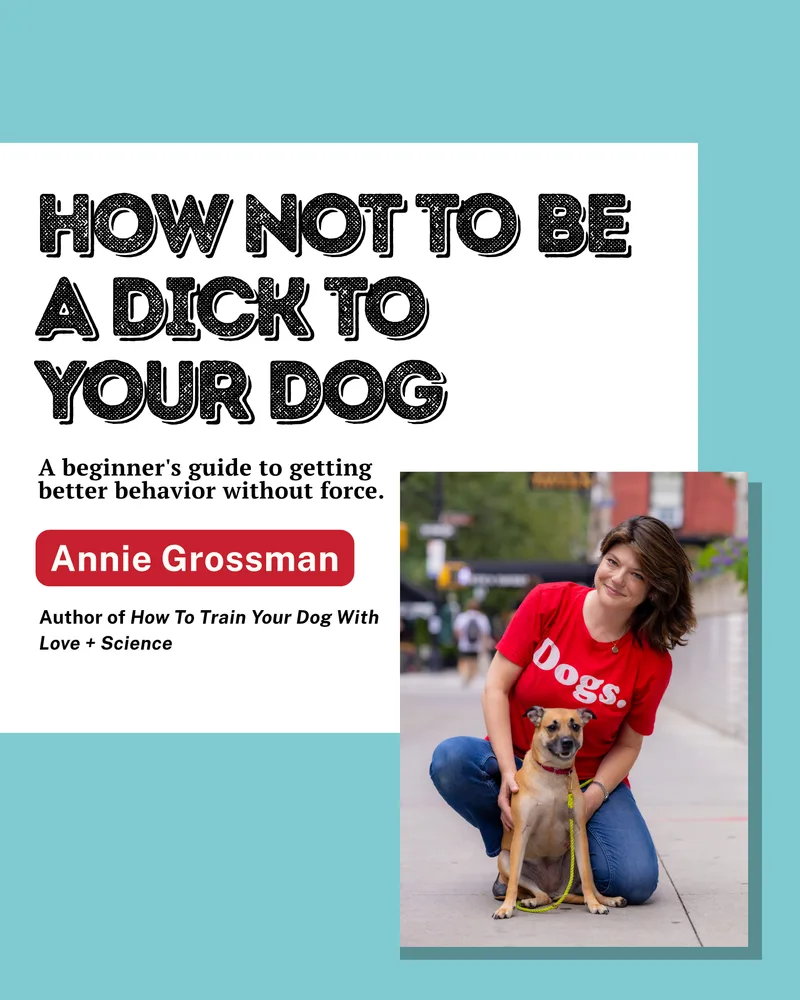
Hello listeners, long time no talk. I am back after about a year working on my book all about dog training, tentatively titled How to Train a Dog with Love and Science to be published by Sourcebooks next spring. I'm excited to tell you more about it in the weeks and months to come, but one thing I could use your help with as I am wrapping it up is I would love it if you would take a look at this good dog training pledge that we're putting at the end of the book, something that dog owners and professionals can sign to state that they believe in Training with as little coercion and punishment as possible. I'm still working on the wording and the content. Would love your thoughts.
You can find it at schoolforthedogs.com slash pledge and when it is available and signable, I will post it at that link too. In other news, Dom Hodgson, my British pet marketing guru, pet business marketing guru friend, is going to be doing a seminar at School For The Dogs on Sunday, April 23rd. I will put a link to get tickets in the show notes. I asked him to talk to me a little bit about what he's going to be covering in the seminar and he gave me some really great marketing tips for people who are professionals or aspiring professionals. But I think even if you are not a professional dog person, just an amateur dog person, you can still Get some good nuggets out of this conversation.
I look forward to being back here on the pod with some new and fun episodes coming up soon.
How are you doing? I'm okay. I haven't been podcasting in like, I don't know, like a year. Well, I'm happy to help you back into the saddle. And I'm excited to talk to you because you are going to be giving a seminar at School For The Dogs on April 23rd.
Grow Your Pet Business fast live. I feel like I'm just happy to catch up with you and get any advice you have for my pet business.
But yeah, let's just dive in. So you've been touring the U.S. this year, is that right? I have indeed, yeah. So it was weird how it came about, Annie.
It's one of these connections, you know, you make these connections in the pet industry and sometimes... They're just Facebook online connections and you never meet the people. And then other times you, you know, you explore the connection and you do something with somebody and then they do something for you. And this kind of worked the same way. There was a guy called Vance Morris, who's an ex-Disney employee, helps...
Businesses to give better customer service experiences. And I basically I connected with him and I invited him to be a speaker at my event, which just happened last weekend in the UK. He was holding a similar event in Orlando last October. And so I went over to see that. And whilst I was over there, I thought, oh, why don't I do my own seminar?
You know, I've been talking about doing this for years. And so, yeah, I did a seminar in Orlando in October. It went really well. A bunch of people came along. You did it with him?
No, I did this. So I attended his event and I kind of did my own seminar at the same time whilst I was in town. I know a couple of pet business owners in Florida. And so Doug Keeling got a nice guy up there. He kind of hosted it for me.
And yeah, that was kind of the start of it, really. And then we did Texas in January. Like I said, I'm coming to New York in April and then Annapolis in August and I'm going back to Florida again in October. So yeah, I'm highly looking forward to seeing you and your facility and yeah, and the good pet business owners of New York. Yeah.
How... How do you think the pet industry has evolved over these last crazy few years of non-in-person stuff? Yeah, yeah. I think obviously, you know, the pandemic hit everybody really hard and some pet businesses are still recovering from that. Some are still recovering their confidence, I think, from that.
But, you know, one thing's for sure, dog ownership certainly went up in that time and the pandemic didn't have any effect on What dog owners, how dog owners feel about their pets and what they are prepared to invest to make their pets happy, you know? And I think we're on this kind of trajectory, more so in the States, definitely, but it is coming more over here to the UK. We're on this trajectory of people, people kind of... Having a dog or another animal, mainly a dog as like a replacement child, you know, and they want all of the things that they would have spent on the child. They want all of those things to happen to the dog or they're prepared to pay for the dog to have all of those different experiences as well.
Yeah, which is great news for ambitious and innovative pet business owners. Yeah. Well, there's certainly been a change, it's true, in why people have pets over the last century or two. I mean, not that people didn't always sometimes love their pets as much as they love their kids, but I think they've come to take on a different role in some families in a way that I think is great. I'm all for it.
Are you seeing People turning to starting their own pet businesses during this period. And I'm curious if there's different kinds of pet businesses than Then most people think like if you're into pets and you're I mean if you're a kid you're like you should become a vet or I don't know maybe become a dog walker. I mean even dog trainer I think was like outside before I became a dog trainer was like outside of my thoughts of like even what kind of business one could have. yeah i agree i agree and one thing i'll say very quickly just about the previous point what you a good point you made about um you can argue one way or the other well is it a good thing or not that they that that they are treating their dogs this way but it's just it's happening you know like the genie is out the bottle like it's it's out there if you if you position yourself as somebody who Even if you have a really strong philosophy about how a dog should be raised, you should put that into your marketing, you should put that out there because people are looking for someone to plug into and they want help. So whether it's a good thing or not, you should make it a good thing.
Yeah, I think for sure there's, what is the growth in the different industries? I think you did right, actually. Let's go with the vet thing first. I have a podcast and I've interviewed dozens if not hundreds of different pet business owners and there's been a lot of them who said, you know, when I was a kid I dreamed of being a vet. But...
I wasn't smart enough, you know, or I didn't have the staying power to kind of get through that or I wasn't lucky enough or whatever. Yeah, but now, I mean, when I started my business back in 2011, For the first maybe three or four years of that business, when somebody would come to my house and like deliver a parcel and they would see the van outside, you know, and they would do this like double take and point at the van and be like, like, you're a dog walker? Like, really? Like, that's a thing? You know, and it feels like, like now surely everybody must know that their dog walkers exist and most people do.
But I think now it's seen more and more as like a legitimate... A legitimate option for anybody to, you know, and I have lots of clients who've started off as walkers and they've transitioned to trainers or they've transitioned to being a groomer or they've saved enough money and started a daycare. So, yeah, there's the pandemic as well. I think the pandemic forced a lot of people to. Kind of reassess what they were doing with their lives, you know, and like, am I really happy in this job?
You know, is it time for me to go and strike on my own? So I think if anything, the pandemic, whilst we did lose some pet businesses who didn't survive, I think it has been the difference in the amount of pet businesses out there has been negligible because a lot of people have since joined the industry as well. And I think one thing what's really What should be maybe worrying for a lot of pet business owners now is the competition. I always say you shouldn't worry about the competition because there's enough dogs to go around. And if you market yourself well enough, you'll be fine.
But I think the competition you maybe should be worried about is the CEO or the high level professional who has had enough of their corporate life. And they're coming into the pet industry now and they're learning all the skills that they need to learn about dogs and handling dogs. grooming dogs and training dogs but they're also bringing with them all of these other skills like staffing and they're bringing a lot of tech skills and they're bringing a lot of marketing skills and stuff with them into this you know and they're kicking ass you know I mean they're able to because they know how to kind of build the business they're able to kind of kick on a lot faster than a traditional pet owner pet business owner would kind of grow more organically does that make sense? Yeah, I want to find these people and have them work for me. I know what they're doing, because I feel like I'm just constantly stumbling along, figuring it out.
So I can appreciate that. I mean, when you were saying that, I was thinking, I wonder if also part of the competition then becomes people who are doing this as like... Retirement jobs or as, I don't know, like with money in the bank as opposed to people, I don't know. Yeah, yeah. And I think that's all, you know, you've got to have these pressures all the time.
You know, you're going to have newbies, you're going to have kids doing it, college kids who, you know, they just want a bit of beer money. You're going to have people who are doing it as a size hustle. You're going to have your retired people, like you say, and you're going to have your... Your corporate-y people coming in as well, you know, with big ideas for the business. This is why, I mean, we've been on the pod before.
This is why, like, your personality marketing and if you're going to niche, you know, and having a really clearly defined message that you're putting out there, if you do that and you get that right, it kind of doesn't really matter how much competition there is because you will resonate with a certain, you know, subsection of the market in your town or in your city. And, yeah, and they won't leave. It doesn't matter. How many people come along who are cheaper than you? That's certainly been my experience.
Yeah, you really need to bring your best game though right now. Yeah, for sure. Yeah, and when I talk to you, I am reminded of... Of how important it is to put out there what you believe in and what you offer and be upfront and show that to people, which can be scary. It can be scary, I think, to put yourself out there.
Actually, Kate was saying, I mean, Kate, my partner, was like, you're very brave. She said to me, and I was like, I guess so. I guess you have to be brave if you're doing this sort of mission-driven thing and also trying to run a business. But any business owner, I feel like at this point, whether it's putting yourself out there on making silly videos on Instagram or TikTok or... We're going up to people in the park, right?
Like you really, it's hard to be a, you know, there's the stereotypical person who, you know, I want to work with dogs because I don't like people, but the fact is like, well, people pay the bills, unfortunately, you know, and people read the ads and people make the phone calls and fill in the application form. So you kind of have to, and people that continue to pay the bills and people refer as well. So yeah, the dog part of it is huge, you know, and part of my story is like, I started off my business and they'll say, My marketing skills were better than my dog handling skills and I had to do kind of a reverse job of catching up with the dog training side of things. But yeah, if you get them both those things right, then you've got a really good chance of success. Personality marketing.
I mean, another way to think of it is like push me pull you marketing, we call it, you know, push me pull you, the Dr. Doolittle double headed llama. This is what happens when you put your personality out there and you do the mission-driven stuff that you've just been talking about, you repel some people, you upset some people, you awaken the trolls who turn up on social media out of nowhere and start adding nasty comments to your stuff and sharing it and lambasting you and talking about you behind the back. Guess what also happens? Your message resonates with the people who do believe in what you're talking about.
who are aligned with your values and they come to you and they come to you in droves. Like I said, we just finished an event this weekend. It was my impact event, my biggest event of the year here in the UK. And Vance was there, a friend of mine, and he was speaking and Vance has done a lot of events all over the world and we were having a meal afterwards and he said, you know, it's very rare that you find you know he said they were so bought into you it was unbelievable you know like they were so bought into everything you were saying and sharing with each other and just like it was just a nice vibe and you know it was just beautiful vibe for the whole weekend and he said that's not really very common you know um but the reason why that happens is the whole personality thing because i want people when they come to my seminar i don't want them turning up saying Oh, well, he's a bit rough around the edges or, you know, he's quite opinionated, you know, because, well, I am, you know what I mean? But I want them to know that all of the time, you know, before they turn up, you know, and then they can come and listen and if they like it, they can go away and take action.
Yeah, I mean, you're making me, again, just think about myself and my own business, and I feel like that, too. So I just finished this book, and I've been going through it with an eyeball, thinking about, like, okay, what is going to get me the hate mail? What is going to get me the trolls? Who's going to, you know... Eviscerate me, which, you know, it's going to happen, but it will also bring in people who are the opposite, right?
Absolutely. In their droves. And no doubt when I read the draft, I'll tell you that it needs some more, it needs a little bit more of the abrasive stuff in there. Well, probably not, Dom, probably not. And don't tell me that because I can't really change that much at this point.
There's a lot in it about Cesar Millan, and there was actually more about Cesar Millan in earlier drafts that got trimmed out. But I pushed to keep some in because even though I know, I mean, I can't tell you, I have a whole folder in my book. In my email inbox, that's just like hate mail I've gotten from people who are so upset that I've ever said anything negative about Cesar Millan because people just like, you know, defend him blindly, I would say. And I tried to really break down, you know, why so much of what he has contributed is just so problematic. And I didn't hold back.
I didn't hold back. But you know what, the other thing I've been doing though over the last, just like as I sort of put the cherry on top of everything is just fact check, like fact checking myself as best I can and, you know, making sure things are well sourced because there's so much that's just not well sourced out there and I don't want to add to the pile of drivel. Yeah, I think one thing that I'd be interested to hear your point in this, you've been training a lot more a lot longer than myself, but I think one thing that writing a book does is it forces you to get real clarity about what you do believe in, you know, and what you do, how you do things, you know, and why you do them that way, because... Until you write the book, you're doing everything like in person. Most of the things on personal online where you can demonstrate and you can, you know, if someone doesn't understand something, you can kind of give them another analogy or, you know, you can you got.
But with the book, it's like it needs to be crystal clear, you know. So for me, I was I had to kind of really think, OK, well, what do I believe? You know, how do I think I do? I think people should do this. Do you have a similar thing?
Yes and no. I wrote the book in a period of about six months, but going back, especially now that I'm going back and looking at my sources and putting stuff in the bibliography and whatever, I'm realizing I've been writing this book in one way or another for over a decade because a lot of it's based on interviews that I've done with people as far back as, I don't know, 2011. And that I didn't, I didn't necessarily like do the interview because I was like, I know I'm going to write a book, but it was like somewhere in the back of my head. So, and I actually, I tried to sell a book about dog training like a decade ago and was basically told, you know, you don't have enough of a platform. And I'm really glad that that never worked out.
And well, that didn't work out until so much later, because I feel like I, I needed to spend that decade like On the ground, talking to people about their dogs, working with dogs, explaining things to people, figuring out sort of like how I, how, like the book is very much structured in a way that is similar to how I used to conduct private lessons with people or even like intro group seminars sort of hitting on like the main things and trying to kind of like Just change people's point of view about what dog training is or just like get it to see them and sort of from a new angle. Because I really feel like that's what my strong suit, I mean, I think I'm a fine, whatever, I'm an okay dog trainer and I can kind of run a business. But I feel like the thing I'm passionate about is like just pointing people towards the world of positive reinforcement dog training or good dog training and getting them to see like how rich that world is. So, but you know, the process of editing the book down from, you know, like whatever it was like, I think my initial draft was like, 600 pages or something and then getting it down to like a more normal size. That sounds like three books to me.
Yeah, I think I maybe wrote more than one book, which is not the worst problem to have. But I got it down to one book. But I think that process was a kind of clarifying process of like what is most important to someone who's coming at this from nothing. Like what is crucial and what is going too far? And, you know, my editor and I had some back and forth on some things where she felt like it was like too in the weeds or going too far in another direction.
And in some cases I felt like she's right. But there were other places where I pushed back because I think, you know, stuff is important. For instance, like at the end of the book, I talk about sort of the future of how I see the future of dog training and of In a way that's kind of perhaps surprisingly hopeful. I think teaching machines, AI, you know, iPad games for dogs and Wi-Fi enabled treat dispensers, like I think this is the future and I'm kind of excited about it actually. And my editor was suggesting, you know, maybe that was taking things too far in a new direction.
But I was like, yeah, I want to give a sort of holistic view of like what this world is. Yeah, it's coming. Yeah. Well, it's here. Yeah, it's here already.
Are there are most of the people that you work with dog walkers? No, no, no. It's a broad range. I mean, I think it probably started out that way because that was some of the different businesses, because I know last time we talked, you told me about a business that just blew my mind that it existed as a New York City woman was that like people rent their yards. What is that called again?
Like yard rent? Yeah, field rent. Yeah, field hire. Yeah, yeah. She's done tremendously well.
Yeah. We had another couple of field hire people that At the seminar this weekend, too. Yeah, so your dog walkers, doggy daycares, dog groomers, trainers and a lot of bigger places in the States, you know, they offer all these things or certainly a combination of those. A lot of pet therapists, Emmett and T-Touch, different pet therapists. I know what T-Touch is.
What was the other pet therapist? Emmett therapy, sort of light finger touch with animals. There's a guy called Tony Sherry who's in my mastermind and he's the UK head guy for the Emmett therapy world. Yeah, it's unbelievable. You know, there's a lot of these things.
This is what's cool about what I do is people come into my world for marketing advice and business is business is business and marketing is marketing is marketing. And I can help them using all the same tips and ticks and tactics that I normally use. But I first of all, I have to find out about exactly what it is that they do. And how it works. And yes, that's been really fun.
So yeah, a lot of pet therapists and you've got your pet photographers. Yeah, field hire is huge over here. Field hire is a really big thing. You know, people like hiring a field or an adventure park, as they might call it over here, somewhere where they can go and take the dog and have like a quiet, non-disturbed walk, really. You know, that's kind of the idea behind it.
And they have different... A lot of my guys go, they really Disneyfy the whole thing, you know, because they're like, they have equipment in there, you know, basic agility equipment stuff and things, scent gardens, sensory areas for the dogs to snip through. And then they'll change it around and theme it like every couple of months, you know, so they'll do like some Halloweeny things and some Valentine's things and all this different kind of thing. So it's like for the dog and the owner, you know, they get the whole kind of... That's so cool.
That's so cool. So they like go buy a field or is it attached to like where they live? No, it's like both, you know, sometimes they'll sometimes they might have a field or a bit of land next to their facility. The one that I'm thinking of, particularly this one, Kathy, who... She actually won my Marketer of the Year competition last year.
Cathy has a place in Wales called, let me pronounce this properly, Kutch. It's called Kutch Dog Adventure Park. Kutch is a Welsh word that means cuddle, believe it or not. How cute is that? So yeah, so she has Kutch Dog Adventure Park and she has two different parks, an adventure field and a sensory field.
And they've got a little river that runs by it. And yeah, they're absolutely... The next part is they're building a little dog hotel on the land as well. So this is like a purpose-built themed thing, you know, and yeah, they're doing really well with it. That's so cool.
Tell me another interesting success story of the recent past with one of your clients. I mean, I deal with so many different people at different phases of their journey, you know? So we get, like, just in the last six months, you know, I've worked with somebody who has, like, set up a business from scratch and they've got a pet sitting. Dog walking business and they've gone from like zero to like eight grand a month in like six to eight months purely by you know and like never really had any experience this before you know she worked at she ran a garage before that came into this and by kind of following the system they've been able to do that I've had people who have switched so they've they've been maybe as a dog walker they've retrained as a groomer I've got a girl called Lucy who's done that and she's She switched areas and she switched professions and now she's full with the grooming, you know, just by just by following the myth. And then we've got, you know, I've got a guy who came to the Texas seminar.
He's got a board and train facility in Texas, Charles, the biggest, huge. I think it was it's the biggest board and train facility in Texas, possibly one of the biggest in the whole country. And yeah, we just did a call the other day, since implementing the stuff that we talked about in the seminar, you know, he's added like, he's increased the average sale by like $600 or something, you know, and this is a well established, pretty well established business, you know, he was already doing like six figures a month anyway, but it's, this is what I mean about these fundamentals, you know, like pricing and getting the message right and having some upsells in place and having like a system for selling, it can help you at whatever stage you're at in your business journey. Are there any, marketing-wise, are there any tools that you tend to recommend to the businesses that you work with or the people that work with? I think probably one of the biggest, the most underutilized tools would be an email list, you know, would be having an email list and emailing that list regularly.
And not only that, but segmenting the email list as well, you know? So... You have regular catch up emails that go out to like everybody. And then you might have specific emails that go out to existing clients that have upsell offers on. You know, you might have come back emails for clients who haven't used your services for like six weeks or six months.
And then you might have offers for people who've just come on the list, you know. And that might sound overwhelming or it might sound pretty basic. You know, I've just mentioned like three or four different things. But just doing just doing that, just like segmenting your list and having a bunch of emails that go out over a period of time, you'll transform the amount of because people are getting individual messages based upon their individual needs. Yeah, this has been a huge thing that I've learned and that I don't think I've done a good job implementing yet for our business, but just the fact that it's something that can and should be done I think has been a real wake up call for me.
I mean, when you start a business, like you don't know what you don't know, right? You don't. You don't. No, you're dead right. And I didn't know about any of this stuff either, you know, when I started out and it, you know, it took me a while to get the hang of it.
But I think things like that, things like because email and follow up in general, you know, whether it's whether it's email or whether it's direct mail post that you send out or whether it's texting or. Or phoning clients or prospects, whatever it is, any kind of follow up, really. But email is so kind of, you know, people still check their emails even when they haven't checked Facebook or Instagram or TikTok. Even millennials, you know, even like my son, who's 18, if he gets an email, he'll check it, you know. So everyone's like that.
So a fundamental like email or fundamental like follow up, it doesn't really matter what. New social media channels come along because all roads should lead to a really good follow-up system. Yeah, yeah. I'm working towards like improving our email for marketing in a way that's not spammy, you know, like I want to be getting people. And also I've been trying to figure out how to make it as easy as possible to get testimonials, you know, get information from people whose, you know.
Lives with their dogs has been impacted for the better by their relationship with School For The Dogs. And that always feels tricky for me because like, I don't know, I guess I could just like blanket email or set up an automation that says like, please write up a couple sentences about your experience, but it would be nice to have more than that. But then it becomes like, how do you orchestrate it? Have somebody send you a video. What'd you say?
I said, shall I give you some testimonial tips while I'm on? I will take them. Yes. So you're dead right. It can be really difficult to get testimonials.
We can feel like we're putting on the client, you know, they haven't got time, et cetera. And you really have to sell the fact that you. Want and you need the testimony, you have to sell that almost as much as you've sold the course or you've sold the package or you've sold the dog walk or whatever, you know. And how I like to do it is, and how I recommend you do it is, I recommend that you tell them how important it is, you know. You say, you know, hey, you know, we've been...
Come into the daycare now for four weeks or, you know, we've been working with you and Fluffy for six sessions now and you've made so much progress. And I actually get most of my best clients like you. I get them through testimonials and referrals, you know. So if you if you feel like you've got value from the service, if you if you've enjoyed it, then the best thing you can do is to give me a testimonial, please. And then you give them a little structure for the testimonial as well, because people don't often know what to say.
So you tell them you need to know what they were worried about, what they were struggling with, what they felt anxious about before they started to work with you, and then what it was like working with you, and then what their life is like now and what they recommend you. And you give them a simple little structure like that. And then that tells a story, see, you know, so it tells the story of my training journey with Annie or my the story of my dog walking service with Dom or whatever, you know, so that's how you structure it. And you stress the importance of it, make it nice and easy for them. Yeah.
And then you reward them afterwards. You know, people give testimonials because they want to help. Usually, you know, you can bribe them and you can, you know, tell them I'll give you a voucher and stuff like that. But I'm not a huge fan of that. I would rather just tell them and tell them how important it is and then have them do it and then surprise them with some kind of gift afterwards, you know, as a thank you.
That's really great advice. Yeah. Do you think. Where do you land on like getting them to just write up a few sentences or is it better to do like video ask kind of thing? Yeah, good question.
Yeah, I personally, whatever they're prepared to do, I'm prepared to take from them. So and the more the better. So a video testimonial is is best. Because if you can get them to do a little handheld video testimonial following that structure, then you can use the video on your website. You can use the video on your socials.
You can rip the audio off and use it elsewhere. And you can also get it transcribed and put it on your website and your socials and everything as well. So video is the absolute best. If you can't get a video, then obviously, you know, get it written. But you'd be surprised, actually.
There's a lot of people who, like, obviously really don't like being on camera and it's their worst nightmare. And you don't want to pressure anyone like that. But you'd be surprised how many people are prepared to give a testimonial, a video one as well. Because you've helped them so much, that's the thing, you know, if you're delivering transformational results for people and, you know, like they had a dream when they got a dog that they were going to be able to take the dog for walks to the park and for whatever reason, like the behaviour broke down and they made mistakes or something bad happened that was out of their control and they can't have that anymore, you know, and then they've gone through all that stress and worry of like, oh my God, you know, like, Now we've got this dog for the next 10 years. We can't take it where there's any other dogs or whatever, you know, and you've helped to fix that, you know, damn right they'll give you a testimonial.
You've just got to ask for it. You've just got to stress how important it is for you. Yeah. Yeah. All right.
Well, you're lighting a fire under my chair. I'm excited that this book is done because I feel like it's consumed so much of my time and brain power over the last year. While I've also been learning a lot about digital marketing sort of at the same time, but I just haven't had the ability to devote myself to it the way I would like to. I think I love talking to you because I am similarly excited about marketing and that I see it's just like such a it's a way to train people essentially. And you're training people in a non-coercive way if you're marketing.
Right. You're not like. That's right. Yeah, that's right. I mean, we just I've just I've just been writing about this actually for a different seminar that I'm doing.
You know, when we're training a dog and we want to get, my old dog training mentor used to say, you know, if the dog isn't listening to you, looking at you, the dog isn't listening to you, you know, so we've got to get the dog's attention, you know, before we do anything else. And it's the same with the marketing, you know, you want to get the client's attention, you know, and how we get the client's attention is usually by talking about something that they're really worried about, you know. Showing boobies. That's one way for sure. And I'm not averse to that either.
Showing them something that they're really worried about. Showing something that they're anxious about. Reminding them of a problem that they've got. And then they'll stop. It'll meet them with the conversation that they're already having in their own head.
And they'll have a bit of empathy with you as well. They'll think to themselves, my God, this dog person isn't just trying to sell me something. They're talking about something that's... It's really, really stressful for me at the moment, you know, so I'm going to listen a little bit more or I'm going to find out a little bit more. And then you can go on to tell them about, you know, all the ways that you can help them and give show them testimonials and all that kind of thing.
So, yeah, it's a lot of similarities between doctrine and marketing, I think. Yeah. Yeah. Well, you know, maybe you don't know, but I don't know what you know. John B. Watson, who was like.
One of the, I mean, pretty much the founder of behaviorism, famous for doing the Little Albert studies at Johns Hopkins in the early 1900s, where he basically showed that you could condition fear in an infant by Making a very loud noise while showing he used a rat and he conditioned the baby to be fearful of a rat and then he showed how that fear could be easily generalized. Pretty crazy, creepy stuff. But he wrote a lot about... Behavior, which was just sort of starting to be understood as something that relates to biology to some extent that is really a science and not voodoo. Anyway, he ended up, when he left academia, he ended up going into advertising.
And is credited actually with bringing a lot of the science of behavior to the world of advertising. And oh my God, I tried to get this actually in the book. Let me see if I can find it. He had this hilarious ad.
You should be careful what you show me if it's marketing related because I'll use it in my next book. It was so he had to describe it because I don't think I'm going to be able to find it on the fly. But basically, you know, saying most most marketing is is not really ideally. Ideally, good marketing is not coercive. It's it's making you do something because you want to do something.
But some marketing is certainly making you do something because you're scared of what will happen if you don't do it. Anyway. He put out an ad that was of a bunch of surgeons gathering around talking about, like, they're doing surgery. I can't remember. I'm butchering it.
But, like, it's as if they're, like, operating on the guy's ass in the 1920s. Like, as if he has some, like, terrible condition brought on by the poor toilet paper he was using. And the ad is like, if only he had bought softer toilet paper. Love it. Very good.
Very good. Yeah. When I, I'll find it somewhere and send it to you. Well, there are, there are, there are probably very few things that we can all, you know, that we all really need in our lives, but good toilet paper is one of them. Definitely.
Yeah. Agree. All right. Well, that sounds like a good place for us to end this. Get a logical conversation.
Well, I'm so excited to have you in New York. I hope that we get to hang out. And thank you so much for chatting. And what's the link people should go to to get tickets? Yeah, they can go to petbusinessmarketing.com forward slash NYC.
And yeah, you can, we have limited spaces for this. So, you know, yeah, grab your ticket now. Yeah, and we'll, you know, I'll, I can't wait to meet you there. As I can't wait to meet you, Annie, I'm really looking forward to it. Yeah, no doubt we'll get to hang out a bit as well.
But yeah, it's Sunday, April 23rd, petbusinessmarketing.com forward slash NYC. And hopefully I'll see you there. Sweet. All right. Thanks, Dom.
No problem. Take care.
Thanks so much for listening. You can support School For The Dogs podcast by subscribing, leaving a five-star review, telling your friends, and shopping in our online store.
Learn more about School For The Dogs and sign up for lots of free training resources on our website schoolforthedogs.com.