
March 20, 2026 · Annie Grossman
Your Dog Doesn’t Want to Meet Every Dog
What people get wrong about on-leash “socialization.”
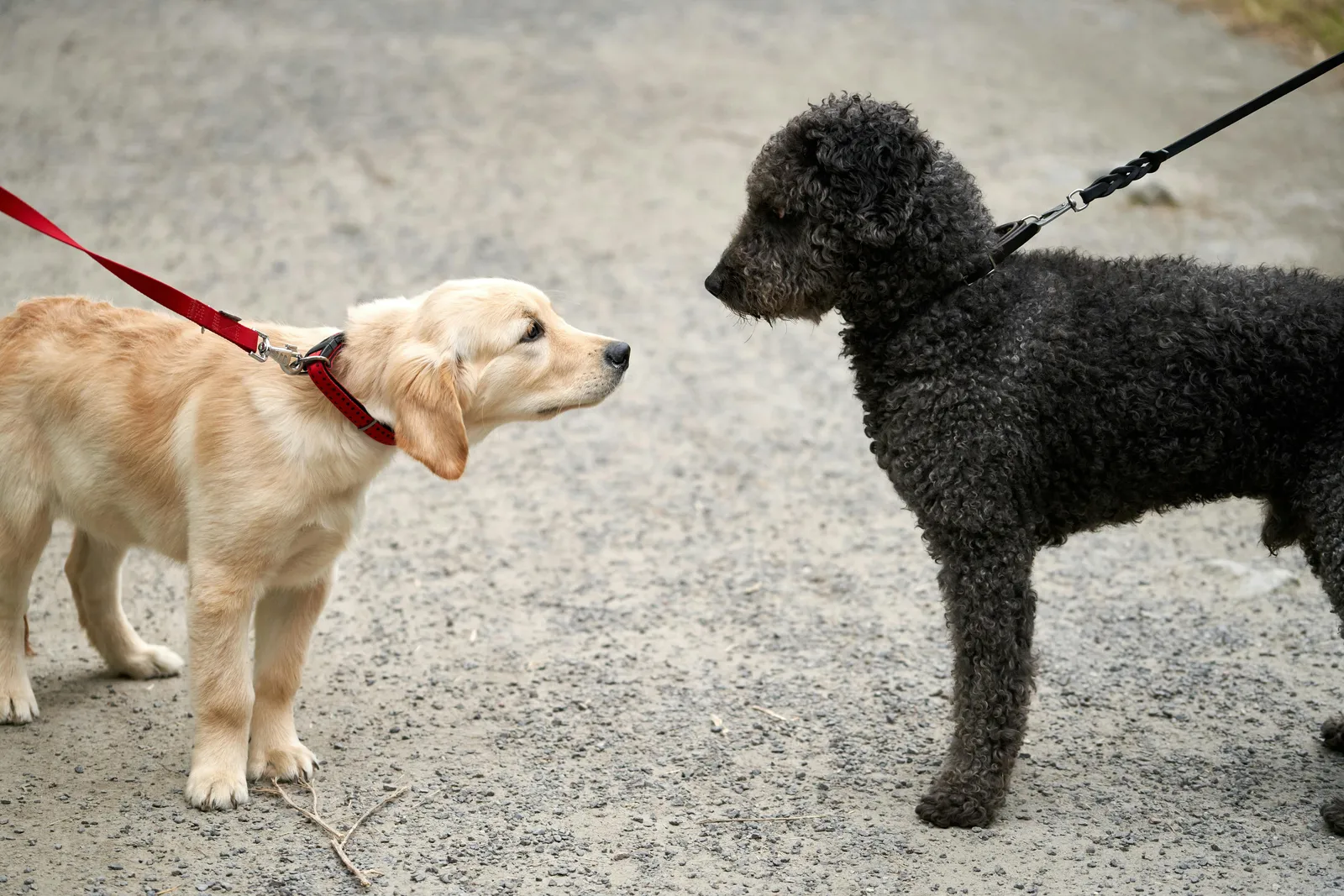
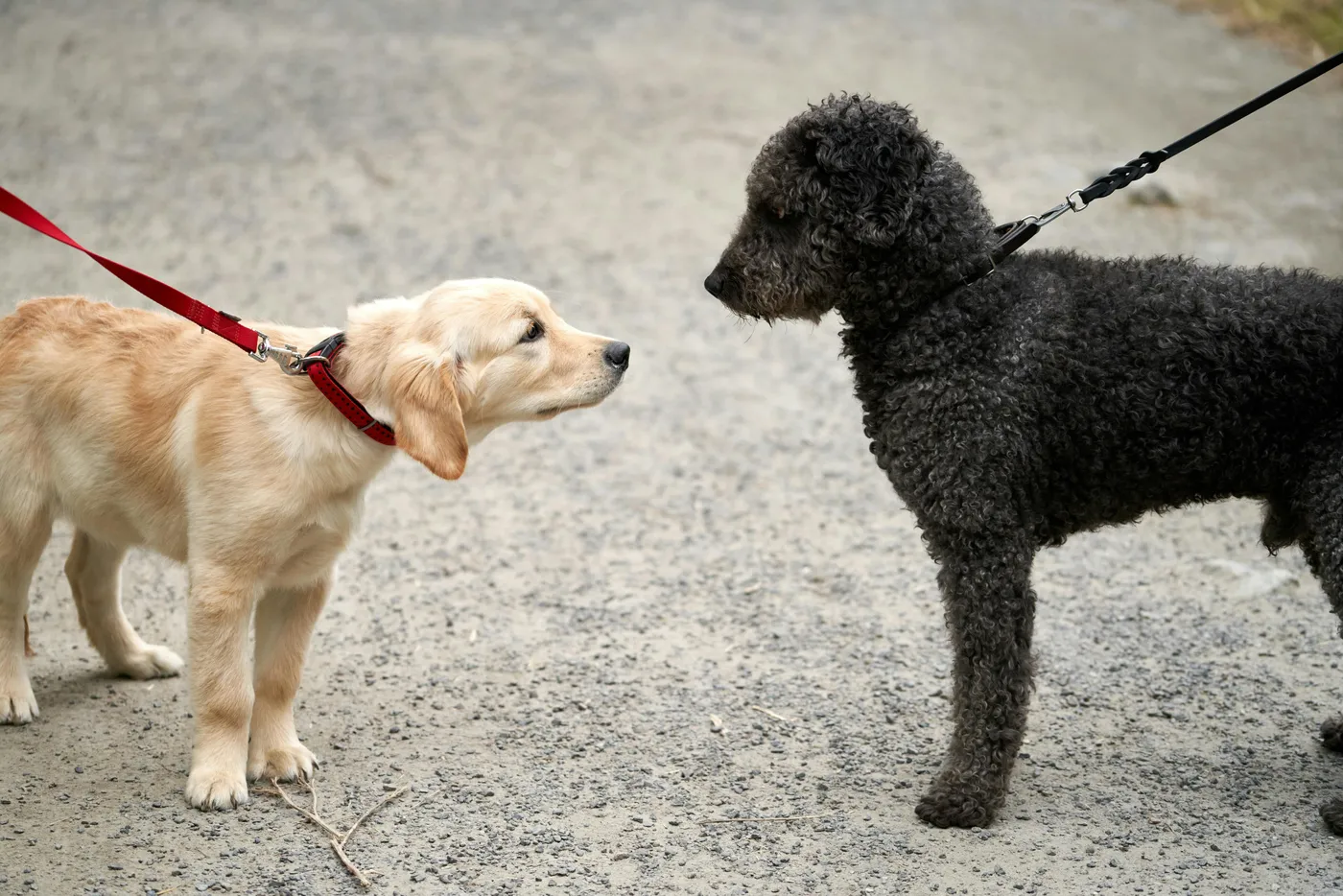
Is your dog truly a social creature? A busy city street may not be the place to find out how they feel about meeting strangers.
Are you a city dog owner?
If so, here’s a wild guess: part of the reason you got a dog was… to meet other people.
Dogs have been lubricating social situations since before Coke met rum.
However, just because you like the idea of meeting other people and their dogs does not mean that your dog actually wants to meet other dogs and their people.
In my work as a dog trainer, I’ve seen many people who simply assume their dogs are generally going to be friendly towards everyone because THEY themselves are generally friendly.
But this is (I’m sorry) silliness.
Contrary to popular belief, I don’t think your dog’s behavior (and preferences and manners) necessarily reflect yours.
There’s just no good research that there is some invisible force— “energy” it’s often called in this context—traveling down the leash and controlling your dog’s behavior.
You might be the nicest person in the world, and you could have a dog who wants to rearrange your neighbor’s Labradoodle’s floofy face.
This doesn’t make your dog bad.
It does give you something to work on.
Safety First
If you live in a busy city where you have to walk on a narrow sidewalk, your first step is to keep everyone safe. That is why people with truly dangerous dogs tend to walk them during hours of the day when no one is out (there’s even a book called The Midnight Dog Walkers, which is about living with a reactive dog).
Beyond that, you want to work on teaching your dog to feel okay about other dogs - a process that involves counterconditioning in order to change your dog’s underlying emotion about triggers. This is basically a jargon-y way of saying that you want your dog to create good associations with things that might have previously seemed scary. This can usually be done by pairing the sight of other dogs with treats that are given progressively closer to the other dog.
If you are successful with counter-conditioning, you might be able to work up to helping your dog learn to both feel good about other dogs and greet them politely. But you might never get to that point, and… that’s okay. Your dog can still live a very full life without having to be social with strangers.
Learning To Navigate The Chaos
People may pay a premium to live on, say, a busy street in the middle of downtown Manhattan, but if your looking to work on dog-dog greeting skills, you’re better off in Canarsie. If you can, practice your maneuvering skills in an empty parking lot or a hallway before you take your show on the road. City streets are narrow and dogs often can’t move away from another dog they feel uncomfortable. If a dog can’t create distance, he or she may try to create space by lunging, growling, or even biting.
Often, the safest option is simply letting dogs pass each other. You can work on training this by having a treat handy (make sure it’s something your dog really likes - cheese and deli meat are good starting points) and giving it on the opposite side of you whenever you see another dog.
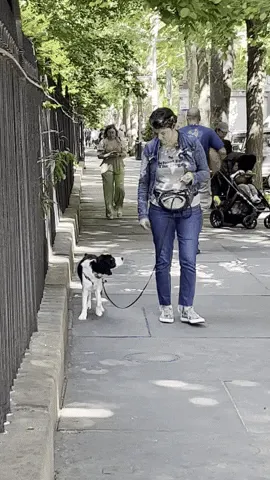
My client Sugar gets a treat as soon as we spot another dog. I’m wearing a hands-free leash, which makes it easier for me to have fingers available to give treats, and also helps me make sure there is adequate slack in the leash.
You can give a cue as you do this so that your dog starts to learn that you saying “Other Side” means to go to your other side.
You can also train a behavior like a U-Turn, which has your dog switching directions when they see another dog.
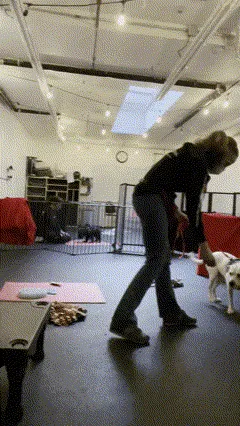
Trainer Anna Ostroff works on practicing an indoors U-Turn with Luna.
If you don’t have a treat, you can still reinforce attention by upping your pace, for example (walking faster is often rewarding to dogs) or by using a gooey voice that your dog likes. A treat is going to work better, but if you don’t have one, you still have options.
When in doubt, I tend to assume all dogs are not okay doing leash greetings, and suggest that clients just avoid them all together. That doesn’t mean that I’m against dogs being social. Au contraire! I just think that interactions go better when dogs get to hang with dogs they already know, and also when they can take place in controlled spaces off leash. Puppies especially benefit from off-leash play or one-on-one playdates with familiar dogs. A hallway rendezvous with a neighbor’s dog can go a long way. You don’t even need that much space. I’ve seen many a dog friendship bloom in a galley kitchen.
Now is where I need to admit something: I let my dog greet other dogs… sometimes!
But I have rules that I follow.
If You Are Going To Allow Leash Greetings…
**Use your words.
**Always ask the person at the end of the other dog’s leash if the dog is friendly. If they say no, they are doing a great favor. If they say “yes,” I still do NOT assume they know what they are talking about. Instead, I check the other dog’s body language…
Look for signs of discomfort.
Signs of discomfort include stiffness, seeing the whites of the eyes (“whale eye”), or a tucked tail. Signs of comfort include loose movement and a wiggly body. As I’m doing this, I’m also making sure that my dog is interested in saying “Hi.” If I see her hackles up, for instance, I usually skip the greeting. Sometimes this “piloerection” can be just a sign of excitement as opposed to a sign of fear. But I’d prefer to play it same and not find out which way she is feeling after an interaction has gone poorly.
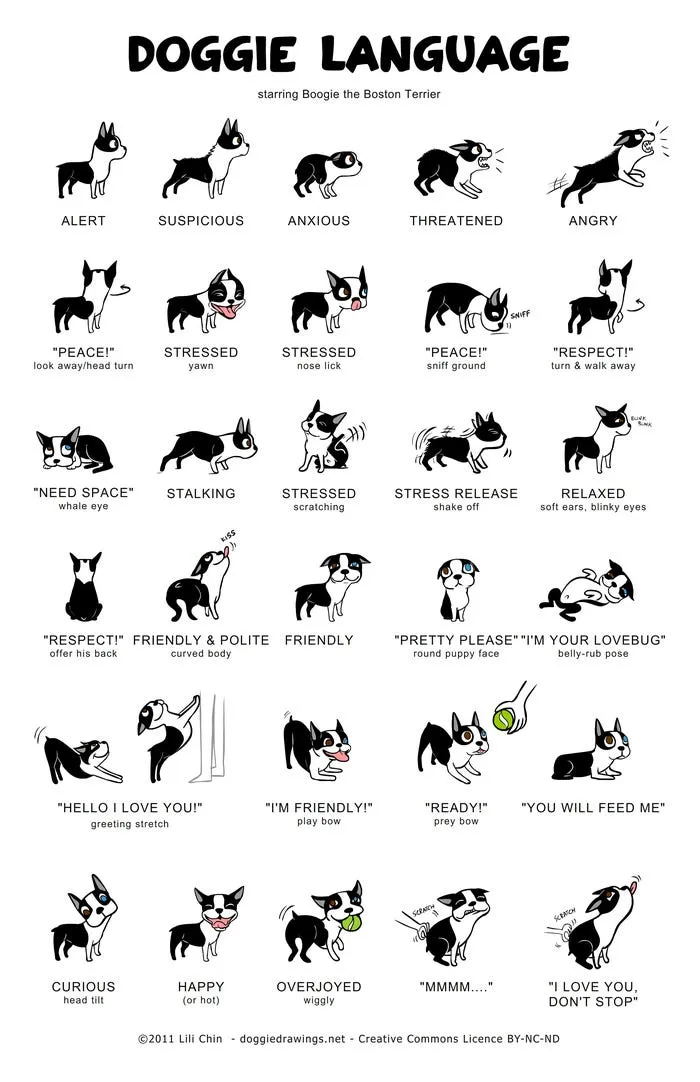
Lili Chin’s guide to dog body language, which can be downloaded for free on her site, can be a helpful way to become familiar with your dogs physical vocabulary. Pay particular attention to signs of discomfort.
**Approach from the side.
**Head-on greetings are awkward for dogs. A polite greeting usually includes a mutual rear sniff followed by a muzzle sniff. You can help your dogs get into this pos_ish_ rather than introducing them head-to-head and then waiting for them to find each other’s gonads.
**Keep greetings short.
**Three seconds is usually plenty of time. Most aggressive interactions escalate through several stages, and three seconds is usually too short for things to reach a point of no return. Afterward, cheerfully move your dog away or toss a treat in the opposite direction.
**Make sure the leash loose.
**Leashes often become taut during greetings, and dogs can learn that the sight of another dog predicts tension or choking. Over time, that association can lead to leash aggression. This is one reason why I’m fan of using longer leashes even on city streets. Too short a leash and you risk either getting tangled with the other dog’s leash, yanking on your dog inadvertently, or both.
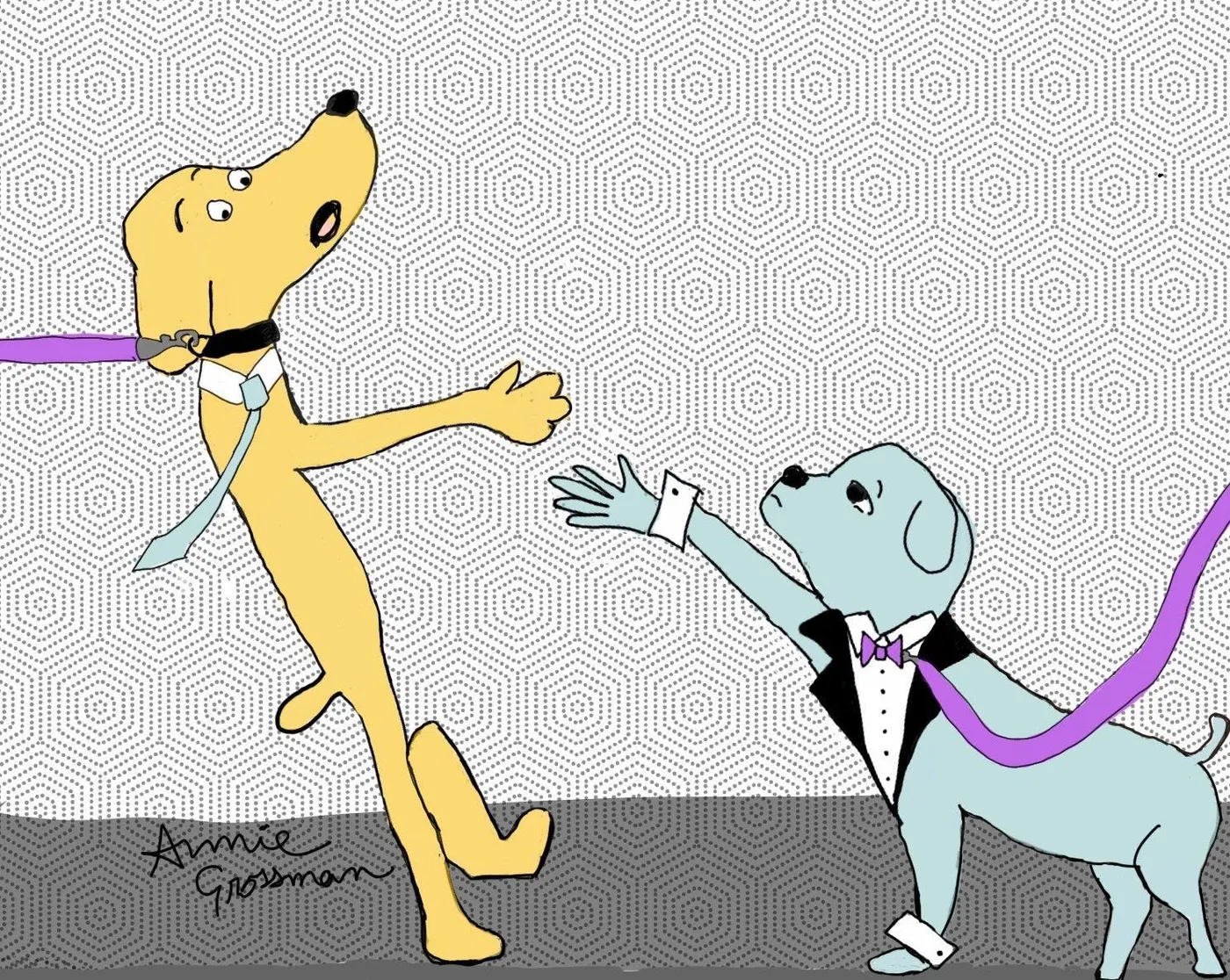
A short leash can cause you to yank your dog during a greeting, even inadvertently. Repeated experiences like this can lead to your dog feeling uncomfortable about greetings, and even lead to bad associations with other dogs in general. (Illustration by author).
My go-to leash for over a decade has been the Found My Animal double-ended thin nylon leash, which allows me to walk my dog hands-free (it clips around my waist. When I do let her say hi to other dog (which is rare!) I can unclasp it and she has lots of room to maneuver.
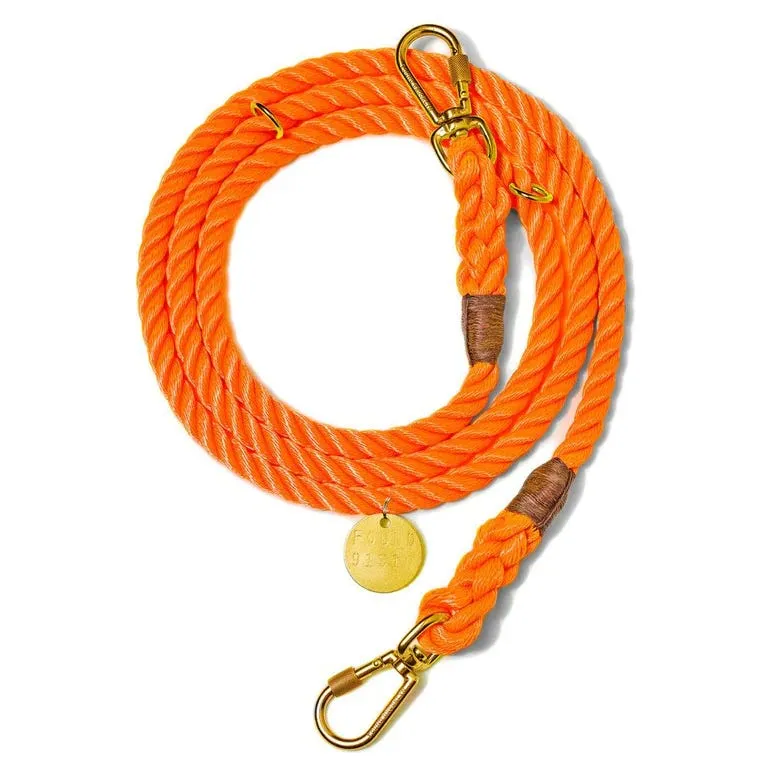
I love the double-ended thin nylon adjustable leashes from Found My Animal. They are indestructible —I’ve been using the same one for a decade. .
Sometimes the most polite thing your dog can do on a city sidewalk is simply keep walking.
Looking for more tips? Make sure to check out my podcast episode on this subject!
Have dog training question? I do Q+A’s once a month! Send me your question at annie@anniegrossman.com and I’ll let you know if I address it.
Originally published in my newsletter, Don't Be a Dick to Your Dog.