
September 24, 2012 · Annie Grossman
How to crate train a dog
A crate is a tool that can help prevent unwanted behaviors and encourage desired ones in situations where you can’t have your dog in an otherwise enclosed, dog-proofed space.
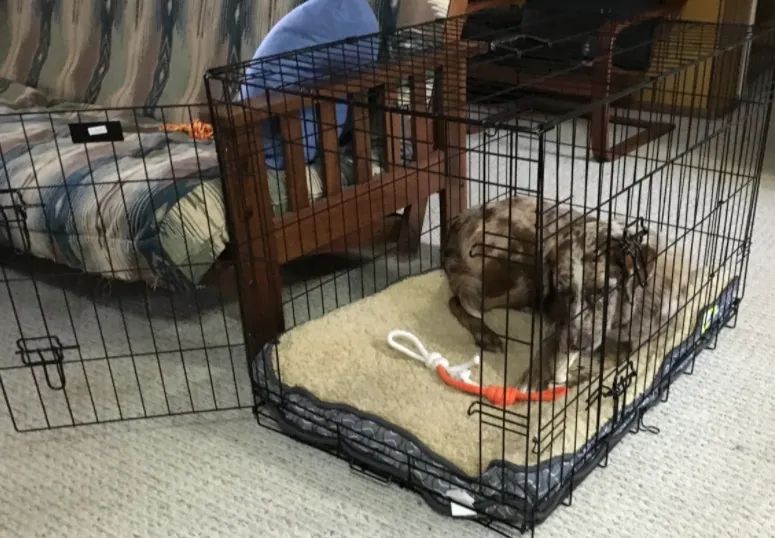
As dog trainers, we often meet new dog owners who hesitate to get a crate. Some worry it will take up too much space, while others feel uncomfortable with the idea of confining their dog. However, crate training can be an incredibly useful tool for house training and teaching dogs how to be alone.
Should you use a crate?
A crate isn’t mandatory, but it can be a great aid for preventing unwanted behaviors and encouraging good ones, especially when you can’t supervise your dog in a secure, dog-proofed space. When introduced correctly, most dogs come to enjoy their crates.
Early experiences with new spaces and objects are crucial and often leave lasting impressions. For this reason, you can’t simply place your dog in a crate and expect them to adjust. This approach can be stressful and even traumatic for many dogs. Crate training should be a gradual process. Start by making the crate a comfortable space with a cozy pad or blanket. Place it in a high-traffic area, such as the kitchen, and occasionally drop treats in the back without your dog noticing. Let your dog discover the treats on their own. Serve meals inside the crate for now, with the door open. To encourage your dog to spend time in the crate, tie a food-stuffed chew toy to the back inside, so your dog must lie down in the crate to enjoy it.
Adding a cue
Teach your dog to enter and exit the crate on command. Use a phrase like “into the crate” or “into bed,” toss a treat inside, and praise your dog as they go in to retrieve it. At first, reward your dog even if they only partially enter the crate. Once they start going all the way in, encourage them to come out with a cue like “come on out!” Praise them when they exit, but save the treats for when they go in.
Repeat this process a few times, then adjust the routine: instead of tossing a treat inside after giving the cue, wait for your dog to enter on their own before rewarding them. If your dog doesn’t respond to the cue, stay patient. Avoid repeating the command or throwing the treat in to coax them. If they don’t enter, end the session calmly and try again later. When your dog finally goes in on their own, reward them generously, repeat the process a few times, and then conclude the session. Always end on a positive note, leaving your dog eager for the next session. If you ever catch your dog relaxing in the crate on their own, reward them with a treat to reinforce that behavior.
When your dog reliably enters and exits the crate on command, you can begin locking the door. Start by playing the “in-and-out” game, but now close the door briefly after they enter. While the door is closed, feed your dog treats through the crate for a minute or two before letting them out. Gradually increase the time with the door closed, walking around the room and occasionally tossing treats into the crate to keep the experience positive.
Building duration
Once your dog is comfortable being in the crate with the door closed for short periods, you can begin extending the time. Set up the crate next to the sofa with some special chew toys or food-stuffed puzzles inside. Cue your dog to enter the crate, reward them, and close the door while you relax and watch TV. Leave the room briefly a few times, but always return within a minute. The goal is to ensure your dog has a calm and positive first experience of being crated for a longer duration. If your dog becomes noisy or restless, ignore it. Reward moments of calm and quiet with a treat.
At the end of the session, open the door without fanfare if your dog is calm. Avoid making a big fuss when they leave the crate. Instead, act neutrally and keep the exit uneventful. You can then cue them to re-enter the crate for another treat, but leave the door open this time.
Once your dog is comfortable being crated while you’re home, start practicing short absences. Leave the house for just a few seconds at first, gradually increasing the time over multiple sessions. Mix in short absences (e.g., 5–60 seconds) alongside longer ones (e.g., 10 minutes, 15 minutes, an hour). Always leave and return without any dramatic goodbyes or greetings.
Before crating your dog for an extended period, make sure they’ve had plenty of exercise. A tired dog is more likely to relax and rest in the crate.
Crate training tips
- Ask your dog to go into the crate at least once a day and reward them with a treat. Allow them to leave the crate immediately afterward to keep the experience positive.
- Provide engaging activities like chew toys or food puzzles to keep your dog entertained in the crate.
- Tire your dog out with physical activity before long crating periods.
- Avoid making a big deal when letting your dog out of the crate. Keep exits calm and uneventful.
- Always let your dog out when they are calm and quiet to reinforce that behavior.
With patience and consistency, crate training can help your dog feel secure and comfortable in their space while giving you peace of mind.
Featured image via Flickr by Taro the Shiba Inu, (CC by 2.0)