
April 15, 2026 · Annie Grossman
Talk To The Animals?
Why our obsession with translating dogs says more about us than them
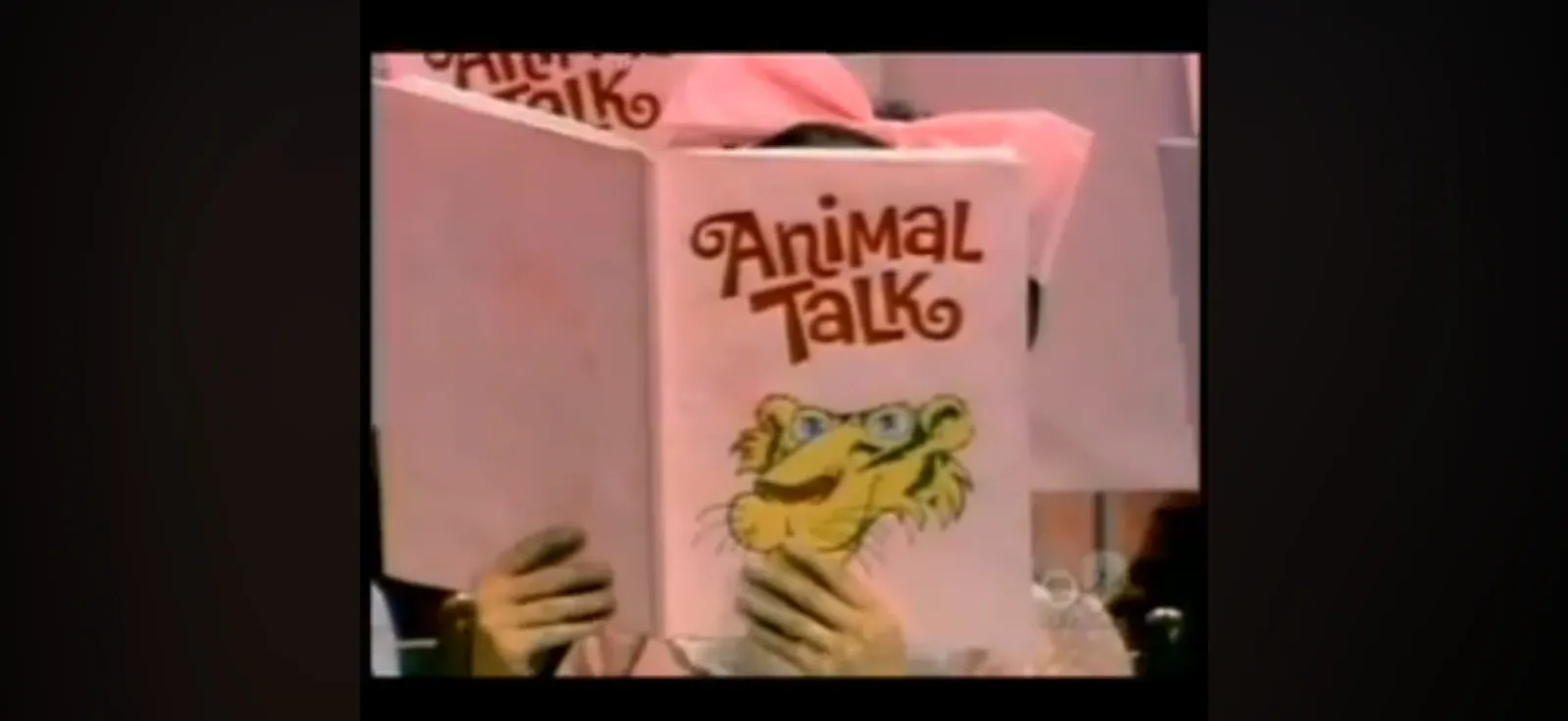
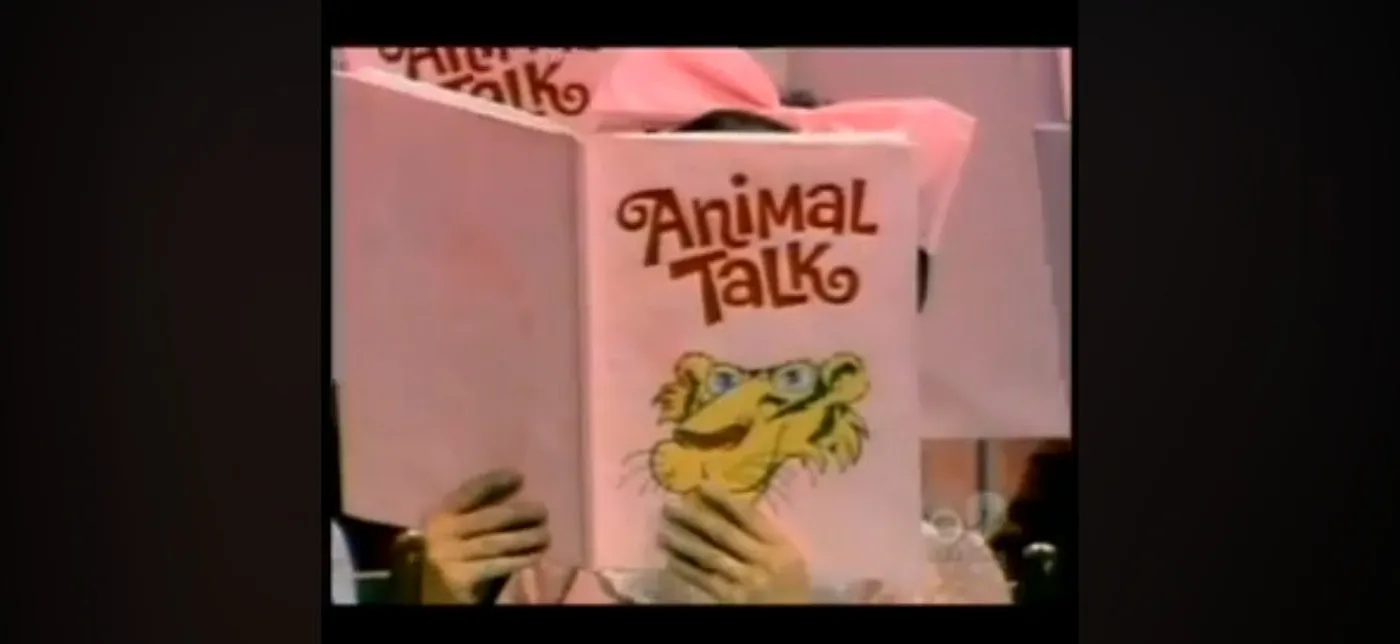
One of The Lennon Sisters studying up on Animal Behavior on The Lawrence Welk Show in 1968.
While normally these days I write about things relating to dogs and behavior, I do have other interests.
Like YouTube.
Have you heard of it?
My favorite video wormhole to go down lands me in the land of musical numbers from American variety shows, mostly from the 60s and 70s.
Spoofs of these shows are also a treat.
I have three daughters now. The two older ones, sometimes like watching these things with me, because: screens. At some point I showed them a Saturday Night Live sketch of the Maharelle Sisters. “Sisters do as sisters should, we’re all together sisters!” they harmonize. The sketch ends with the fourth sister, Kristen Wiig, singing
“I found a dead cat on the side of the road,
so I took it home and put some honey on it,
and I cooked it and then I ate it
Is that bad?”
They became obsessed.
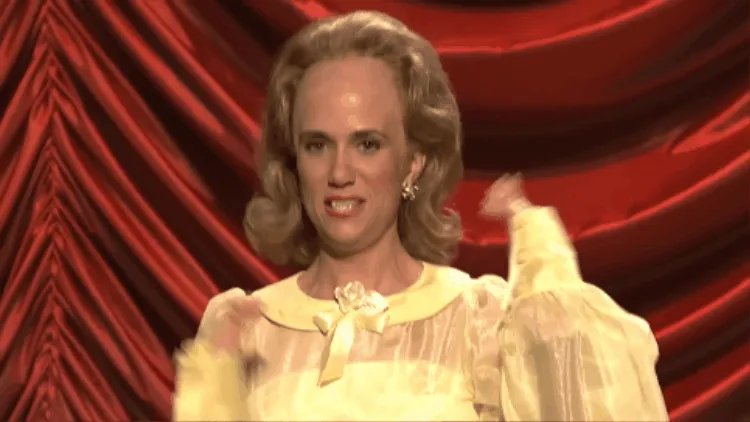
Kristen Wiig as one of The Maharelle Sisters on Saturday Night Live
I explained to them that it was a pastiche— that there had been actual singing sisters, on an actual show like this: the Lennon sisters, on the Lawrence Welk Show.
I wanted to show them the original show, and I knew just the video to pull up.
Talk to the Animals
As you may or may not know about me, I have lots of issues with Cesar Millan, the celebrity dog trainer. In my book I do a deep dive into the problems visible in two particular episodes of his show, The Dog Whisperer. What’s funny is even the name of the show is something I find distasteful. The whole idea of “whispering,” as if there is this special combination of words that you can say into a dog’s ear that will make them do x, y, or z, like we are somehow pulling behaviors out of them. (It makes me think of once, when I had my dog play dead, a cousin — a grown up— said “What do I say to make my dog do that?”)
I know that “whispering” in his case means he is controlling the dogs with his silent and invisible “calm dominant energy,” but that is not the most common definition of the word. Whispering is a word that has to do with, well, words.
And words are human inventions.
The whole notion of people talking about “talking to animals” leads me to think about how anthropocentric we are as a species.
My Animal Degree
I think my dad first sent me this clip many years ago when I first went to school to become a dog trainer. You see, the song refers to “getting an animal degree.” He had a habit of fixating on a song that related to whatever was happening in the news or in a conversation.
A tattooed waitress would launch him into Lydia The Tattooed lady.
If a bank teller’s name was Peggy Sue, she was in for a treat.
When Russia invaded Crimea, he would walk down the street belting “Cry Me A River.”
This was generally a charming habit. Except when he was in a hospital bed and the doctor explaining that he’d just had a mini-stroke happens to be named Paganini.
Lord have mercy.
Anyway, the song Talk To The Animals was written by Leslie Bricusse and Anthony Newley, the same duo who wrote the music for the 1971 film Willy Wonka and The Chocolate Factory, which is a movie I cherish. There are two numbers, in particular, that I think really just nail topics that aren’t often covered in song.
The first is Pure Imagination, which is one of the few love songs where, essentially, an entrepreneur is serenading their business.
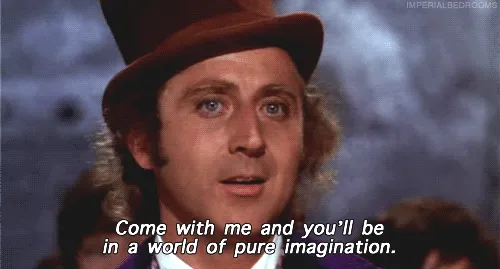
I literally can get teary watching Gene Wilder survey his candy land, singing about a “world of my creation” that “defies explanation,” as it gets to the heart of all that was wonderful about starting and running School For The Dogs, the training center I had in the East Village for over a decade; it embodied my dream of a little world where people could learn what it means to teach and learn without force and coercion.
If you want to view paradise
Simply look around and view it
Anything you want to, do it
Want to change the world?
There’s nothing to it
And there’s the ultimate spoiled child song, I Want It Now, in which Veruca Salt wants to take home one of Wonka’s golden-egg laying geese.
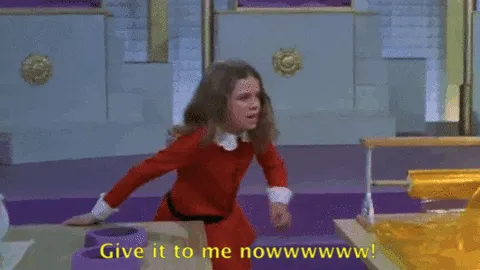
I sing this to my kids when I think they’re being, well, brats—They hate it!
I can clear the room by just speaking the words: “I want a feast! I want a bean feast!”
They literally run away with their fingers plugged in their ears. (This is a good example of negative reinforcement!)
In Talk To The Animals, we have another example of a song that is about a subject that is rarely touched upon by song writers. But…it is not a great song. I find it pretty grating, to be honest. Although I do like the lines:
“If people ask me ‘Can you speak Rhinoceros?’ I’d say, ‘Of course-eros! Can’t you?”
and
“If friends say ‘Can he talk crab or pelican?’ You’ll say ‘Like hell he can!’”
Originally written for the 1967 movie Dr. Doolittle, it asks what would happen if one could have conversations about Eastern art with intellectual llamas, play chess with camels, have tea with crocodiles or curse in “fluent kangaroo.”
Now, I’m not saying these are necessarily bad questions. But, do they really warrant a full production number?
Actually, I take it back. Maybe these are bad questions. Or if not, then, at least…weird ones.
Like, for the last decade or so there’s been a craze of people trying to translate dog thoughts and feelings into human words using any number of devices, apps, buttons, AI, etc. It distracts from the fact that we are working to understand dogs without putting our words in their mouths. I mean, they seem to understand us quite well without us making apps that help us speak their language. Unless maybe I just don’t know about it and there’s an app that helps show people how to get on all fours and wiggle their butts or lift their leg on the sidewalk. Not that that doesn’t sound like a good time.
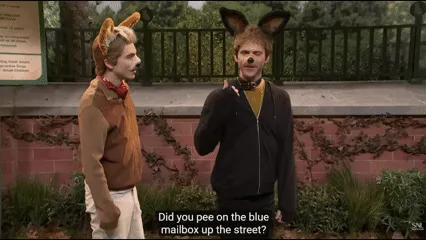
There are a lot of cartoons that feature dogs behaving as humans, for an audience of humans. This Saturday Night Live bit comes close to what I imagine dogs would make if they could make humans behaving as dogs, for an audience of dogs.
I think about this kind of thing whenever I watch cartoons that have animals walking around on two legs behaving like humans (Daniel Tiger, Peppa Pig, Bluey, and ten-thousand others). If pigs made cartoons, would they be about humans walking around on all fours, rooting in mud? Do dolphins daydream about human echolocating?
Deep thoughts.
Anyway, I feel like I’m being a bit of a killjoy. If you know someone pursuing an animal degree, or building an AI app for translating dog language, you might share the Talk To The Animals song with them.
The one I shared above is of The Lennon Sisters in 1968 on the Lawrence Welk Show.
My seven-year-old watched the first minute and said to me, “But this one isn’t funny.”
I said, ‘“Yeah but that’s sort of why it is funny. Like, they were trying to be funny, so it’s funny because it’s not really funny.”
Blank stare.
But then the dancing gorilla came out and I think she got what I was saying.
Then there is the Roger Moore version of The Muppet Show in 1980, in a vignette that brings in laser guns in the mix. The overall effect is beneficial.
Lastly, I feel we should cleanse our palates with the simplest rendition of this song that I could find: Sammy Davis Jr. in 1967. Heeled boots, signet, limp wrist. He is awesome even before he starts gyrating while crooning about rhinoceri.
Again… funny because it was trying to be funny but wasn’t funny. Or was he not trying to be funny?
Man, I don’t know.
I’m probably never going to learn to talk to animals—and I don’t have much faith they’ll be translated into English anytime soon.
But I do plan to keep studying their language.
It’s a class with really great teachers.
Originally published in my newsletter, Don't Be a Dick to Your Dog.