
April 10, 2026 · Annie Grossman
Ask Annie: Should I Teach My Puppy "Sit"?
Start with “come” and “drop it”—not "sit." Here’s why.
I’m periodically answering subscribers’ questions. Have a dog training question for Annie? Submit it here!
I just got a new puppy. What’s the first thing I should teach? Sit?
— Nancy P.
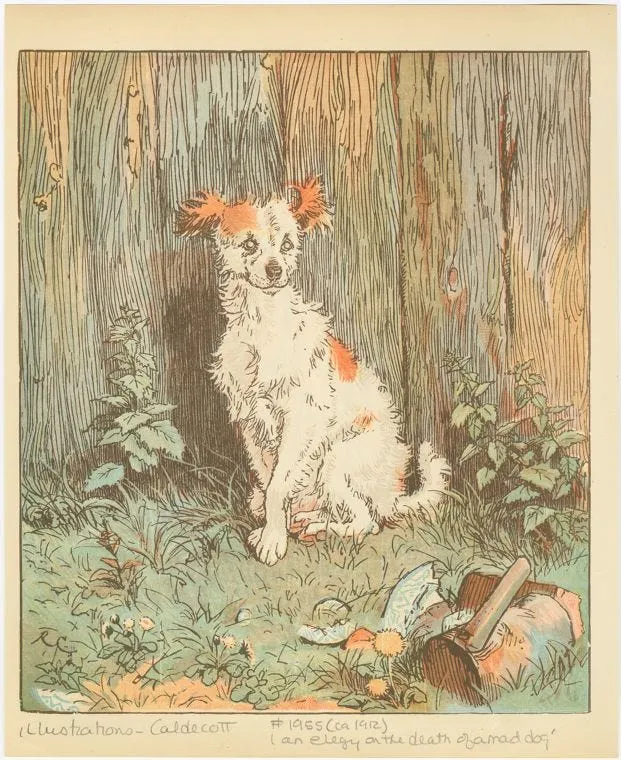
Humans love a dog who sits.
Nancy! Great question!
But… not a very original one. I think this is a question dog trainers get asked a lot. Every single friend or relative who has gotten a dog in the last decade and has my number… Guys, you think I’m just going to give away this kind of precious information FOR FREE?!
Of course I am.
Dissecting the Oreo
Most people think dog training starts with the human asking a dog to do something in exchange for something.
It’s a three-part Oreo-esque transaction: The human is the black cookie, offering the “command” (or “cue”) and a reward. The creamy white filling is the dog doing the behavior.
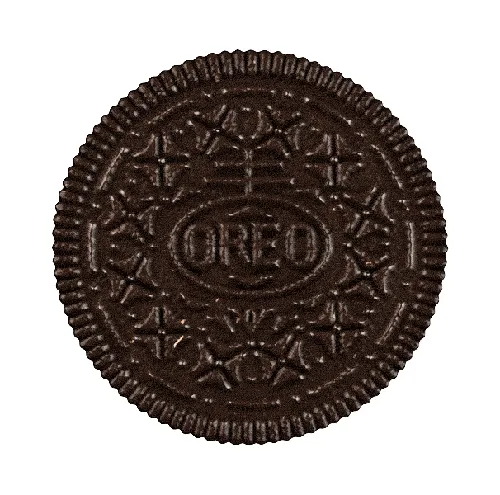
In case you didn’t know, an Oreo is a type of cookie and this is what it looks like.
Like sit, as you suggest.
We humans sure do love sitting. (Heck, I bet you’re doing it right now.)
Is that why we start with sit? Or maybe it’s a control thing?
Control the butt, and you control the dog. (Humans also love butts. Heck, I bet you’re sitting on one.)
So: You say sit, the dog does it (maybe you wait, maybe you lure, maybe you physically “help”), then you reinforce the behavior (with something the dog likes, like food or praise, or by stopping something unpleasant—positive and negative reinforcement, respectively)
This can certainly work.
But if you’re just coming out of the gate with training, it’s not where I’d start.
It’s kind of like you’re starting out going to school for the first time: you don’t begin with finals. You start in kindergarten, where expectations are low and learners are set up for success.
Remember, this isn’t just about the dog! You’re a learner too.
So I like teaching something that is kindergarten-level easy for both species.
Two things, actually: come and drop it.
These are not just nice-to-have behaviors—they’re potentially life-saving ones.
And you can teach them with your eyes closed.
Literally.
That’s because I want you to give the reward before the behavior happens.
Crazy I know. But stick with me (I’m the one with the Oreos!).
The Soda Machines Setup
Join me on a trip to a land of… soda machines.
On one side of the room, you have a normal soda dispenser. You put in money, and out comes your soda. Simple. Reliable. Fast.
The machine doesn’t care how you put the money in—left hand, right hand, crumpled dollar, tap your phone. Money goes in, soda comes out.
The other machine is more like a claw game. You put in your dollar, and then you have to carefully maneuver the crane—left, right, forward, back—hoping you can grab the soda and drop it into the slot. Even if you’re good at it, you might only succeed every second or third try. It takes skill. And patience. And a little luck.
Now, if my goal is to get people to spend money quickly, I’m picking the first machine every time.
Because I don’t actually care how they do it. I just want the behavior to happen quickly and reliably.
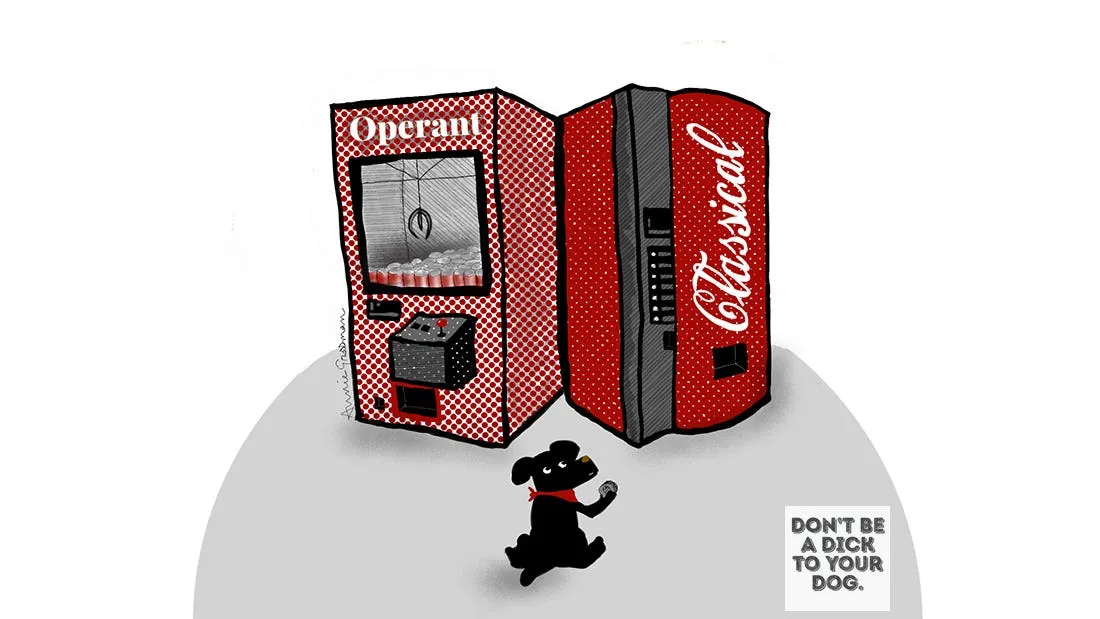
We tend to think in terms of Operant Conditioning when it comes to dog training: Rewarding a behavior in order to encourage it. It’s called “operant” because the animal is “operating” on their environment to effect change. But we can also teach things by helping the dog forge associations that change behavior. This is Classical Conditioning: creating an association with a novel stimuli in order to elicit an automatic response. (Illustration by author)
The thing is, a lot of dog training—especially at the beginning—looks more like the claw machine.
We ask for a behavior, wait, repeat ourselves, maybe get something close, and then reward it.
“Come… come… come… good.”
“Drop it… no… drop it… okay fine, I’ll trade you that shoe for a treat.”
From the dog’s perspective, it’s not always clear what worked. The timing is fuzzy. The rules keep shifting. The payoff is inconsistent.
And sometimes you go home with a four-inch stuff Minion which isn’t even what you were trying to get!
Oh wait, you can’t get a Minion… this is a soda machine. I forgot. Point is: The dog may get their proverbial soda eventually. Some of the time.
But it’s not a sure thing.
Rates of Reinforcement
The claw machine is offering a variable rate of reinforcement.
I’m not knocking it—it’s powerful stuff. That’s what keeps people glued to slot machines and doomscrolling.
But slot machines only work because we already understand the game. And we trust the system. It’s not like you sometimes go to Atlantic City and the machines are just… off.
Instagram isn’t ever like “Nothing more to see! Go to bed now, friend!”

Big thanks to Mark Zuckerberg for so reliably using a variable rate of reinforcement to make us all better people.
If you’re just starting out with a puppy, they don’t yet understand what earns the reward.
So making the reward unpredictable doesn’t make the behavior stronger.
It just makes you less reliable.
It makes the lesson harder to understand.
Is Sock In Dogs Mouth? Yes or No (Circle One)
If you’re teaching something that’s essentially pass/fail, you can often keep the training equation this simple.
If you’re working on teaching a dog to dance the tango, you have to shape many behaviors carefully, which may mean you need to think hard about which successive approximations of behaviors you want to reinforce.
But if I’m teaching a come, I don’t care what route the dog takes. With a drop it, I don’t care what the dog did with his tongue to get the item out of its maw.
Just like Big Soda now doesn’t care how you pay. You don’t even need change any more! Hold phone to machine, get drink. (A modern miracle, really).
Predicting Reward
Instead of making the reward depend on the behavior, you make your cue predict the reward.
You’re not waiting for the dog to get it right.
You’re building an association that produces the behavior.
Since sugar is the theme here, let’s take an example from one of my favorite sitcoms.
Imagine you wanted to train the behavior of someone approaching you with their hand out?
This seems like an arbitrary thing to train, but
-
I think most thing we train dogs to do probably seem arbitrary to them
-
It’s essentially training a “come.” It’s just a person instead of a dog, and they have their hand out.
-
This scenario was dreamt up by the writers of The Office, so don’t blame me.
Here, Jim trains Dwight to respond to the sound of his computer restarting.
Watch the video in the original post on Substack →
Drop it
Take “drop it.”
Most people wait until the dog has something in his mouth, then ask him to release it. Maybe they offer a treat in exchange. Maybe they repeat the cue. Maybe it turns into a negotiation between their forearm and the dog’s epiglottis.
But you can start somewhere much simpler.
You say “drop it,” and then… you drop stuff.
Delicious stuff.
You’re not asking for anything.
You’re making a promise:
When I say “drop it,” good things fall from the sky.
If you keep that promise enough times, your dog starts to believe you.
And belief is powerful.
Ultimately, you are actually — most likely!— working with a variable rate of reinforcement. This is because we are all fallible. Even I don’t always leave the house with treats on me. The one-in-a-hundredth time your dog grabs a chicken bone and you don’t have treats ready, you’ll have built enough history to be able to get away with it.
Just like you don’t give up on your office soda machine because of the one time the can got stuck.
Come
Same idea with “come.”
“Come” shouldn’t mean “maybe something good will happen.”
It should mean: jackpot.
Every time.
At least at first.
You make your signal—a whistle, a word, a sound—and then you deliver the goods, right at your feet, where you want your dog to be.
“But it’s a bribe!” you say.
Is it?
When your favorite store wants you to engage in the behavior of going there, they send you a message that says SALE.
You go.
Was that a bribe?
Or did you go because you have a long history of good things happening when you see that word?
At first, your dog might already be right next to you when you teach come. That’s fine. Remember: this isn’t supposed to be hard for anyone. He doesn’t need to come from anywhere. You both could even be, like, sitting (ah… sitting).
All that matters is that you dog is aware of the pairing: signal → food.
Do that enough times, in enough places, and the signal starts to carry meaning. It becomes a promise.
Later, when there’s distance or distraction, you won’t just have a cue you’ve repeated a lot.
You’ll have something your dog has learned to feel good about.
Classical Conditioning In The Wild
This is the manner in which I taught my dog, Poppy to go to her crate.
This is, essentially, a come. It just isn’t coming to me — it’s going to a specific spot in our home.
This is a really important behavior around here. I have three little kids and two doors to my apartment and sometimes, I just need to know exactly where she is (in her crate) and what she’s doing (or more importantly— what she’s not doing: Jumping on a grandparent, barking at the delivery guy, trying to get the sitter to feed her from the table, etc). Her “Go To Crate” cue is tight. I don’t ALWAYS give her treats or some other goody when she goes to her crate, but… I try to.
Watch the video in the original post on Substack →
Of course, you can create a cue that predicts the cue… or create unexpected cues… or both.
One friend told me her husband puts peanut butter in a Kong and tells the dog to go to the crate whenever they are planning to be… intimate. Now, the dog runs to the crate when he as much as smells the peanut butter.
“What’s funny,” she said, “Is that my husband says the smell of the peanut butter now gets him, let’s just say… in the mood!”
😂🐕🥜💋💏
What have YOU trained in this manner? Or… have been trained to do?!
Enjoyed this post? I did a podcast episode on this topic in 2018! Check it out:
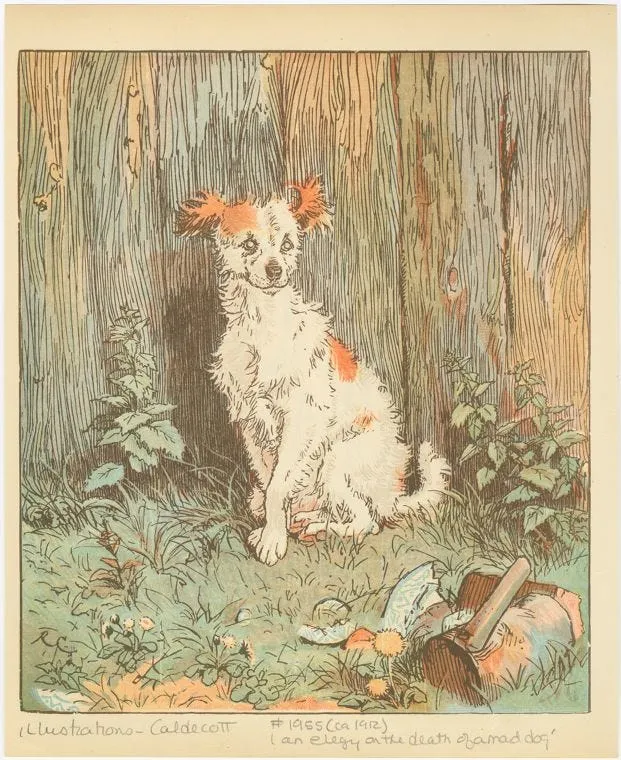
Featured image of sitting dog: The Miriam and Ira D. Wallach Division of Art, Prints and Photographs: Picture Collection, The New York Public Library. “The mad dog” The New York Public Library Digital Collections. 1912. https://digitalcollections.nypl.org/items/a302a880-c5bb-012f-6add-58d385a7bc34
Originally published in my newsletter, Don't Be a Dick to Your Dog.