
July 11, 2024 · Annie Grossman
8 Tips To Keep Your Dog Safe At The Dog Park
Dog parks can be fun but they can also be intimidating for a dog, and possibly dangerous. Here are some tips on becoming the best-educated dog-park goer possible.
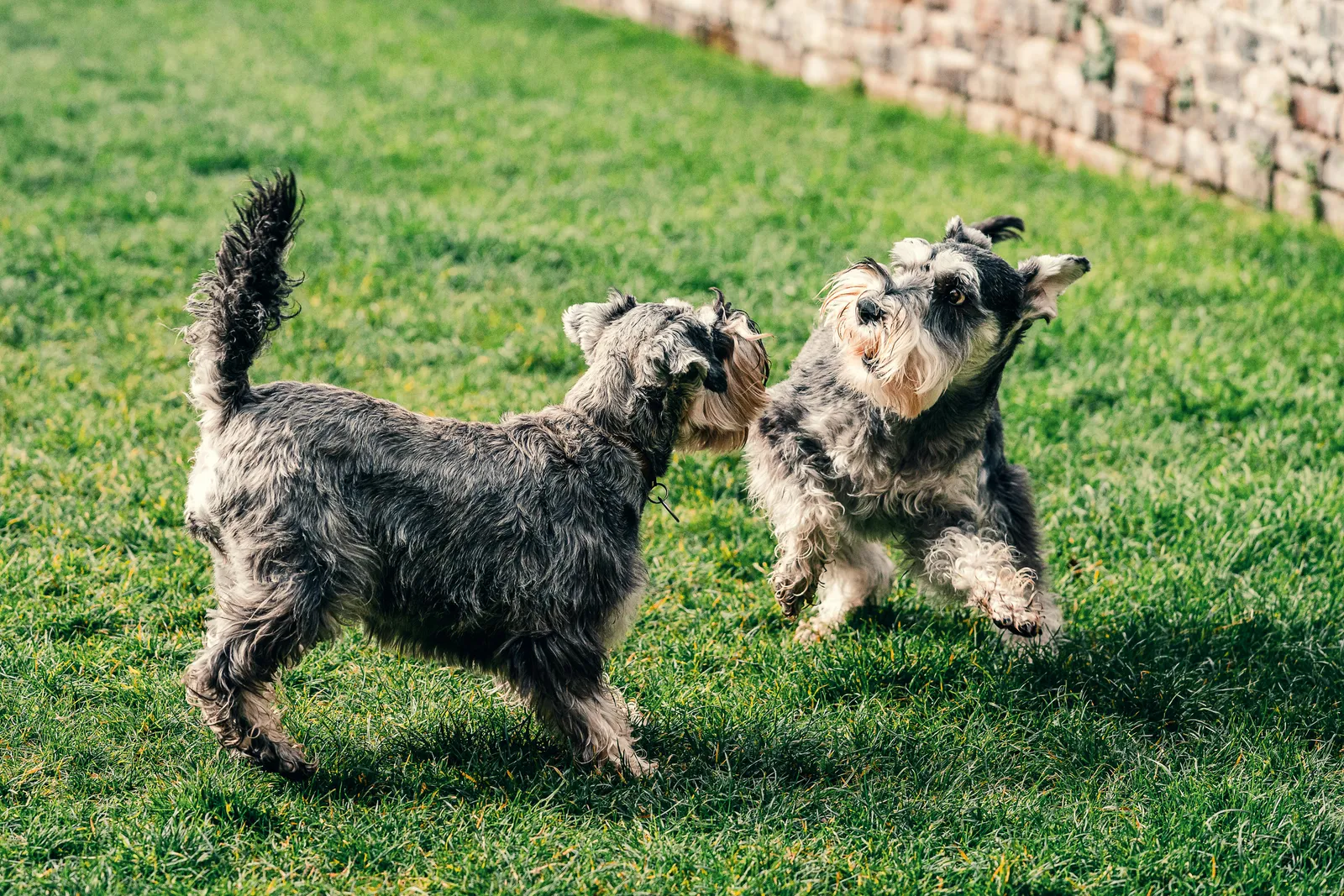
Dog parks aren’t appropriate for every dog, and urban dog parks have their own unique challenges: They can be small and dense, with a revolving population. If a park has dogs in it who don’t want to be there, and are accompanied by humans who aren’t particularly good at reading dog body language, things can go south quickly. So how do you make sure your dog stays safe and happy at the dog run? Here are some tips on becoming the best-educated dog-park goer possible.
1. Ensure your dog can sit and wait before entering into the park. Allowing your dog to rush into the park leads to increased excitement which can lead to inappropriate “over the top” greeting and play behaviors. Teaching your dog to sit and wait before entering the park allows some of that excitement to dissipate so they can enter more calmly. This will also give you the opportunity to observe how the other dogs in the run react to your dog before they even enter.
2. Walk briskly into the run. Don’t linger at the gate, walk right in confidently, using your body to split and walk between dogs to prevent them from all crowding your dog at once as you enter. Multiple dogs crowding all at once can be overwhelming for some dogs and can easily lead to conflict.
3. Call your dog frequently for breaks. Practice calling your dog to come to you often throughout the visit and then immediately release them to go back into play. This will ensure your recall cue will work when you really need it. If you’re using treats to reinforce, keep them hidden and make sure you practice with a trainer to learn how to deliver them stealthily, otherwise you could cause a dog fight. (Pro tip: come to our School Yard classes to learn how to teach your dog to break from play.)
4. Leave the toys at home. Toys or other resources of “value” can easily cause scuffles or actual fights. Avoid bringing toys in and if it looks like there are resources already present in the run when you arrive, leave and come back when there aren’t any. (Pro tip: in a controlled playgroup like our School Yard, toys may sometimes be appropriate, depending on the group in attendance.)
5. Keep visits short. Dogs (especially adolescents) can become overstimulated or overtired when you stay too long. Being overstimulated or overtired can lead to less control over their bodies and thus the ability to communicate may deteriorate, which can lead to more conflict. Limit visits to 15-20 minutes to be on the safe side.
6. Improve your ability to analyze dog body language. Our Body Language Basics course is a great place to start. Do you know what cut-off signals are? How about meta-signals? Do you know what high risk behaviors look like? These are important body language concepts to be aware of that a certified dog trainer can help you learn more about. Becoming a better reader of your own dog’s body language is always a good idea, but it’s a must if you want to visit dog parks. .