
October 30, 2026 · Annie Grossman
Americans are spending close to $1B a year on Halloween costumes for pets ... their dogs wish they wouldn't.
What looks like patience in a costume might actually be canine stress.
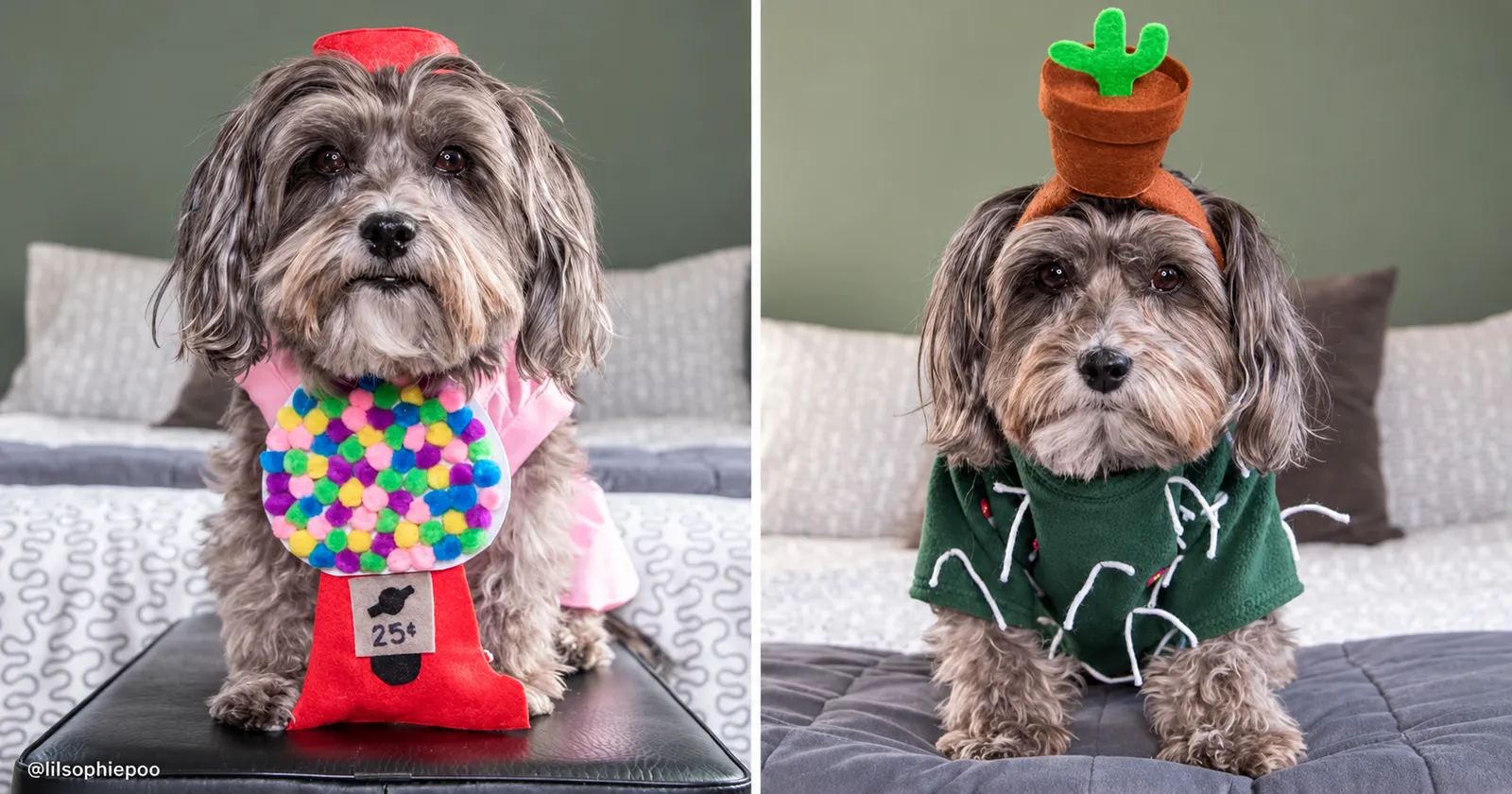
Firstly, a bit of news:
Come talk dog to me! Starting next Wednesday, I’m hosting Dog Talk, a live dog-training Q+A every Wednesday at noon ET. Bring your questions, conflicting advice, or behavior-nerd obsessions. Included for paid subscribers; $10 otherwise.
Dog Talk: Sign up for an upcoming Wednesday here.

The top row shows dogs in costumes; the bottom row shows dogs in shelters.
OK, now, for today’s topic: The weird yearly ritual where adult humans forcibly unleash their creative energy on dogs. And there’s not even any candy involved.
According to the National Retail Federation’s 2026 survey, Americans plan to spend $920 million on Halloween costumes for their pets. That’s pet costumes, not just dog costumes. Either way, it amounts to a lot of tiny hats.
Now, I don’t love being a killjoy on this topic, but every, just as surely as the trees turn to gold, costumed dogs rain down on my Instagram feed. Most of them are displaying body language that makes me pause. Are we so busy admiring going goo-goo eyed at dogs dressed as Ewoks, or admiring the creative output of the dogs owners, that we’re forgetting to think about how the dogs feel about it all?
Sometimes, I think we are.
Or maybe we just think that, considering how good they have it (free food, no rent) they can do us the favor of dealing with this occasional silliness.
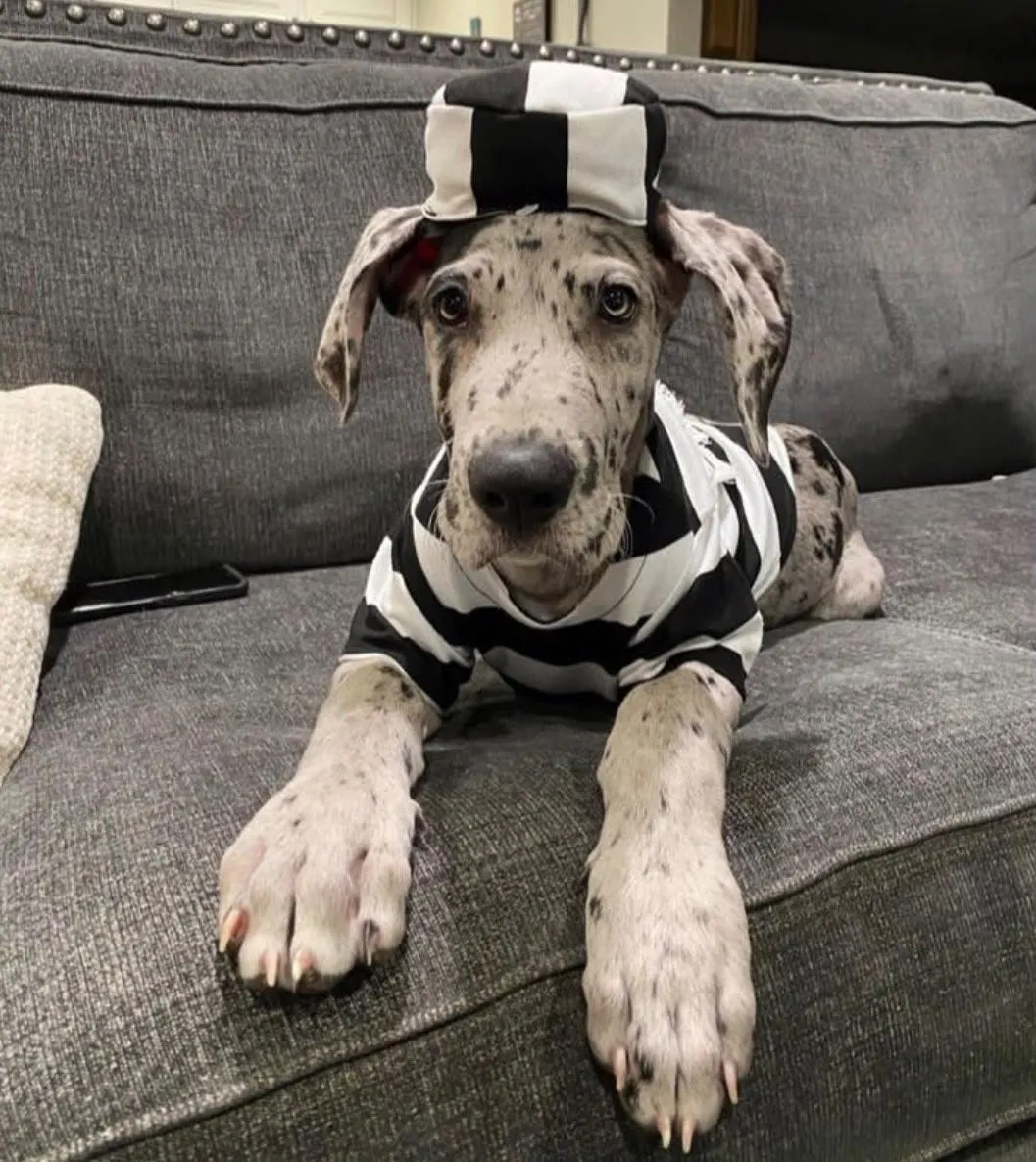
It’s funny because I actually am a prisoner. Get it? (@daneandadoxie)
A photograph can’t tell us everything about how a dog feels. But, as I write about in my book, lip and nose licking can be signs of discomfort, especially alongside a tense body or attempts to turn away.
As an example, let’s try to guess as to the thought and feelings being experienced by Sophie, a Colorado-based poodle mix whose human poses her in a different handmade costume every day of October. Every year. Since 2019.
That’s 248 days of dog costume fun, friends.
Here she is dressed as a tomato pincushion.
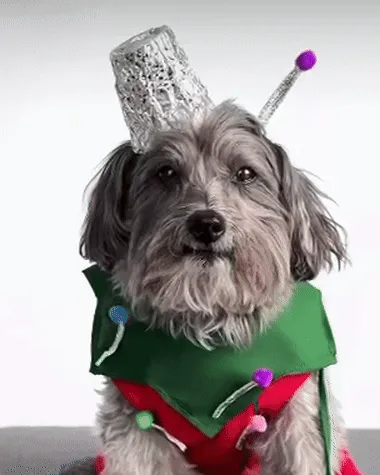
Sophie looks to be holding still and looking toward the camera. Is she showing a sign of likely discomfort (licking her lips) because of what she is wearing? Or because there’s a camera in her face? Or because she doesn’t like the mix the photographer is playing? I don’t know. But… I could imagine maybe it’s the tinfoil thimble hat.
Creative? Yes. But is she into it?
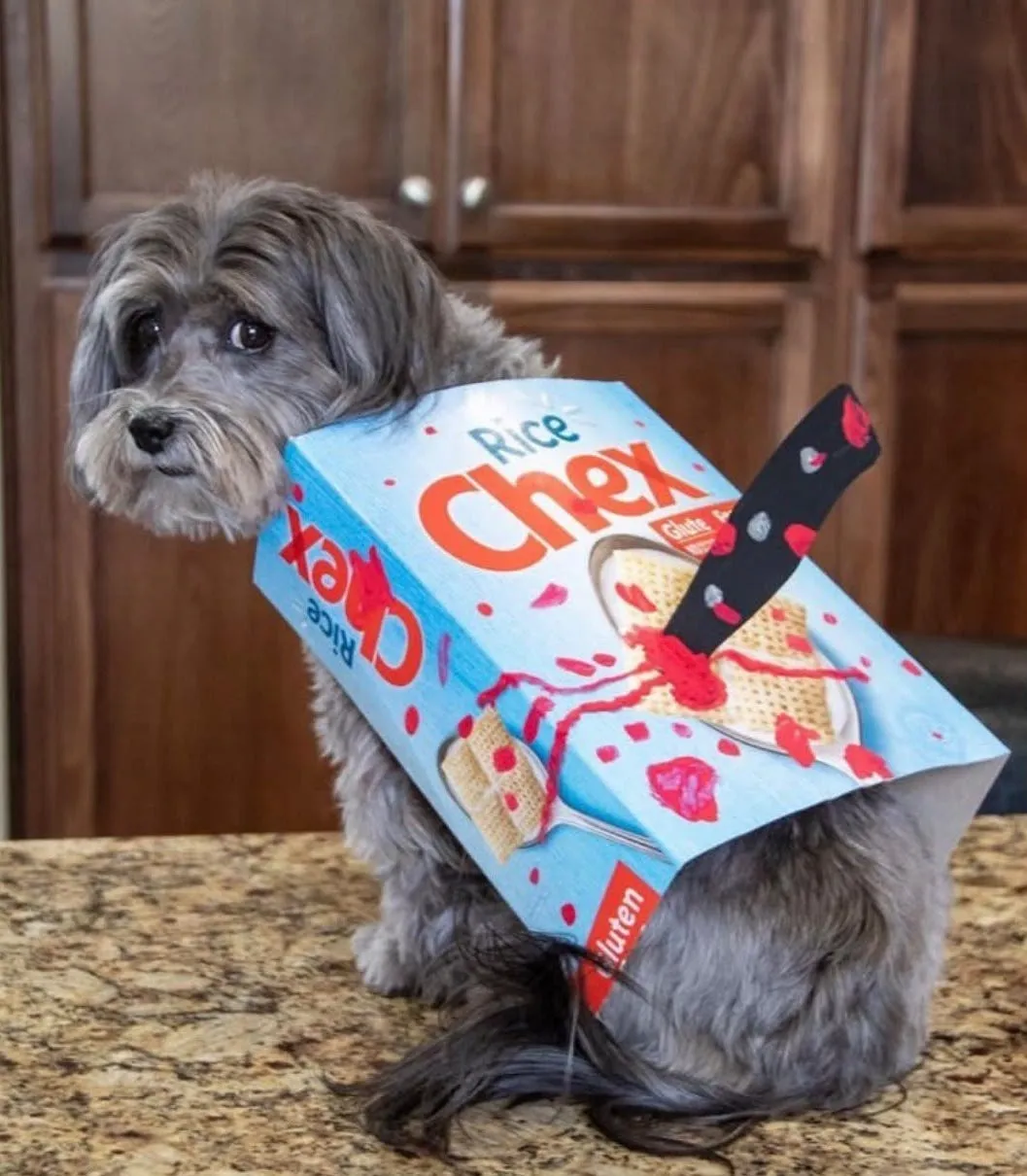
Sophie as a “Cereal” Killer…

a cactus…
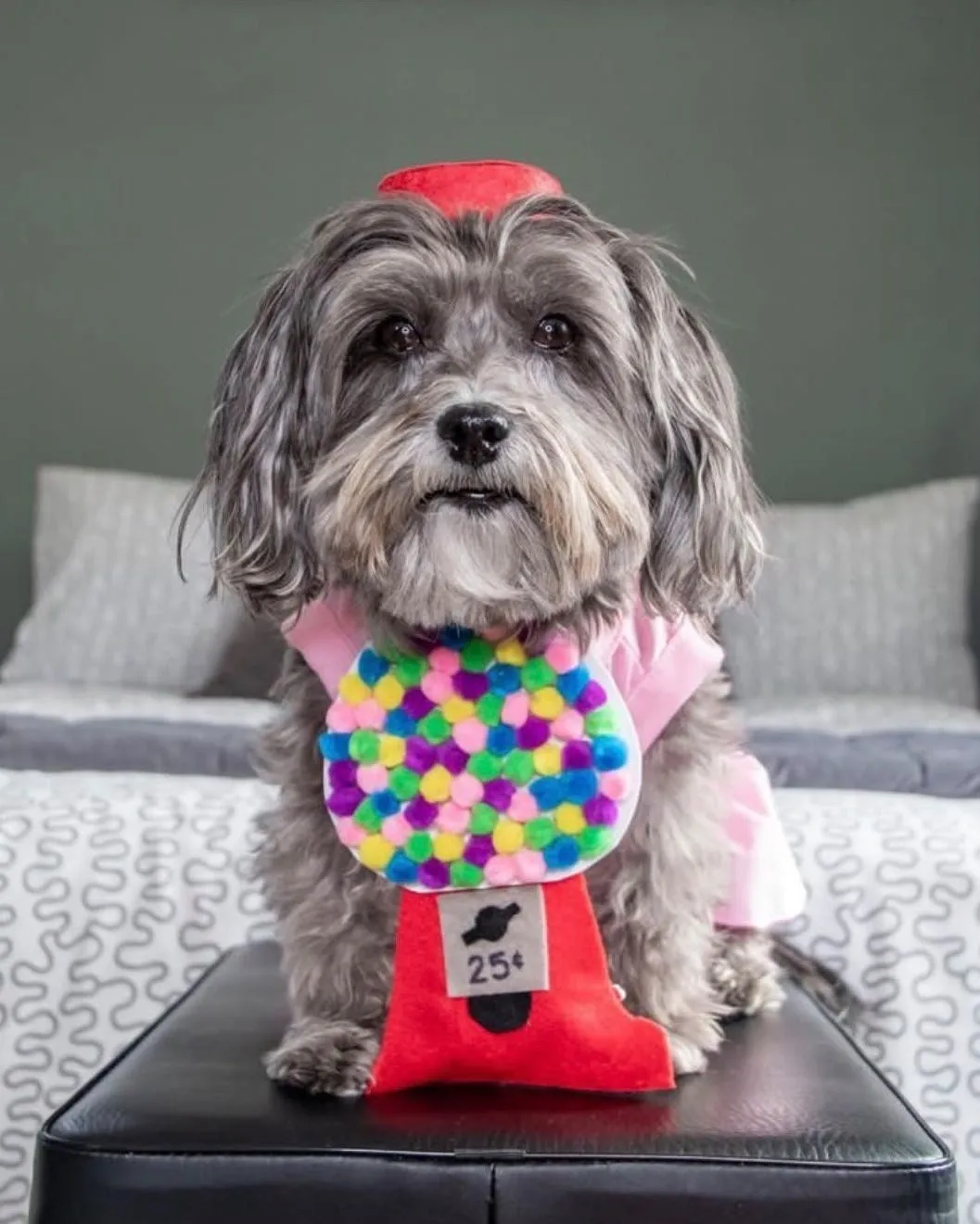
a very still gumball machine…
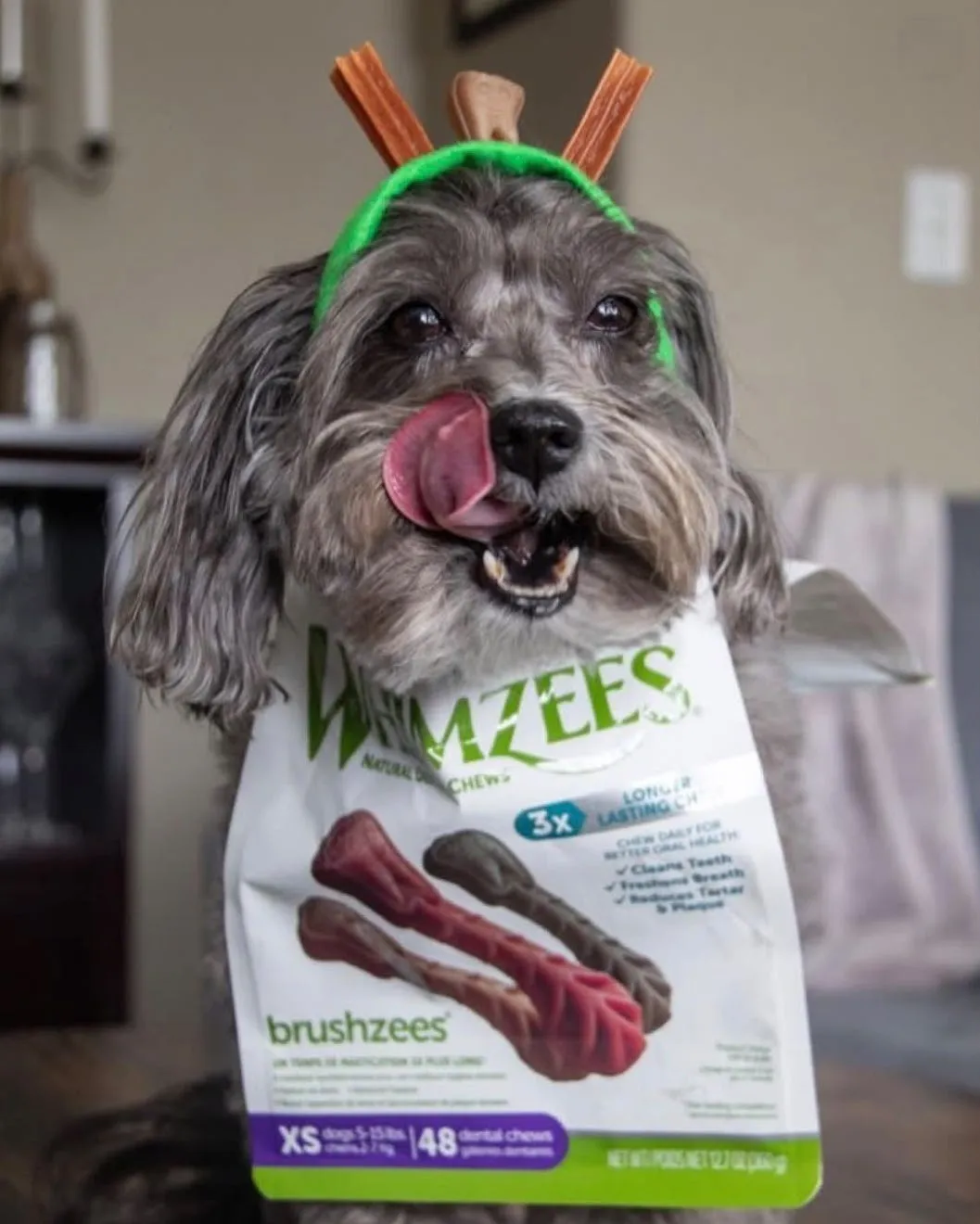
and… with treats strapped to her head, a distance unreachable by her tongue.
Let me paint this picture another way: Imagine staying with a friendly host family in a country where you don’t speak the language. One day they put you in a strange outfit and parade you around. You try to signal that you’re uncomfortable, but everyone is too busy taking pictures to notice. You don’t know why this is happening, or when it will end.
Having to wear something strange can be a lot for a dog to get used to. Even if you do the work to slowly acclimate your dog to a costume, there are other factors you might not consider: they’re navigating crowds of people in costumes, other dogs in bizarre outfits, kids accosting you (or ringing the doorbell over and over). You have to figure the dog has no real understanding that any of this is ever going to end. For all they know, they’re going to be wearing rabbit ears forever.
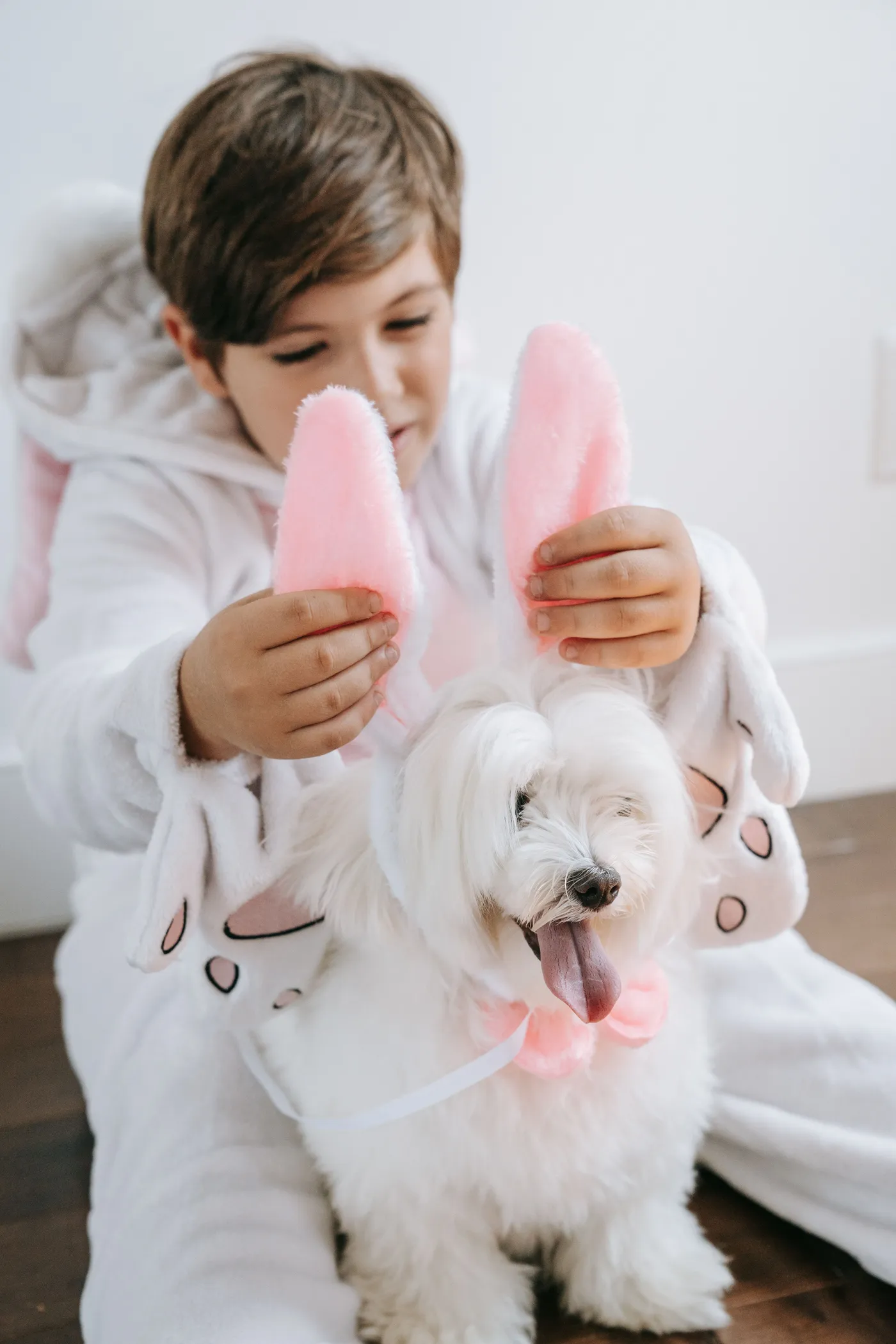
“I thought I already had cute ears?”
Stress in dogs can look an awful lot like patience or stillness to the untrained eye. There are dogs who genuinely don’t care. Bomb-proof, nothing-bothers-them dogs. If that’s your dog, fine. But for most dog owners, my advice is simple: don’t do it.
If you insist on a costume, please listen to this podcast episode first. One suggestion it includes is… teaching your dog to wear a cone, and decorating that. If you’re going to spend any amount of time training your dog to wear something silly, why not teach him to wear something silly that he might actually need to wear in the future? I’ve outlined how to train your dog to be comfortable in a cone below.

The late/great Amos at a cone-decoration party at School For The Dogs in 2016
Or, you could just… be the dog!

Halloween shortly after opening School For The Dogs’ first storefront in 2014. I’m a little grayer in the muzzle now!
To be fair, I wouldn’t say that my youngest daughter’s choice of wearing a costume was fully consensual…

But my 5-year-old definitely wanted to dress up for school today, and guess what she wanted to be!

How to train your dog to wear a cone
Step 1: Create a good association:
Pair the experience of wearing the cone with something really delicious. If you can’t think of what your dog might enjoy, try peanut butter. Put the cone on, feed peanut butter. Be generous! Take the cone off, and the peanut butter goes away, too. This can be done in a few short sessions every day. If your dog is too stressed to eat while wearing the cone, don’t force it. You might instead choose to start by simply leaving the cone out in your home so that its novelty wears off. All the better if you sprinkle treats around it now and then.
Step 2: Teach putting the head through:
If your dog knows how to touch a hand or an object like a target stick, you can put one or the other all the way through the hole and let your dog touch it. Click (or use a marker word like “yes”) and treat. Progressively bring your hand back towards you through the hole, encouraging your dog to put his nose through the hole to reach the hand or stick. When this becomes easy, wait for him to put more of his head through before you click and treat.
Step 3: Teach putting it on:
Most things in life are less stressful if they’re not forced upon. That is why teaching a dog to put on his own cone can reduce his fear of it. Start by setting the cone down flat, with the wide part facing up. If it doesn’t stay still that way, you may have to hold it in place. Put a treat in the center and let your dog eat it. Do this three times. The fourth time, wait for him to start looking for the treat in the center (even though there isn’t one) and then click and treat (place treat just outside of the cone). This will help teach him to try putting his head through it even when there isn’t a visible treat there. Once he seems to have figured out Oh I just have to bob my head into this thing and a treat appears, flip the cone over so your dog now has to put his head through the smaller part of the cone. Start off with the cone at its largest setting, and hold it down (if you need to) to prevent him picking it up with his head the first few times. Start like you did the first time, with him going towards a treat that is already in the cone, and then move up to clicking and treating him for putting his head into it even when there is no visible treat. Once he seems very comfortable bobbing his head in and out of the cone, you can begin clicking/treating it when he starts to bring his head back up with the cone on.
Originally published in my newsletter, Don't Be a Dick to Your Dog.