
July 14, 2018 · Annie Grossman
The Dog Training Triad Part 1: Management
Discover the Dog Training Triad: Management, Timing, and Rewards. Learn how to use management to prevent unwanted behaviors and create a positive training environment.
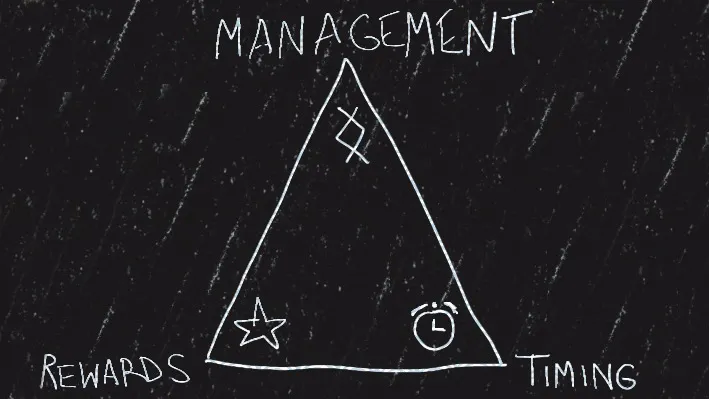
There are three major ingredients required in any positive reinforcement-based dog training plan. They are: Management, Timing, and Rewards. I call this The Dog Training Triad. In this series of posts (and accompanying episodes of School For The Dogs Podcast—click here or scroll down to listen) I will be talking about each of these essential pillars.
What is “management” in dog training terms?
Simply put, management is all about making the right option the easy option for your learner in order to up the chances of getting the behaviors you want.
We govern our dogs’ worlds, and a great way to get behaviors we want is to not allow the behaviors we don’t want to ever occur to begin with. In some ways, there are lots of ways in which we are smart about managing our dogs’ behavior without even thinking about it. How do you make sure you don’t get the behavior of your dog running into the street? You keep your dog on a leash. How do you keep a puppy from peeing on the rug? Pick up the rug. A crate is, for example, a very useful management tool, as a dog who is in a crate simply cannot also be chewing on your coffee table’s legs or pooping on the sofa.
But isn’t training more complicated than that?
Managing the environment in order to make sure behaviors you don’t want don’t occur is often the “oh, duh” kind of dog training solution that will leave you kicking yourself for not having thought of it yourself. Usually, it mostly involves training humans. Don’t want your dog to drink from the toilet? Close the lid. Don’t want your dog to chew shoes? Put them in the closet, and keep the door shut. The fact that environmental management can be easy should be happy news: Good dog training doesn’t need to be hard!
Keep bad behaviors from ever starting
As a trainer, it is always preferable to smartly consider how to set the stage to optimize chances of success rather than rearranging the environment after your pupil has already done something you don’t want him or her to do. This is because:
1. An unwanted behavior could be life-threatening. Would you rather your dog chew on a wire so that he learns a lesson, or do you want him to not do it in the first place? Do you put a fence around the pool before or after your toddler winds up flailing in the deep end?
2. Unwanted behaviors are often self-reinforcing. Peeing on the rug feels good. Chewing on a wire feels good. Barking feels good. Whenever your dog has the option to do one of those things, he or she will only be getting better at doing it. Even if you rearrange the environment so the behavior won’t happen again, it still has some reinforcement history behind it, which could affect future behaviors in a new environment. For example: If a dog steals food off the counter just once, they may keep checking the counter hoping for another reward.
3. Punishing unwanted behavior can be problematic. Punishment often creates additional challenges:
- Dogs may associate the wrong thing with the punishment (e.g., thinking peeing in front of you is bad rather than peeing on the rug).
- Punishment often requires escalating intensity to remain effective.
- The reinforcement of the unwanted behavior often outweighs the punishment.
Create a “Yellow Brick Road”
The boundaries we create for our dogs shouldn’t be set with barbed wire. Rather than forcing dogs to stay on the path we want them to be on, we need to make the path really awesome so they have no reason to veer. Think about Dorothy and her crew on the Yellow Brick Road: They weren’t forced to stay on the road, but they remained on it because there were lots of good things happening on that path. As trainers, we can create that road. By controlling their world from the outside, we can help boost the chances we’re going to get dog behaviors we really like—then we can positively reinforce those behaviors like crazy to increase the likelihood that they will reoccur.
The Management Recipe: Space, Time, and Energy
There are three things we are managing in training. Here are some tools and tips to help you manage these elements wisely:
Managing Space
- Crates: A crate limits your dog’s options and prevents unwanted behaviors. More on crate training here.
- Muzzles: A muzzle can prevent bites or scavenging.
- White noise machines: Use a white noise machine or a door sweep to reduce triggers for barking.
Managing Time
Dogs spend at least 50% of their time sleeping. Puppies, closer to 80%. Make the most of their active hours by:
- Scheduling elimination breaks.
- Using work-to-eat to extend meal times.
Managing Energy
A tired dog is a happy dog! Exercise your dog with walks, play, or games like tug-of-war. Use enrichment toys to engage their mind and burn energy during feeding.
This post is part one of a three-part series on The Training Triad. Stay tuned for our next posts, which will focus on rewards and timing. Make sure to check out our podcast for accompanying content.
Featured drawing by Annie Grossman